
ADVERTISEMENT
ADVERTISEMENT
ADVERTISEMENT
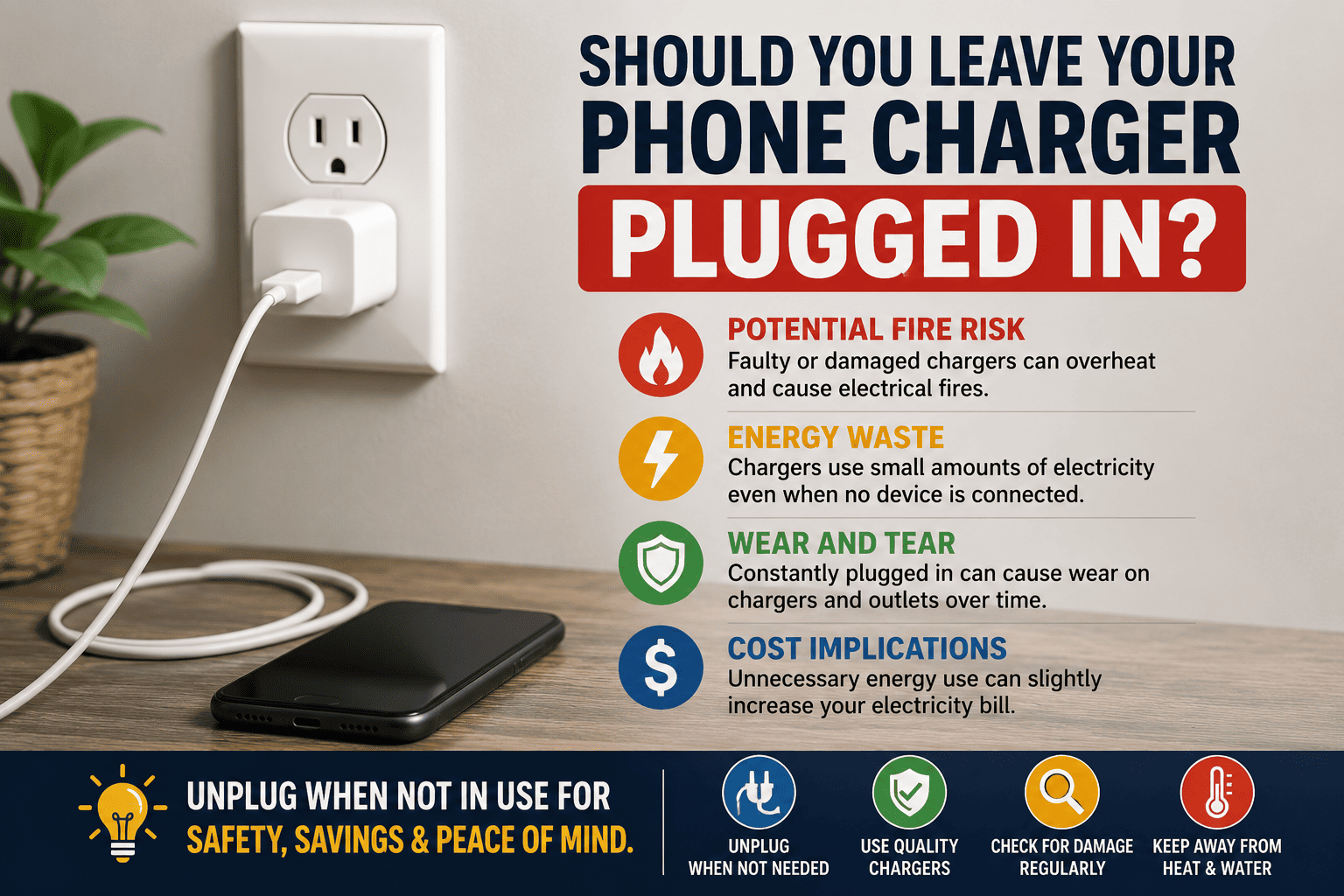
Should You Leave Your Phone Charger Plugged In? What You Need to Know
In our busy daily lives, convenience often wins. Many people leave their phone chargers plugged into the wall long after their devices have been disconnected. It may seem completely harmless, but there are a few good reasons to make unplugging your charger part of your routine.
From small amounts of standby electricity to the importance of using safe, undamaged equipment, understanding what happens when a charger remains connected can help you make smarter choices at home.
How Does a Phone Charger Work?
A phone charger converts the alternating current (AC) supplied by your wall outlet into the direct current (DC) your phone needs.
When your phone is connected, the charger supplies electricity to the device. When the phone is disconnected, a modern charger typically uses very little electricity, but it may still consume a small amount of standby power.
This is sometimes called “vampire energy” because the device can continue drawing a tiny amount of electricity even when it isn’t actively charging anything.
Is Leaving a Charger Plugged In a Fire Risk?
For a modern, quality charger in good condition, the risk is generally low. However, electrical equipment can become hazardous when it is damaged, poorly manufactured, overheating, or used incorrectly.
A damaged cable, cracked adapter, exposed wiring, or charger that becomes unusually hot should not be ignored.
It’s particularly sensible to unplug chargers when you’re leaving home for an extended period or when they’re not needed.
Does an Unused Charger Waste Electricity?
Yes, but usually only a small amount.
A charger that’s plugged in without a device attached may continue consuming a tiny amount of standby electricity. Individually, this is unlikely to make a dramatic difference to your electricity bill.
However, households often have multiple electronic devices and adapters connected at the same time. Reducing unnecessary standby consumption can be a simple way to improve energy efficiency.
Can Constant Plugging and Unplugging Damage the Charger?
Leaving a charger connected doesn’t automatically mean it will wear out quickly. In many cases, the bigger concern is ordinary physical wear: bending cables, pulling adapters from outlets, or using damaged equipment.
The outlet can also experience mechanical wear if plugs are repeatedly inserted and removed roughly.
The best approach is to handle chargers carefully and replace them when they show signs of damage.
Can Unplugging Chargers Save Money?
An individual phone charger generally uses so little standby electricity that the savings from unplugging one charger are modest.
Still, if you have several chargers and other electronics continuously connected, reducing unnecessary standby power can contribute to lower overall energy use.
The bigger benefit is often good electrical safety habits, rather than significant savings on your electricity bill.
Signs Your Charger Should Be Replaced
Pay attention to your charger and cable. Stop using it if you notice:
- Frayed or exposed wires
- Cracks or damage to the adapter
- Burn marks or unusual discoloration
- A burning smell
- Excessive or unusual heat
- Loose connections
- Sparking or other abnormal behavior
When replacing a charger, choose one from a reputable manufacturer and make sure it is designed for your device.
Simple Ways to Use Chargers More Safely
A few easy habits can make charging safer and more convenient:
- Unplug chargers when they’re not needed, especially before leaving home for a long period.
- Keep chargers away from water and excessive heat.
- Don’t use damaged cables or adapters.
- Avoid covering a charger while it’s operating, so heat can dissipate properly.
- Use reputable, safety-compliant charging equipment.
- Don’t overload electrical outlets or power strips.
- Replace chargers that show signs of damage or unusual behavior.
Final Thoughts
Leaving a phone charger plugged into the wall isn’t automatically dangerous, particularly when you’re using a modern, high-quality charger that’s in good condition. However, unplugging chargers when they’re unnecessary is a simple habit that can reduce standby electricity use and eliminate one potential source of electrical problems.
Rather than worrying about every charger in your home, focus on the things that matter most: use quality equipment, inspect it regularly, keep it in good condition, and unplug it when it’s not needed for extended periods. Small safety habits can make your home a little safer and more energy-efficient.
ADVERTISEMENT