
ADVERTISEMENT
ADVERTISEMENT
ADVERTISEMENT
Tomato-based sauces are some of the most versatile staples in the kitchen, but their names can sometimes be confusing. Marinara sauce and spaghetti sauce are often used interchangeably, yet they can differ in ingredients, texture, cooking time, and flavor.
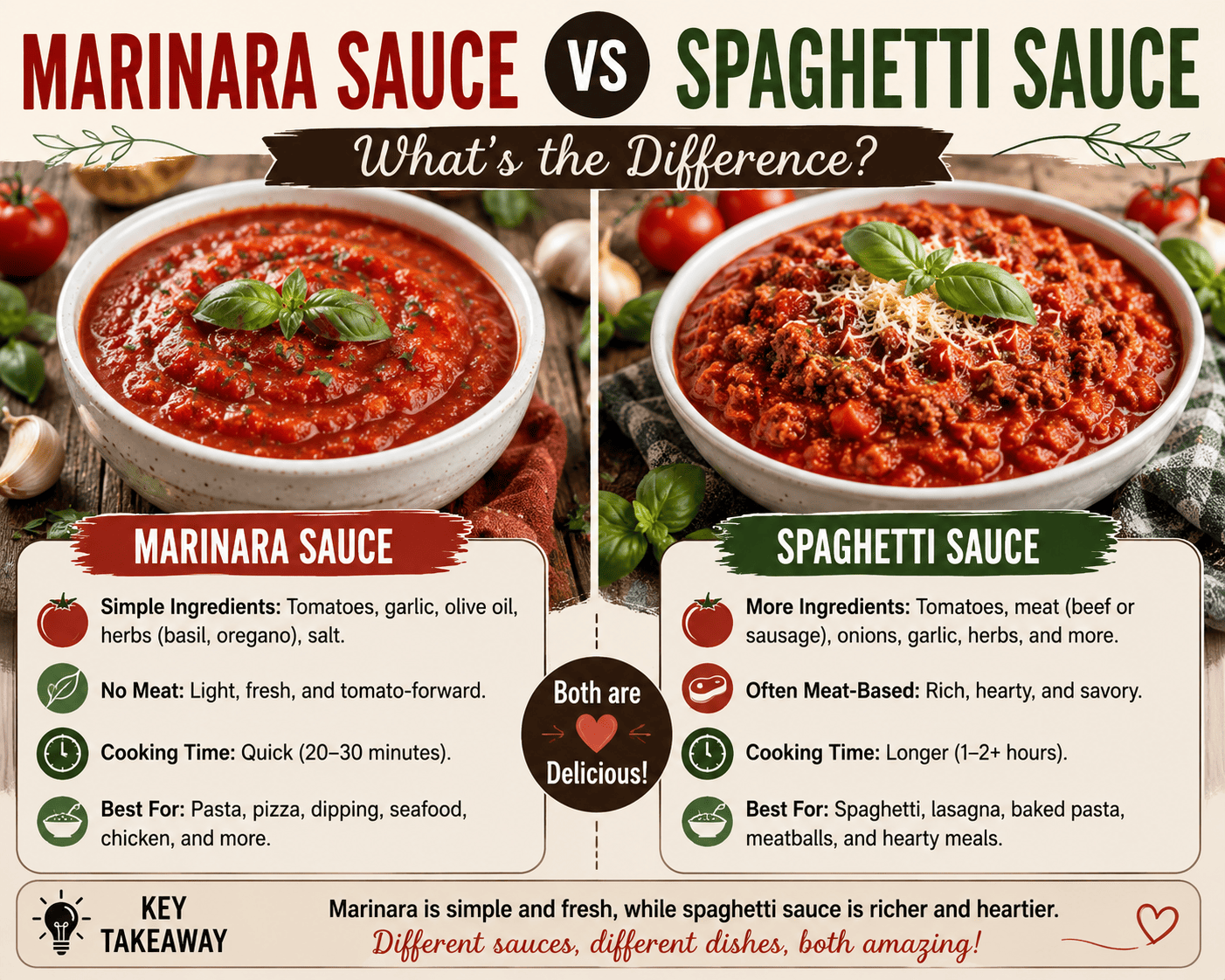
So, are they actually the same thing? Not quite. While both are commonly tomato-based, marinara is generally simpler and quicker, while spaghetti sauce is a broader term that can describe everything from a basic tomato sauce to a hearty meat-filled recipe.
What Is Marinara Sauce?
Marinara is a relatively simple tomato sauce traditionally associated with Southern Italian cooking, particularly Naples.
A classic marinara usually contains just a handful of ingredients, such as:
- Tomatoes
- Garlic
- Olive oil
- Basil or oregano
- Salt
- Sometimes red pepper flakes
The goal is to let the tomatoes and aromatics shine rather than create a heavily layered sauce.
A Brief History of Marinara
The history of marinara is connected to the introduction of tomatoes to Europe from the Americas. Over time, tomatoes became an important part of Italian cooking, particularly in southern Italy.
The name marinara is commonly associated with the Italian word marinaro, meaning “sailor.” There are several explanations for the name, including its association with sailors and the sauce’s suitability for preparation with relatively simple, shelf-stable ingredients.
What Does Marinara Taste Like?
Marinara typically has a bright, fresh, and slightly tangy flavor.
Because it usually doesn’t contain meat or a large number of additional ingredients, the tomato flavor remains prominent. Garlic, herbs, and olive oil provide supporting flavors without making the sauce overly heavy.
Marinara is often cooked relatively quickly compared with richer tomato sauces.
How Is Marinara Made?
A basic marinara can be prepared by gently sautéing garlic in olive oil before adding crushed or chopped tomatoes.
The sauce is then simmered with herbs and seasonings until it reaches the desired consistency. Some recipes add red pepper flakes for heat, while others include a small amount of wine or fresh basil.
The important characteristic is simplicity. Marinara doesn’t need hours of cooking to develop its appeal.
What Is Spaghetti Sauce?
Unlike marinara, “spaghetti sauce” isn’t one specific traditional recipe.
The term is commonly used to describe a sauce served with spaghetti, particularly in American cooking. Depending on the recipe, spaghetti sauce can be a simple tomato sauce or a much heartier preparation.
It may include:
- Tomatoes
- Onions
- Garlic
- Ground beef
- Italian sausage
- Mushrooms
- Bell peppers
- Herbs
- Parmesan cheese
- Other vegetables or seasonings
Because there is no single standard recipe, spaghetti sauce can vary dramatically from one kitchen to another.
Why Is Spaghetti Sauce Often Heartier?
Many spaghetti sauce recipes are designed to create a rich, filling meal. Ground beef or sausage is often browned with onions and garlic before tomatoes are added.
The sauce may then simmer for a longer period, allowing the flavors to blend and the texture to become thicker and richer.
Some recipes don’t contain meat at all, so spaghetti sauce doesn’t have to be a meat sauce. The term is simply broader than marinara.
Marinara vs. Spaghetti Sauce: The Main Differences
The easiest way to understand the difference is to look at their typical characteristics.
| Feature | Marinara Sauce | Spaghetti Sauce |
|---|---|---|
| Main base | Tomatoes | Usually tomatoes |
| Ingredients | Usually simple | Can contain many ingredients |
| Meat | Usually none | May include beef or sausage |
| Cooking time | Often relatively short | Can be longer |
| Flavor | Bright and fresh | Rich and savory |
| Texture | Often lighter | Can be thicker and heartier |
| Uses | Pasta, dipping, pizza, appetizers | Pasta and complete meals |
These are general differences rather than strict rules. Recipes vary widely, and there can be plenty of overlap between the two.
Can You Substitute One for the Other?
In many recipes, yes.
Marinara can work in dishes that call for spaghetti sauce, especially when you want a lighter tomato flavor. Likewise, a simple spaghetti sauce can sometimes replace marinara.
However, the finished dish may taste different.
A chunky, meaty spaghetti sauce won’t provide the same light, fresh character as a simple marinara. Similarly, using marinara in a recipe designed around a rich meat sauce may produce a lighter result.
How to Use Marinara Sauce
Marinara is extremely versatile. Try it with:
- Spaghetti and other pasta
- Pizza
- Mozzarella sticks
- Breadsticks
- Eggplant Parmesan
- Chicken Parmesan
- Meatballs
- Calzones
- Vegetable dishes
Its bright tomato flavor makes it particularly useful as both a sauce and a dipping option.
How to Use Spaghetti Sauce
Spaghetti sauce is naturally suited to hearty pasta meals.
It can be served with:
- Spaghetti
- Penne
- Rigatoni
- Lasagna
- Stuffed shells
- Baked pasta
- Meatballs
- Ground beef or sausage dishes
A meat-based spaghetti sauce can turn a simple plate of pasta into a substantial dinner.
Which Sauce Should You Choose?
The best choice depends on the dish and the flavor you’re looking for.
Choose marinara when you want something:
- Quick and simple
- Bright and tomato-forward
- Light and versatile
- Suitable as a dipping sauce
Choose spaghetti sauce when you’re looking for something:
- Richer and more substantial
- Packed with vegetables or meat
- Slow-simmered and deeply flavored
- Designed for a hearty pasta meal
Final Thoughts
Although marinara sauce and spaghetti sauce are often confused, they aren’t necessarily the same. Marinara is generally a simpler, tomato-forward sauce with a relatively short ingredient list and cooking time. Spaghetti sauce is a much broader category that can include meat, vegetables, additional seasonings, and longer cooking times.
There is no single rule that says one sauce is better than the other. Marinara is perfect when simplicity and fresh tomato flavor are the goal, while spaghetti sauce offers plenty of room for richer, heartier combinations.
Ultimately, both have a place in the kitchen—and knowing the difference simply makes it easier to choose the right sauce for your next meal.
ADVERTISEMENT