
ADVERTISEMENT
ADVERTISEMENT
ADVERTISEMENT
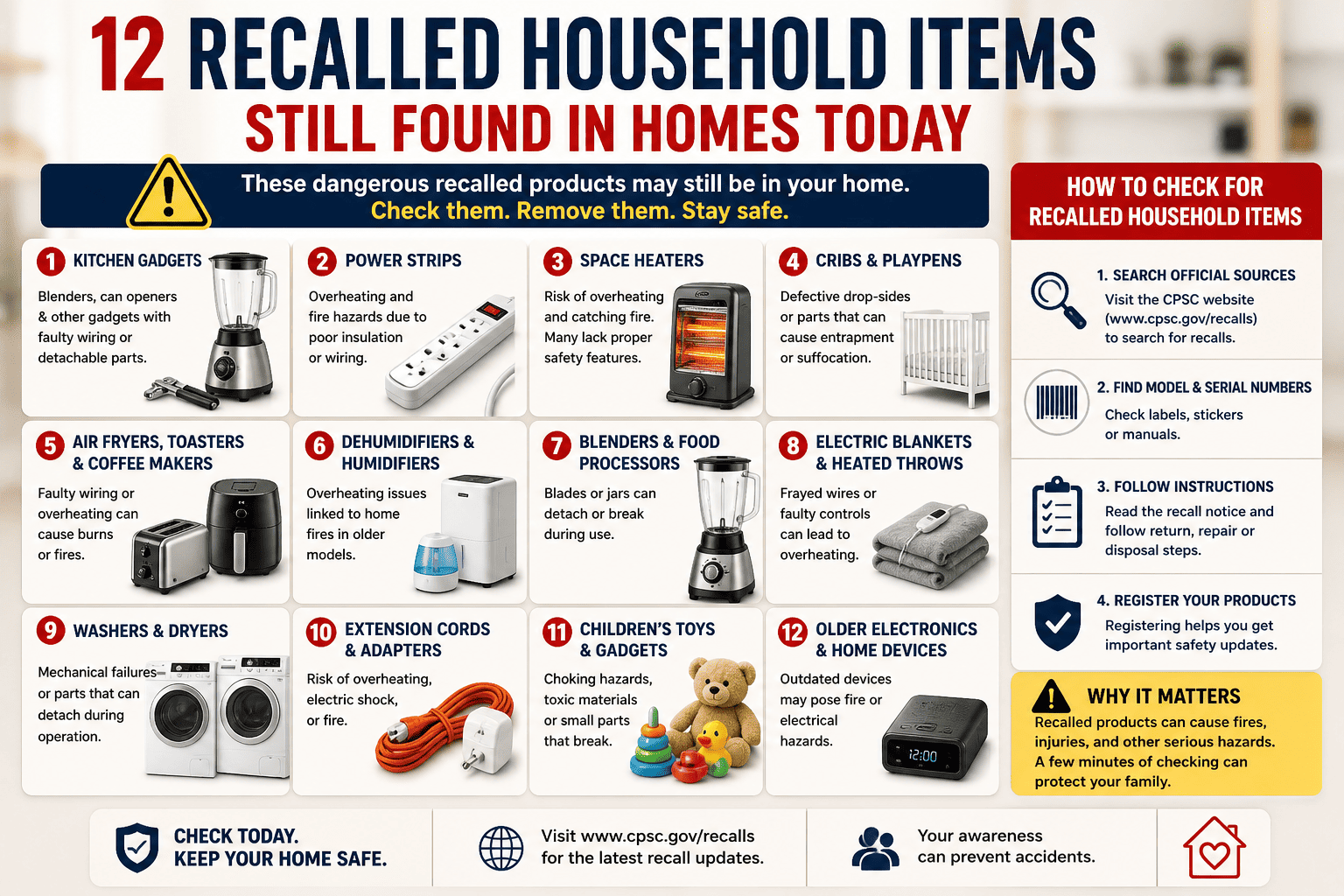
Every year, thousands of consumer products are recalled because of safety risks. Yet many of these items remain in homes long after warnings are issued. Some continue to be used daily, putting families at risk without anyone realizing it.
Recalls happen for many reasons, including fire hazards, electrical defects, choking risks, toxic materials, and mechanical failures. Taking time to identify recalled products in your home can help prevent accidents and keep your household safer.
1. Kitchen Gadgets Hiding in Junk Drawers
Old kitchen drawers often contain forgotten gadgets that may have been recalled years ago. Common examples include:
- Electric can openers with faulty wiring
- Hand blenders with loose blades
- Defective slicers or choppers
- Battery-powered tools that overheat
Even if these products still work, they may still be dangerous.
2. Power Strips Behind TVs and Desks
Power strips are found in almost every home, but some recalled models have been linked to overheating and fires.
Check power strips for:
- Melted plastic
- Loose plugs
- Burn marks
- Frayed cords
- Missing certification labels
Older strips hidden behind furniture are easy to forget, making them especially risky.
3. Space Heaters With Fire Risks
Portable heaters can be helpful in winter, but recalled models have caused house fires, burns, and smoke damage.
Watch for heaters that:
- Tip easily
- Smell like burning plastic
- Lack auto shut-off features
- Overheat quickly
- Have damaged cords
If your heater is old, check the brand and model number.
4. Cribs and Playpens With Safety Hazards
Some baby products have been recalled because of entrapment, collapse, or suffocation risks.
Items to inspect include:
- Older cribs with drop-side rails
- Worn playpens
- Broken latches
- Loose mattress supports
- Missing hardware
Children’s products should always meet current safety standards.
5. Overheating Kitchen Appliances
Small appliances can become dangerous if wiring fails or components overheat.
Common recalled products include:
- Air fryers
- Toasters
- Coffee makers
- Electric kettles
- Slow cookers
If an appliance sparks, smokes, or shuts off unexpectedly, stop using it.
6. Old Dehumidifiers and Humidifiers
These appliances help manage indoor air quality, but some older units have been recalled after reports of fires and overheating.
Check for:
- Strange smells
- Hot exterior surfaces
- Loud motor noises
- Burn marks near outlets
- Excessive vibration
Many people keep these devices running unattended, increasing risk.
7. Blenders and Food Processors
Some recalled blenders and processors have had parts crack, detach, or shatter during use.
Inspect for:
- Cracked jars
- Loose blades
- Lid locking issues
- Wobbling bases
- Unusual grinding noises
Stop using damaged food prep equipment immediately.
8. Electric Blankets and Heated Throws
These products can become hazardous over time, especially if wires inside the fabric are damaged.
Warning signs include:
- Uneven heating
- Hot spots
- Frayed cords
- Burn marks
- Flickering controls
Replace older heated bedding if safety is uncertain.
9. Washing Machines and Dryers
Laundry appliances have also been recalled for mechanical and electrical failures.
Potential dangers include:
- Excessive shaking
- Burning smell
- Loud banging
- Loose lids or doors
- Dryer overheating
Routine maintenance helps reduce appliance hazards.
10. Extension Cords and Adapters
These everyday items are often overlooked, yet damaged or recalled cords can cause shocks or fires.
Inspect cords for:
- Cracks
- Exposed wires
- Loose outlets
- Overheating plugs
- Discoloration
Avoid overloading cords or using damaged adapters.
11. Children’s Toys and Electronic Gadgets
Some toys are recalled because of choking hazards, button batteries, toxic materials, or parts that break easily.
Check toys for:
- Loose small pieces
- Broken battery compartments
- Sharp edges
- Missing labels
- Age-inappropriate parts
Regular toy checks are especially important in homes with young children.
12. How to Check for Recalled Products at Home
A quick home safety check can make a big difference.
What to Do:
- Look for brand names and model numbers
- Search official recall databases
- Register products after purchase
- Keep receipts when possible
- Follow recall instructions immediately
Most recalls offer refunds, replacements, or repairs.
Final Thoughts
Dangerous recalled products can remain in homes for years simply because people forget about them or never hear the warning. From kitchen gadgets to heaters and children’s toys, everyday items can sometimes pose hidden risks.
Taking a few minutes to inspect your home and check older products can help protect your family and give you greater peace of mind.
ADVERTISEMENT