
ADVERTISEMENT
ADVERTISEMENT
ADVERTISEMENT
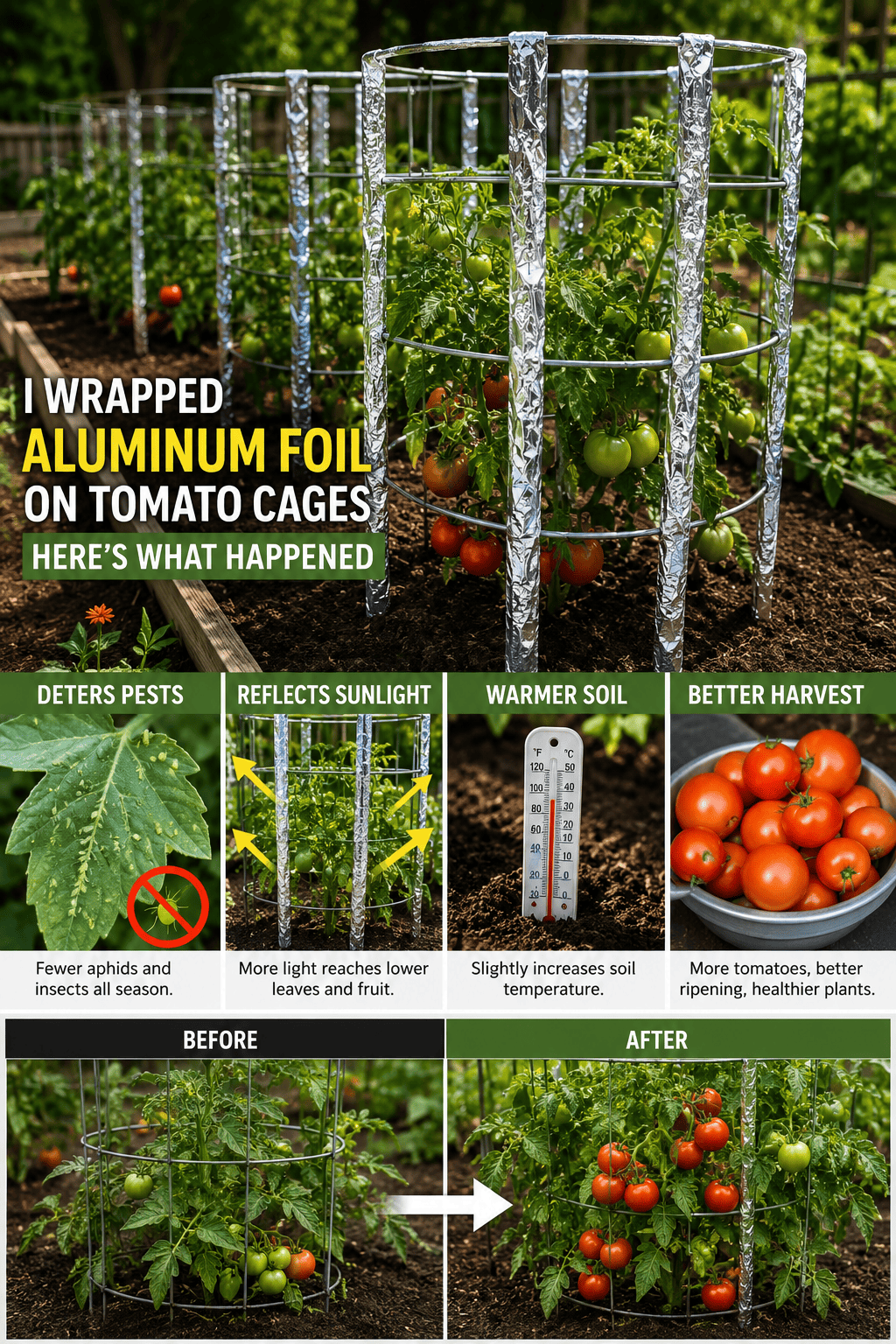
Every gardener is constantly searching for simple ways to protect plants, improve growth, and increase harvests. This season, I decided to experiment with an unusual gardening trick: wrapping my tomato cages in aluminum foil. At first, it sounded a little strange, but after hearing claims about pest control and improved sunlight reflection, I figured it was worth a try.
Tomatoes are one of the most rewarding plants to grow, but they also come with their fair share of challenges. Between aphids, whiteflies, uneven ripening, and unpredictable weather, keeping tomato plants healthy can take a lot of effort. I hoped this inexpensive hack might make a noticeable difference in my garden—and the results were more surprising than I expected.
Why I Tried Aluminum Foil on My Tomato Cages
My main reason for trying aluminum foil was pest control. I had read that the reflective surface could confuse insects such as aphids and whiteflies, making it harder for them to land on the plants. Since I prefer natural gardening methods whenever possible, the idea of reducing pests without chemicals immediately caught my attention.
Another benefit I hoped for was improved light distribution. Tomato plants grow thick and bushy, often shading the lower leaves and fruit clusters. By reflecting sunlight back toward the plant, the foil could potentially help lower branches receive more light and encourage more even growth.
With healthier plants and a bigger harvest in mind, I decided to give the experiment a full-season test.
How I Wrapped the Tomato Cages
The setup process turned out to be simple and inexpensive. I bought a standard roll of aluminum foil and cut long strips to fit the height of my tomato cages, which were around four feet tall.
I carefully wrapped the foil around the vertical sections of each cage, covering them as evenly as possible. To keep everything secure, I fastened the foil using small pieces of garden wire spaced throughout the cage. This prevented the foil from blowing loose on windy days while still allowing the plants enough room to grow naturally.
Within minutes, my tomato bed looked completely different—bright, reflective, and impossible to miss.
The First Changes I Noticed
Almost immediately, the garden appeared brighter thanks to the foil reflecting sunlight throughout the bed. The shiny cages gave the entire area a more illuminated look, especially during the afternoon hours.
After about a week, I noticed the soil around the tomato plants felt slightly warmer than usual. The reflected heat seemed to create a warmer growing environment, which can be helpful for tomato roots and early plant development.
At this point, I was curious to see whether the visual changes would actually translate into healthier plants.
Did the Foil Help Keep Pests Away?
To my surprise, pest activity noticeably decreased. Aphids and whiteflies, which normally appear quickly in my garden, were far less common around the tomato plants. The reflected light likely disrupted their ability to settle comfortably on the leaves.
I also observed fewer squirrels and birds visiting the tomato bed. The flashing reflections may have discouraged some curious critters from getting too close.
The foil didn’t completely eliminate pests, but it reduced them enough that I used fewer pest-control treatments throughout the season. For an organic gardener, that alone felt like a major success.
The Impact on Sunlight and Plant Growth
One of the biggest advantages was the improved sunlight distribution. Lower leaves and fruit clusters received more reflected light instead of remaining hidden in the shade beneath thick upper growth.
As a result, the tomatoes seemed to ripen more evenly across the plant. Some of the lower fruit even matured faster than in previous years, which rarely happens in my garden.
The plants themselves looked stronger overall, with healthier foliage and less mid-season stress. However, during extremely hot days, I had to monitor the plants carefully because the extra reflected heat occasionally made the area around the tomatoes noticeably warmer.
Changes in Soil Moisture and Temperature
The foil also seemed to affect moisture retention. Since the reflective surface reduced direct sunlight exposure on the soil, evaporation slowed down slightly. I found myself watering less often compared to previous summers.
Additionally, the soil temperature remained consistently warmer by a few degrees. Tomatoes thrive in warm soil, so this likely contributed to stronger root development and improved nutrient absorption throughout the season.
For gardeners dealing with cooler climates or fluctuating temperatures, this could be an unexpected advantage.
The Downsides I Didn’t Expect
Not everything about the experiment was perfect. The shiny cages attracted a lot of attention from neighbors, many of whom stopped to ask what I was doing. While the conversations were fun, some people questioned whether using aluminum foil in the garden was environmentally friendly.
I also discovered that strong winds could tear the foil over time, which meant occasional repairs were necessary. A few insects were oddly attracted to the reflective material as well, although they didn’t seem harmful to the plants.
These minor inconveniences weren’t deal-breakers, but they were definitely things I hadn’t considered beforehand.
Comparing This Year’s Harvest
When harvest season arrived, the results spoke for themselves. My tomato plants produced noticeably more fruit than they had in previous years, and the tomatoes looked healthier overall with fewer blemishes and pest-related damage.
The even ripening throughout the plant was especially impressive. Instead of having most of the ripe fruit concentrated near the top, tomatoes developed consistently from top to bottom.
By the end of the season, I estimated my harvest had increased by roughly 20% compared to the year before. Even better, the flavor remained just as rich and delicious as always.
What Other Gardeners Thought
The foil-wrapped cages definitely sparked curiosity among other gardeners. Some thought the idea was brilliant and wanted to try it immediately, while others remained skeptical about the long-term practicality and environmental impact.
Despite the mixed opinions, the experiment became a great conversation starter and led to some interesting gardening discussions and shared ideas.
Would I Do It Again?
After seeing the results firsthand, I would absolutely consider using aluminum foil on tomato cages again. The reduction in pests, improved light distribution, and larger harvest made the experiment worthwhile.
That said, I may look into more eco-friendly reflective materials in the future to reduce waste while still achieving similar benefits.
Sometimes the simplest gardening experiments turn out to be the most effective. This small change taught me that a little creativity in the garden can lead to surprisingly impressive results.
ADVERTISEMENT