
ADVERTISEMENT
ADVERTISEMENT
ADVERTISEMENT
What Does “WC” Mean on Restroom Signs? The Surprisingly Simple History Behind the Letters
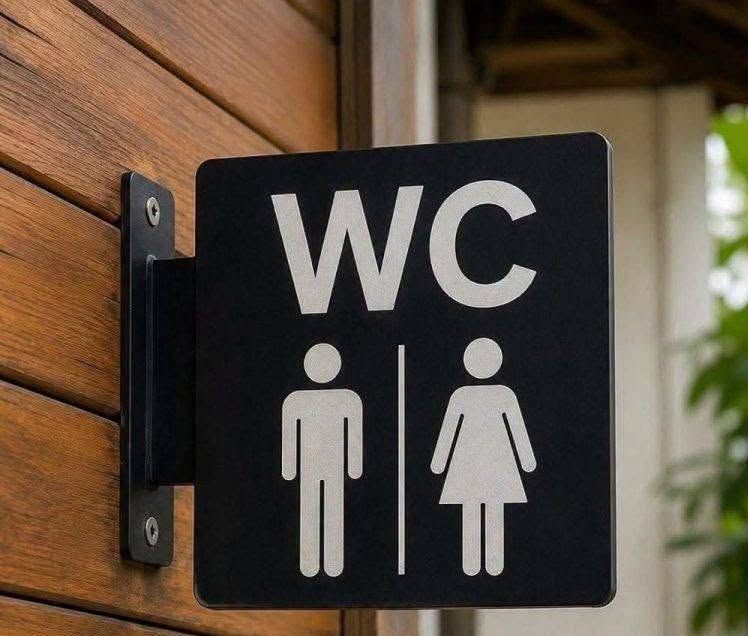
If you’ve ever traveled to another country, you’ve probably noticed “WC” written on restroom signs. While most people understand that the sign points toward a bathroom, many have no idea what those two letters actually mean.
So, what does WC stand for—and why is it still used today?
The answer goes back more than a century and is much simpler than you might expect.
What Does WC Stand For?
WC stands for “Water Closet.”
The term originally referred to a small room containing a toilet that used water to flush away waste. Over time, “water closet” became a common term for a toilet or toilet room, particularly in Britain and other parts of Europe.
Today, you’re more likely to hear words such as bathroom, restroom, toilet, or lavatory, depending on where you live. However, the abbreviation WC has remained on signs, maps, public buildings, hotels, restaurants, and transportation hubs around the world.
What Exactly Is a “Water Closet”?
The phrase may sound strange today, but it made perfect sense when it first became popular.
Before modern indoor plumbing became widespread, toilets were often very different from the flush toilets we know today. Some relied on pits, containers, or other systems for collecting waste.
The development of toilets connected to a water supply and drainage system was a major improvement.
The term “water closet” distinguished this newer type of toilet from older facilities that didn’t use water for flushing.
In simple terms:
Water + closet = a small enclosed room containing a water-flushing toilet.
Why Do We Still See “WC” Today?
One reason is that WC is short, universally recognizable, and language-neutral.
Imagine a hotel with guests from dozens of different countries. A sign saying “Bathroom” may not be understood immediately by everyone, especially if the local language is different.
The simple letters WC can serve as a convenient international abbreviation.
You may see it in places such as:
- Airports
- Train stations
- Hotels
- Restaurants
- Shopping centers
- Museums
- Public buildings
- Tourist attractions
In many European countries, WC remains a particularly common way of identifying toilet facilities.
Is WC the Same as “Toilet”?
In everyday modern use, WC generally refers to a toilet or toilet room, although the historical meaning is more specific.
The term originally described the room or enclosed space containing a flush toilet. Today, however, people often use WC simply as a sign indicating where the toilets are located.
So when you see:
WC 🚻
you can safely understand it as:
“The toilets are here.”
Why Don’t We Usually Say “Water Closet” Anymore?
Language changes as technology and society change.
“Water closet” was once a practical description of a relatively new household feature. As indoor plumbing became normal, people no longer needed such a specific term to distinguish a flush toilet from other types.
Different English-speaking regions eventually developed their own preferred terms.
For example:
- Bathroom is common in the United States and Canada.
- Restroom is especially common in American public places.
- Toilet is widely used in Britain and many other countries.
- Lavatory is a more formal term and is also associated with transportation.
- WC remains common internationally, especially on signs.
WC vs. Restroom vs. Bathroom
Although these words are often used interchangeably, they can have slightly different meanings depending on the country.
Bathroom:
In North America, this is one of the most common everyday terms, even when there isn’t actually a bathtub or shower.
Restroom:
This is frequently used for public facilities in the United States.
Toilet:
Common in Britain, Ireland, Australia, New Zealand, and many other places.
Lavatory:
A formal term that you may encounter on airplanes, trains, or in older signage.
WC:
A concise abbreviation derived from the historical term Water Closet.
Why the Letters Are Usually Written as “WC”
The abbreviation is particularly useful because it takes up very little space.
A restroom sign might need to be understood quickly from a distance. Two simple letters are much easier to recognize than a longer phrase.
That’s why WC signs can be found in places where space is limited, such as corridors, doors, maps, and directional signs.
And because the abbreviation has become internationally familiar, it can communicate the purpose of a room without requiring a long explanation.
The Interesting Part: “Closet” Didn’t Always Mean a Wardrobe
One reason the expression sounds unusual today is the word “closet.”
Modern English speakers often associate “closet” with a small storage space for clothes.
Historically, however, closet could refer to a small private room or enclosed space. It wasn’t necessarily a place for storing clothing.
That older meaning makes the phrase “water closet” much easier to understand.
It essentially described a small private room associated with a water-flushing toilet.
Where You’re Most Likely to See WC
If you’re traveling internationally, don’t be surprised when you see WC instead of “restroom” or “bathroom.”
You’ll frequently encounter the abbreviation in European travel environments, including hotels, restaurants, train stations, airports, and public facilities.
In some places, you might see both:
WC / Toilets
or
WC / Restrooms
This makes the meaning immediately clear to visitors.
The Next Time You See “WC”…
Now you’ll know that those two letters aren’t random.
WC = Water Closet, a historical term for a toilet room equipped with a water-flushing toilet.
The phrase may sound old-fashioned today, but the abbreviation has survived because it’s short, recognizable, and useful across languages and cultures.
So the next time you’re traveling and spot a simple “WC” sign, you’ll know exactly what it means—and you’ll also know the surprisingly interesting history behind those two little letters. 🚻
Quick Fact
WC: Water Closet
Meaning today: Toilet or restroom
Why it remains popular: Short, recognizable, and widely understood internationally.
ADVERTISEMENT