
ADVERTISEMENT
ADVERTISEMENT
ADVERTISEMENT
hy Does White Stuff Come Out of Chicken While Cooking?
Have you ever cooked chicken and noticed a strange white substance or foam appearing on the surface? It can look a little unusual, especially when you’re baking, grilling, or pan-searing chicken.
The good news is that in most cases, there’s nothing wrong with your chicken. That white substance is usually a combination of water and proteins naturally found in the meat.
Here’s exactly what it is, why it happens, and when you should actually be concerned.
What Is the White Stuff on Chicken?
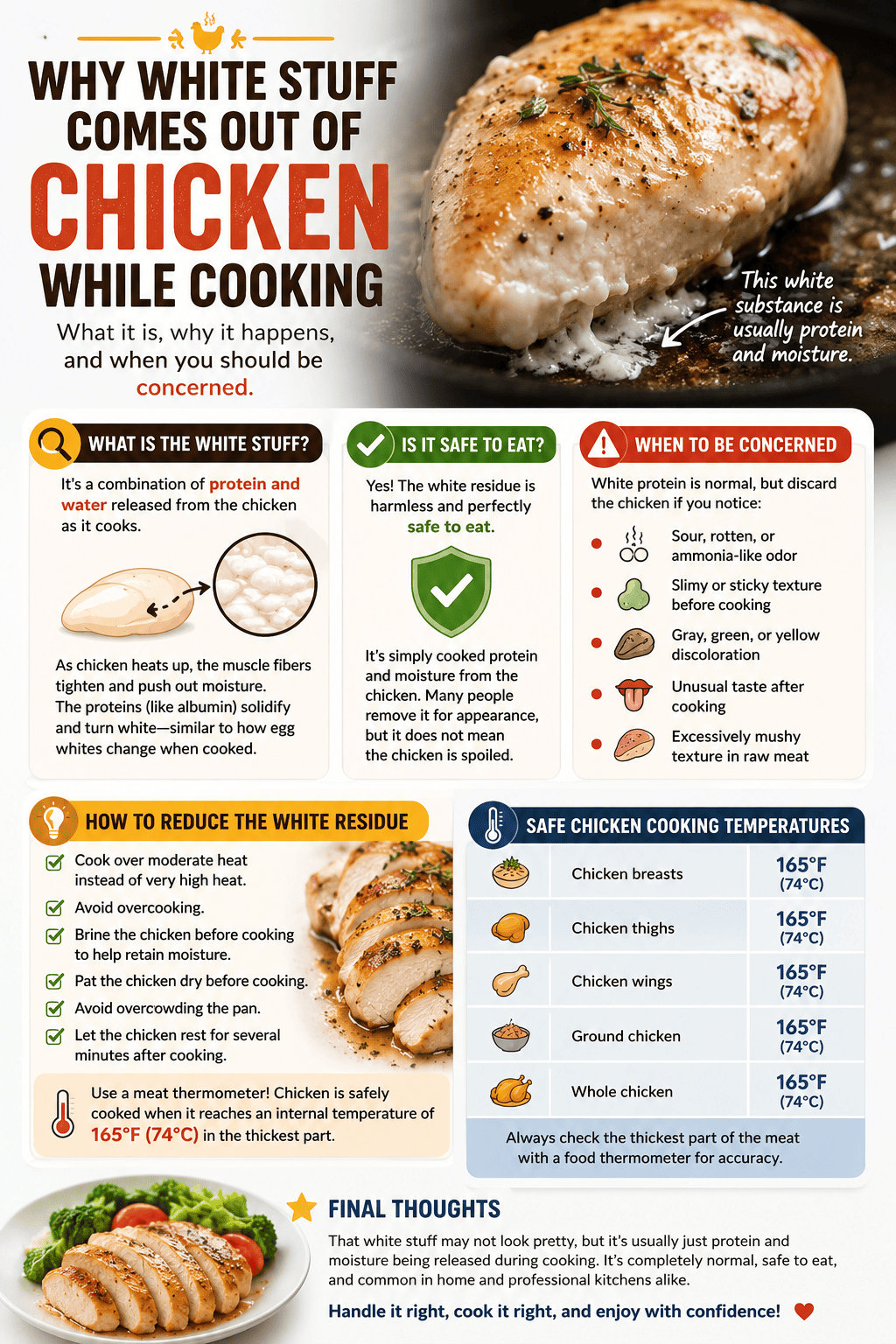
The white substance you see on cooked chicken is primarily protein and water released from the meat during cooking.
As chicken heats up, its muscle fibers contract and squeeze out some of the moisture inside the meat. That moisture contains dissolved proteins, including water-soluble proteins such as albumin.
When these proteins are exposed to heat, they coagulate and become opaque white—similar to what happens when an egg white changes from clear to white as it cooks.
You may notice this white residue when:
- Baking chicken
- Roasting chicken
- Grilling chicken
- Pan-searing chicken
- Cooking chicken at higher temperatures
It can be especially noticeable on chicken breasts because they are relatively lean and can lose moisture quickly during cooking.
Is the White Stuff Safe to Eat?
Yes. The white protein residue itself is generally harmless.
It is simply cooked protein and moisture that have moved to the surface of the chicken. It does not automatically mean that the chicken is spoiled or unsafe.
Some people remove it because they prefer the appearance of the chicken without the white residue, but there is no need to scrape it off for safety reasons.
The important thing is that the chicken is handled properly and cooked to a safe internal temperature.
When Should You Be Concerned?
While white protein on cooked chicken is normal, changes in raw chicken can sometimes indicate spoilage.
Before cooking, discard chicken if it has signs such as:
- A strong sour, rotten, or ammonia-like odor
- A slimy or unusually sticky surface
- Significant gray, green, or other unusual discoloration
- An unusually mushy texture
- Packaging that is leaking or damaged in a way that raises food-safety concerns
Remember that color alone isn’t always a reliable indicator of freshness. When chicken looks or smells questionable, it’s safer to throw it away rather than take a chance.
Why Does More White Stuff Sometimes Appear?
The amount of white protein that appears can vary depending on the chicken and how it is cooked.
You may notice more residue when:
- The chicken is cooked at very high heat.
- The meat loses a lot of moisture.
- The chicken is cooked for too long.
- The surface of the chicken is particularly wet.
- The chicken is crowded in a pan and releases moisture during cooking.
This doesn’t necessarily mean the chicken is bad. It is primarily a result of proteins and moisture moving out of the muscle as it heats.
How Can You Reduce the White Residue?
If you don’t like the appearance of the white protein on your chicken, you can try a few cooking techniques:
1. Pat the Chicken Dry
Before cooking, gently pat the surface of the chicken dry with paper towels. A drier surface can help improve browning.
2. Avoid Overcooking
Cooking chicken longer than necessary can cause additional moisture loss. Use a food thermometer rather than relying only on cooking time.
3. Avoid Excessively High Heat
Very high heat can cause the exterior to cook rapidly while moisture is pushed toward the surface. Use an appropriate cooking temperature for your recipe.
4. Don’t Overcrowd the Pan
Leave enough space between chicken pieces so heat can circulate and moisture can evaporate instead of causing the chicken to steam.
5. Let the Chicken Rest
After cooking, allow the chicken to rest for a few minutes before slicing. This gives the juices time to redistribute throughout the meat.
6. Use a Food Thermometer
This is one of the easiest ways to know when chicken is safely cooked.
According to U.S. food-safety guidance, chicken and other poultry should reach an internal temperature of 165°F (74°C). Measure the temperature in the thickest part of the meat, avoiding contact with bone.
Safe Internal Temperature for Chicken
| Type of Chicken | Minimum Internal Temperature |
|---|---|
| Chicken breasts | 165°F (74°C) |
| Chicken thighs | 165°F (74°C) |
| Chicken wings | 165°F (74°C) |
| Ground chicken | 165°F (74°C) |
| Whole chicken | 165°F (74°C) |
A food thermometer is the most reliable way to check whether chicken has reached a safe internal temperature.
Should You Remove the White Stuff?
You don’t need to remove it.
The white substance is cooked protein and is safe to eat when the chicken has been properly cooked and handled. If you don’t like how it looks, you can simply wipe or scrape it away after cooking.
For a more attractive finished dish, focus instead on drying the chicken before cooking and avoiding unnecessary overcooking.
Final Thoughts
That white stuff that comes out of chicken while cooking can look strange, but it’s usually nothing to worry about. It’s primarily protein and moisture that are released from the chicken as the muscle fibers heat and contract.
It doesn’t mean your chicken is spoiled, and the residue itself is safe to eat.
The most important things are proper storage, safe food handling, and cooking chicken to 165°F (74°C). Once you know what that white substance is, you can stop worrying about it and enjoy your perfectly cooked chicken with confidence!
ADVERTISEMENT