
ADVERTISEMENT
ADVERTISEMENT
ADVERTISEMENT
Found a Pile of Winged Bugs or Loose Wings by Your Front Door? It Could Be Termites
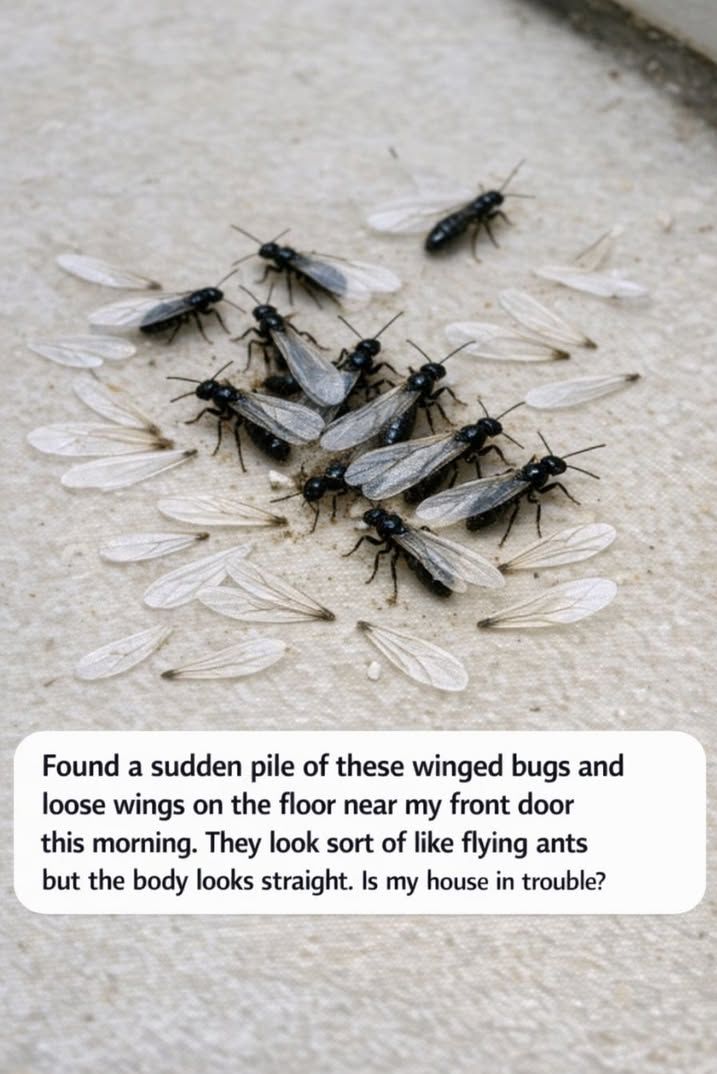
Discovering a sudden pile of winged insects or scattered wings near your front door can be unsettling. Many homeowners assume they are flying ants, but in many cases, they may actually be termite swarmers—the reproductive members of a termite colony searching for a place to start a new nest.
Unlike worker termites, which stay hidden inside walls and wood, swarmers are one of the few visible warning signs of termite activity. Knowing how to identify them quickly can help you prevent serious damage to your home.
Are They Flying Ants or Termite Swarmers?
Flying ants and termite swarmers are often confused, but there are clear differences.
Termite Swarmers Have:
- Straight antennae
- Thick, straight waist
- Two pairs of wings equal in size
- Soft-looking bodies
- Wings that easily fall off
Flying Ants Have:
- Bent antennae
- Narrow, pinched waist
- Front wings larger than back wings
- More defined body segments
If you see piles of loose wings near doors or windows, termites are a strong possibility.
Why Termites Gather Near Doors, Windows, and Lights
Termite swarmers are attracted to light. That is why they often appear around:
- Front doors
- Porch lights
- Windows
- Indoor lamps
- Garage entrances
They usually emerge during warm, humid weather, especially after rain.
When swarmers gather around entry points, it often means a colony is nearby—or already inside the structure.
What a Pile of Wings Really Means
After termites mate, they shed their wings and search for a nesting location.
So if you find:
- Dozens of loose wings
- Dead winged insects
- Bugs crawling near light sources
…it may indicate active termite swarming in or around your home.
Even if the colony is not yet inside your walls, it is close enough to be a concern.
Signs You May Already Have a Hidden Infestation
Besides swarmers, look for these warning signs:
- Mud tubes along foundation walls
- Hollow-sounding wood
- Soft or blistering wood surfaces
- Doors or windows suddenly sticking
- Tiny pellets or insect debris
- Cracked paint that looks like water damage
These signs suggest termites may already be feeding on wood inside your home.
Quick DIY Checks You Can Do Today
Inspect the area around your front door and nearby rooms.
Check For:
- Mud tunnels near the foundation
- Cracks around door frames
- Damp wood or trim
- Loose baseboards
- Wing piles in corners or window sills
Also reduce moisture and seal openings where insects can enter.
When You Can Wait — and When You Shouldn’t
You Can Monitor If:
- You confirmed they are flying ants
- Only one or two insects appeared
- No damage signs are visible
Act Immediately If:
- Wings are piled up
- Many swarmers appeared suddenly
- You find mud tubes
- Wood sounds hollow
- Damage is visible
Delaying treatment can allow termites to spread further.
Professional Inspection and Treatment Options
A licensed pest control expert can inspect hidden areas and determine whether termites are active.
Common treatments include:
- Liquid soil barriers
- Bait stations
- Localized wood treatment
- Moisture correction
- Ongoing monitoring plans
Professionals can also identify the termite species and estimate damage risk.
How Much Damage Can Termites Cause?
Termites can silently weaken:
- Floor joists
- Wall studs
- Door frames
- Cabinets
- Roof supports
- Wooden decks
Because they eat wood from the inside out, damage may go unnoticed for months or even years.
How to Prevent Future Swarms
Protect your home with these steps:
- Fix leaks quickly
- Keep gutters draining away from foundation
- Remove wood touching soil
- Store firewood away from house
- Seal cracks and gaps
- Reduce outdoor lighting near doors during swarm season
- Schedule yearly inspections
If You Rent or Share Property
If you rent, notify your landlord immediately and document what you found with photos.
If neighbors are affected too, multiple nearby homes may need inspection since termite colonies can spread across properties.
Also review insurance policies—many standard plans do not cover termite damage.
Final Thoughts
A pile of wings near your front door might seem minor, but it can be an early warning sign of termites nearby. Acting quickly can save thousands in repair costs and prevent structural damage.
When in doubt, get a professional inspection. With termites, early action matters most.
ADVERTISEMENT