
ADVERTISEMENT
ADVERTISEMENT
ADVERTISEMENT
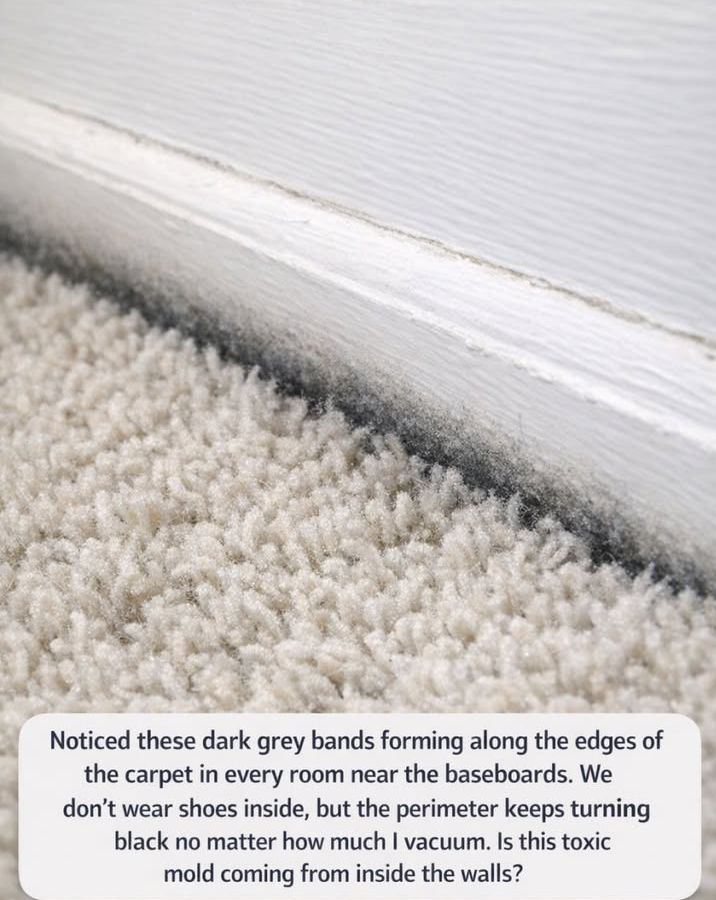
Have you noticed dark grey or black lines forming along the edges of your carpet near baseboards, walls, or doorways? Even in a clean home with a no-shoes rule, these marks can keep showing up and become harder to ignore over time.
The good news is that these stains are usually not caused by poor housekeeping. In many cases, they result from airflow, trapped dust, and fine particles collecting in specific areas of the carpet. However, in some situations, moisture or mold may also be involved.
Here’s what causes these dark carpet edge stains, how to remove them, and how to keep them from coming back.
1. What Those Dark Carpet Lines Usually Are
The most common cause of dark lines along carpet edges is something called filtration soiling. This happens when air moves through tiny gaps around walls, baseboards, doors, or floor seams.
As air passes through the carpet fibers, it carries microscopic dust, dirt, soot, and debris. The carpet acts like a filter, trapping those particles. Over time, buildup creates dark grey or black lines.
These stains often appear:
- Along baseboards
- Under closed doors
- Near stair edges
- Around floor vents
- Along walls behind furniture
2. Why It Happens Near Baseboards and Doorways
Air naturally moves through pressure gaps in your home. Heating and cooling systems, opening doors, and daily airflow changes can push air through cracks around walls or thresholds.
When that air squeezes through the carpet edge, tiny particles get left behind in the fibers. Since this happens repeatedly, the edges darken faster than the rest of the carpet.
Homes with central heating or air conditioning often experience this more frequently.
3. Common Sources of the Dirt and Fine Particles
The dark residue may come from several everyday sources, including:
- Household dust
- Pet dander
- Smoke from candles or fireplaces
- Cooking grease or fumes
- Outdoor pollution
- Soot from traffic or urban air
- Pollen
- Tiny fabric fibers
Even clean homes can collect these particles because many are too small to see.
4. Could It Be Mold Instead?
Sometimes dark carpet edges may be related to moisture problems rather than dust buildup.
Signs it may be mold include:
- A musty smell
- Damp carpet or padding
- Water stains nearby
- Peeling paint or warped baseboards
- Irregular blotchy spots instead of straight lines
- Allergy symptoms worsening indoors
If moisture is present, mold can grow beneath the carpet or inside walls.
5. Health Concerns to Consider
Filtration soiling itself is usually made of dust and particles, but it can still affect indoor air quality.
Sensitive people may notice:
- Sneezing
- Allergy flare-ups
- Coughing
- Asthma irritation
Mold exposure can create stronger reactions and should be handled quickly.
6. Why Vacuuming Often Doesn’t Solve It
Regular vacuuming helps surface dirt, but these dark lines are often deeply embedded into the carpet fibers.
Standard vacuums may not fully remove:
- Fine soot particles
- Sticky residue
- Dirt packed into edges
- Contaminants trapped near seams
Without fixing the airflow issue, stains often return after cleaning.
7. Best Professional Cleaning Options
Professional carpet cleaners can often reduce or remove dark edge stains using:
- Hot water extraction
- Steam cleaning
- Edge detailing tools
- Specialized stain treatments
- Deep fiber agitation methods
Older stains may lighten instead of disappearing completely.
8. DIY Methods That Can Help
If the staining is mild, try these steps:
- Vacuum edges slowly using a crevice tool.
- Sprinkle baking soda and let sit 15 minutes.
- Use a carpet-safe cleaner on the area.
- Gently scrub with a soft brush.
- Blot with a clean towel.
- Let dry completely.
Always test products on a hidden area first.
9. How to Prevent Dark Carpet Lines
To stop the stains from returning:
- Seal gaps along baseboards with caulk
- Add weatherstripping under doors
- Replace HVAC filters regularly
- Use high-quality air filters
- Vacuum edges often
- Improve room ventilation
- Reduce candle or smoke use indoors
- Clean air vents regularly
These steps reduce particle movement and buildup.
10. When to Call a Mold or Air Quality Specialist
Call a professional if you notice:
- Persistent musty odors
- Repeated stains after cleaning
- Wet carpet or leaks
- Respiratory symptoms at home
- Visible mold nearby
- Unknown black growth under carpet edges
They can inspect moisture issues and test indoor air quality.
11. Keeping Carpet Edges Clean Long-Term
The best solution combines cleaning with prevention. Deep clean the stains, improve airflow control, and reduce dust sources in the home.
With regular maintenance, your carpet edges can stay clean and your indoor air can feel fresher too.
Final Thoughts
Dark grey carpet lines may look alarming, but they’re usually caused by filtration soiling—not dirt from shoes or neglect. Understanding how airflow carries particles into carpet fibers helps explain why these stains form in specific spots.
Once you treat the stains and fix the underlying cause, you can keep them from returning and protect both your carpet and your home’s air quality.
ADVERTISEMENT