
ADVERTISEMENT
ADVERTISEMENT
ADVERTISEMENT
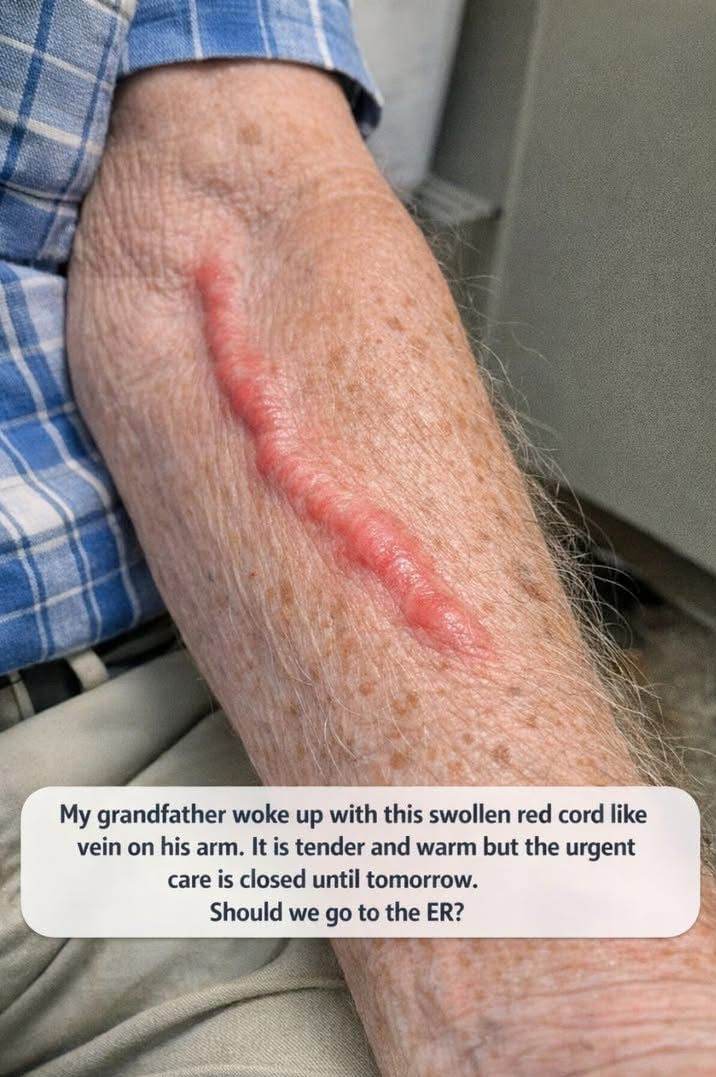
Waking up to find a swollen, red, cord-like line running along the arm can be alarming—especially when it feels warm and tender to the touch. Many people wonder whether it can wait until urgent care opens or if it needs emergency attention right away.
A painful red streak or raised vein on the arm may be caused by inflammation of a vein, infection, or a blood clot near the surface. While some cases are less urgent, others need prompt medical care, especially in older adults or anyone with additional symptoms.
Here’s what a swollen red cord-like vein could mean, when to seek emergency help, and what to do next.
1. What a Red Cord-Like Line on the Arm Could Be
A raised, tender, rope-like line under the skin often suggests an inflamed vein. This can happen when a superficial vein close to the skin becomes irritated or develops a clot.
Possible causes include:
- Superficial thrombophlebitis (inflamed vein with clot)
- Cellulitis (skin infection)
- Lymphangitis (infection spreading through lymph vessels)
- Vein irritation after injury or IV placement
- Insect bite reaction
- Trauma to the arm
Because the area appears red, swollen, and warm, medical evaluation is important.
2. Could It Be a Blood Clot?
Yes, a cord-like painful vein may be caused by a clot in a superficial vein. While superficial clots are often less dangerous than deep vein clots, they still require medical attention.
Sometimes clotting can extend deeper or signal an increased risk of other circulation problems.
Symptoms may include:
- Firm tender line under the skin
- Redness along the vein
- Warmth
- Swelling
- Pain when touched or moving the arm
3. Could It Be an Infection?
Yes. If redness developed quickly or continues spreading, infection is another concern.
Signs that suggest infection:
- Increasing warmth
- Fever
- Chills
- Pus or drainage
- Rapidly spreading redness
- Feeling weak or unwell
Infections in older adults can worsen quickly and should not be ignored.
4. Should You Go to the ER Tonight?
Because the person is elderly and the area is warm, tender, swollen, and visibly inflamed, it is safest to seek same-day medical care now, especially if urgent care is closed.
The emergency room is especially appropriate if any of these are present:
- Fever
- Shortness of breath
- Chest pain
- Fast heart rate
- Confusion
- Severe pain
- Rapidly spreading redness
- Significant swelling of the whole arm
- History of blood clots
- Cancer or recent surgery
- Taking blood thinners
5. Why Older Adults Should Be Evaluated Promptly
Older adults can have:
- Higher clotting risk
- Fragile skin and circulation changes
- Faster progression of infection
- More subtle symptoms despite serious illness
Prompt evaluation helps prevent complications.
6. What the ER or Doctor May Do
A clinician may:
- Examine the arm
- Check vital signs
- Order an ultrasound to look for clotting
- Evaluate for cellulitis or infection
- Prescribe antibiotics if needed
- Recommend anti-inflammatory treatment
- Advise compression or elevation depending on cause
7. What to Do While Waiting
Until he is seen:
- Keep the arm elevated
- Avoid massaging the area
- Avoid tight sleeves or pressure
- Encourage hydration unless medically restricted
- Monitor for worsening redness or swelling
Do not try to drain, puncture, or aggressively rub the area.
8. When It Might Be Less Urgent
If there is only mild tenderness, no fever, no spreading redness, and no swelling beyond the line, it may still be less urgent—but it should still be assessed soon.
Because the exact cause cannot be confirmed from appearance alone, in-person evaluation is best.
Final Thoughts
A swollen red cord-like vein that is warm and tender can represent an inflamed vein, clot, or infection. Since this involves an older adult and symptoms appeared suddenly, it’s wise to seek medical care tonight rather than waiting until tomorrow.
If symptoms worsen or he develops chest pain, shortness of breath, fever, or confusion, go to the ER immediately.
ADVERTISEMENT