
ADVERTISEMENT
ADVERTISEMENT
ADVERTISEMENT
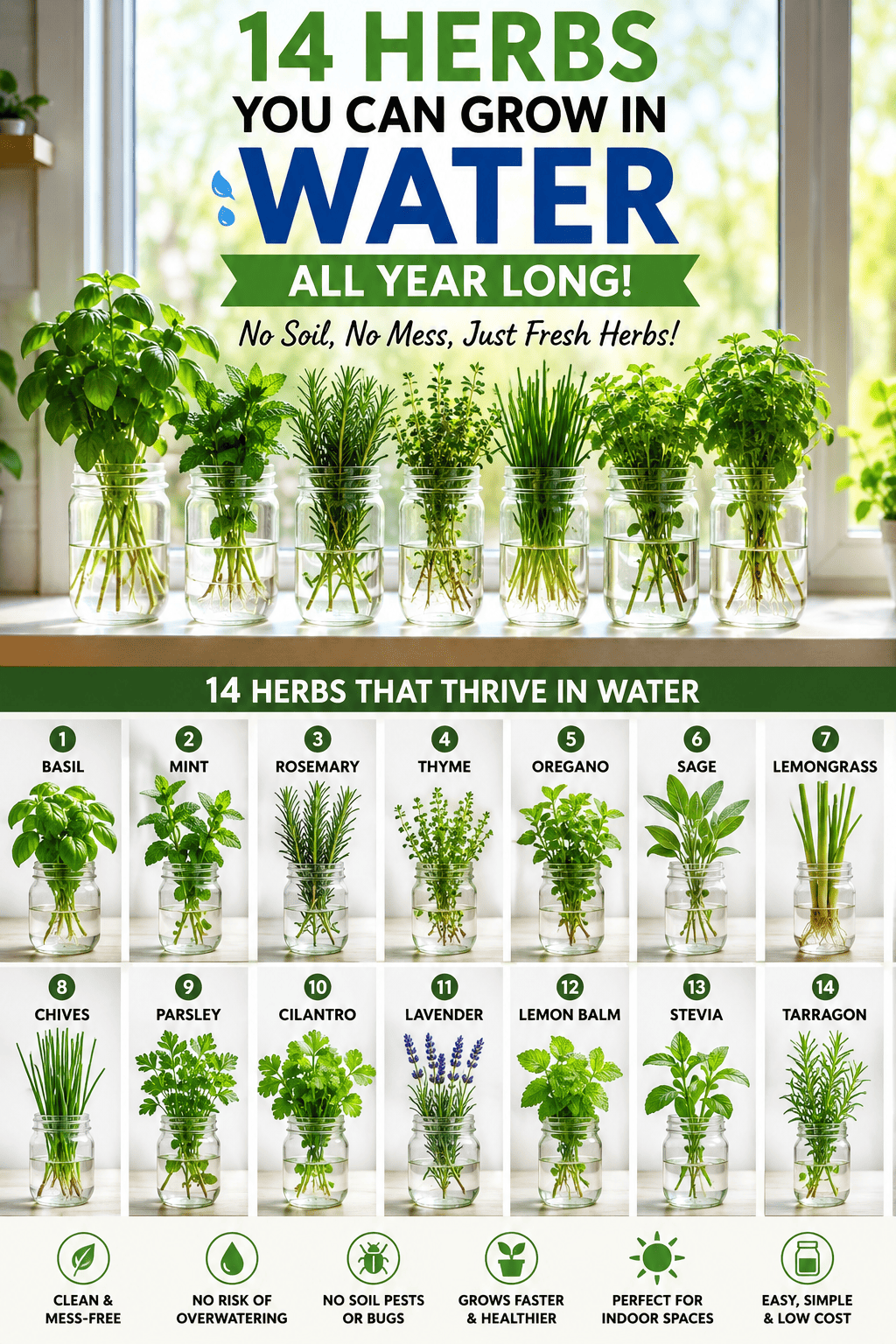
Most people believe herbs can only thrive in soil, but many popular culinary and medicinal herbs actually grow beautifully in nothing more than water. In fact, some herbs grow faster, greener, and healthier this way than they do in traditional pots.
This simple growing method — often called water gardening or hydroponic herb growing — makes it easy to enjoy fresh herbs year-round without dirt, messy containers, or expensive equipment.
All you need is a clean glass jar, fresh water, a sunny windowsill, and a few healthy herb cuttings.
For apartment dwellers, busy households, beginner gardeners, or anyone tired of struggling with houseplants, growing herbs in water is one of the easiest ways to keep fresh greenery indoors all year long.
Why Herbs Grow So Well in Water
Many herbs naturally develop roots from their stems when placed in water. These roots, known as adventitious roots, allow the plant to absorb water and nutrients directly without needing soil.
Water-grown herbs offer several advantages:
- Constant hydration
- No overwatering problems
- Fewer pests and diseases
- Faster root growth
- Cleaner indoor gardening
- Very little maintenance
Because the roots have direct access to moisture, many herbs stay lush, tender, and productive for months indoors.
How to Successfully Grow Herbs in Water
Getting started is simple and requires very little effort.
Begin by taking a healthy cutting from an existing herb plant. Each cutting should measure about 4 to 6 inches long and be snipped just below a leaf node.
Remove the lower leaves so they won’t sit underwater.
Place the stem in a clean glass jar filled with room-temperature water. Only the stem should be submerged — never the leaves.
Set the container in bright, indirect sunlight, such as a kitchen windowsill.
To keep the herbs healthy:
- Change the water every 3 to 5 days
- Rinse the jar regularly
- Remove yellow or damaged leaves
- Keep the herbs in bright light
Once roots appear, the herbs can continue growing in water indefinitely or be transferred to soil later.
1. Basil
Basil is one of the easiest herbs to grow in water. It develops roots quickly and produces fresh growth continuously when harvested often.
Water-grown basil tends to stay soft, fragrant, and vibrant green.
To keep it productive, pinch off flower buds as they appear.
2. Mint
Mint thrives in water and roots incredibly fast. It grows vigorously indoors and can continue producing fresh leaves for months.
Its refreshing flavor makes it perfect for teas, desserts, smoothies, and garnishes.
Growing mint in water also helps prevent it from spreading aggressively like it does in garden soil.
3. Rosemary
Rosemary takes longer to root than softer herbs, but once established, it grows very well in water.
This fragrant herb loves bright light and fresh, clean water. Regular water changes help prevent stem rot.
With patience, rosemary can provide aromatic sprigs year-round.
4. Thyme
Thyme adapts surprisingly well to water growing.
Although rooting can take time, thyme becomes hardy and low-maintenance once established. It remains compact while producing flavorful, aromatic leaves.
Bright light helps thyme thrive indoors.
5. Oregano
Oregano roots quickly in water and produces dense, leafy growth indoors.
Frequent trimming encourages bushier growth and keeps the plant productive.
Its strong flavor makes it ideal for cooking year-round.
6. Sage
Sage is another woody herb that can thrive in water with proper care.
It prefers bright light and cooler indoor temperatures. While it roots slowly, established plants can remain healthy for long periods.
Fresh sage leaves are always useful for cooking and herbal teas.
7. Lemongrass
Lemongrass is one of the easiest herbs to regrow in water.
Simply place the base of a store-bought stalk into water, and roots usually appear within days.
This tropical herb enjoys warmth and bright sunlight and adds fresh citrus flavor to soups, teas, and dishes.
8. Chives
Chives grow exceptionally well in water and regenerate quickly after trimming.
They need bright indirect light and regular harvesting to encourage new shoots.
Fresh chives are perfect for salads, eggs, soups, and baked potatoes.
9. Parsley
Parsley can grow successfully in water when given consistent care.
It usually develops roots within one to two weeks and stays tender and vibrant indoors.
Frequent water changes help parsley remain healthy and productive.
10. Cilantro
Cilantro grows surprisingly well from cuttings placed in water.
It roots quickly and produces fresh leaves fast, especially in cooler indoor conditions.
Regular harvesting helps delay flowering and extends leaf production.
11. Lavender
Lavender can survive long-term in water, although it roots more slowly than softer herbs.
This fragrant herb prefers bright light and clean water. Once established, it produces aromatic foliage and occasional blooms indoors.
12. Lemon Balm
Lemon balm thrives in water and grows rapidly indoors.
Its fresh citrus scent makes it a favorite for teas and calming indoor spaces.
Regular trimming keeps the plant full and healthy.
13. Stevia
Stevia grows extremely well in water and produces naturally sweet leaves throughout the year.
It prefers warmth and plenty of light and stays compact when harvested often.
Fresh stevia leaves can be used as a natural sweetener.
14. Tarragon
Tarragon adapts nicely to water growing and produces flavorful leaves steadily indoors.
Bright indirect light and regular water changes help it stay healthy and bushy.
This herb is especially popular for sauces, dressings, and French cooking.
Why Water-Grown Herbs Are Perfect for Indoor Gardening
Growing herbs in water eliminates many of the common problems gardeners face.
Without soil, there’s:
- No messy potting mix
- No fungus gnats
- No accidental overwatering
- No muddy spills
- Fewer plant diseases
Indoor water-grown herbs are also protected from harsh weather, frost, heat waves, and outdoor pests.
That means you can enjoy fresh herbs even during winter.
How Long Can Herbs Live in Water?
Many herbs can survive in water for months or even years with proper care.
Soft-stem herbs like basil, mint, oregano, and lemon balm tend to grow the longest and fastest.
Woody herbs such as rosemary, thyme, sage, and lavender grow more slowly but can still remain healthy for extended periods.
Refreshing cuttings every few months helps keep plants vigorous and productive.
Common Mistakes to Avoid
Most problems with water-grown herbs are easy to fix.
Avoid these common mistakes:
- Letting water become stagnant
- Forgetting regular water changes
- Allowing leaves to sit underwater
- Using dirty containers
- Keeping herbs in low light
- Ignoring algae buildup
With proper care, water gardening becomes one of the simplest ways to grow herbs indoors.
Final Thoughts
Growing herbs in water is a clean, affordable, and beginner-friendly way to enjoy fresh greenery all year long. Whether you live in a small apartment or simply want low-maintenance indoor plants, these herbs can thrive with nothing more than water, sunlight, and occasional care.
With just a few jars on a sunny windowsill, you can have a constant supply of fresh herbs ready for cooking, teas, and natural home fragrance every season of the year.
ADVERTISEMENT