
ADVERTISEMENT
ADVERTISEMENT
ADVERTISEMENT
Imagine relaxing at home with a warm drink when suddenly a small brown bug with scary-looking pincers on its tail darts out from under the rug. Many people instantly feel uneasy when they see one of these insects. This bug is called an earwig, and while its appearance can be intimidating, it is usually far less dangerous than it looks.
Earwigs are common insects that sometimes wander indoors by accident. Their unusual shape often causes fear, but learning more about them can quickly ease concerns. Here’s what earwigs really are, why they look so threatening, and whether they pose any risk to people or pets.
1. What Is an Earwig?
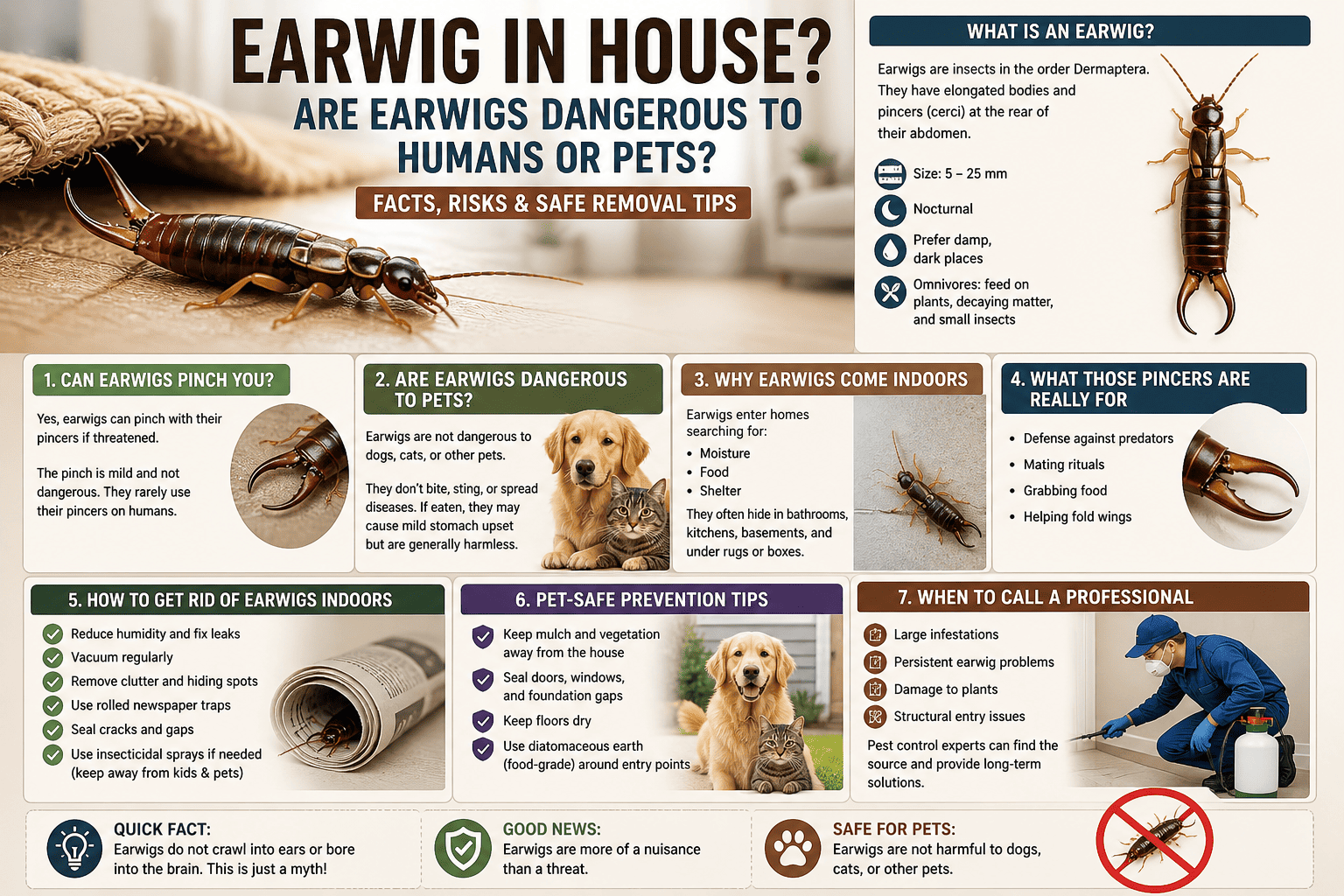
Earwigs belong to a group of insects known as Dermaptera. They have long, narrow bodies and a pair of pincers, called cerci, at the end of the abdomen. Depending on the species, they are usually between 5 and 25 millimeters long and are commonly brown, dark red, or black.
These insects prefer dark, damp places. During the day, they hide under rocks, mulch, flowerpots, furniture, or rugs. They are mostly active at night and move quickly when disturbed.
2. Why They Look So Scary
The main reason earwigs frighten people is their rear pincers. These forceps-like appendages make them look aggressive or dangerous. In reality, earwigs are shy insects that would rather hide than attack.
Their fast movement and unusual body shape can also make them seem threatening, but they are mainly searching for moisture, food, and shelter.
3. Can Earwigs Pinch You?
Yes, an earwig can pinch if it feels trapped or threatened. However, the pinch is usually mild and harmless. Their pincers are not strong enough to seriously injure human skin.
Most earwigs avoid confrontation and will try to run away instead of using their pincers.
4. Are Earwigs Dangerous to Pets?
Earwigs are not considered dangerous to dogs, cats, or other household pets. They do not sting, inject venom, or spread diseases to animals.
If a curious pet eats one, it may cause slight stomach irritation, but serious problems are very unlikely.
5. Do Earwigs Bite or Spread Disease?
Earwigs do not bite in the traditional sense, and they do not sting. They are also not known to spread diseases to humans or pets.
Although they can be annoying to find indoors, they are more of a nuisance than a health concern.
6. What Are the Pincers For?
Those pincers actually serve several useful purposes:
- Defending themselves from predators
- Helping during mating rituals
- Grabbing food
- Assisting with wing folding in species that can fly
So while the pincers look dangerous, they are mostly tools for survival.
7. How to Identify an Earwig
You can recognize an earwig by these features:
- Long, narrow body
- Brown or dark coloring
- Two visible pincers on the rear end
- Long antennae
- Quick movement when disturbed
They are sometimes confused with silverfish, but silverfish do not have pincers.
8. Why Earwigs Come Indoors
Earwigs usually enter homes looking for moisture and shelter. They are often found in:
- Bathrooms
- Basements
- Kitchens
- Laundry rooms
- Under rugs or boxes
They may crawl inside through cracks, gaps, doors, or windows.
9. How to Get Rid of Earwigs Indoors
If earwigs show up in your home, try these simple steps:
- Reduce humidity with fans or a dehumidifier
- Repair leaking pipes or faucets
- Vacuum regularly, especially hidden areas
- Remove clutter where they can hide
- Use rolled newspaper traps overnight
- Seal cracks around doors and windows
These methods often solve the problem without chemicals.
10. Pet-Safe Prevention Tips
To keep earwigs away while protecting pets:
- Keep mulch and wet leaves away from the house
- Trim plants touching walls
- Seal openings around the foundation
- Keep floors dry
- Use pet-safe barriers like food-grade diatomaceous earth carefully in cracks and gaps
Always keep any pest-control products out of reach of animals.
11. When to Call a Professional
Most earwig problems can be handled at home. But if you notice large numbers of them or repeated infestations, a pest professional may help identify the cause and treat the issue safely.
They can also check for moisture problems or structural gaps allowing insects inside.
Final Thoughts
Earwigs may look frightening, but they are usually harmless insects simply searching for damp, dark shelter. They do not pose serious risks to people or pets, and they rarely use their pincers. With a few simple cleaning and prevention steps, you can keep these odd-looking visitors outside where they belong.
ADVERTISEMENT