
ADVERTISEMENT
ADVERTISEMENT
ADVERTISEMENT
I Closed My Crisper Drawer Vents and Added Paper Towels for 2 Weeks—Here’s What Happened
During a sticky July heat wave, I decided to try a simple refrigerator experiment.
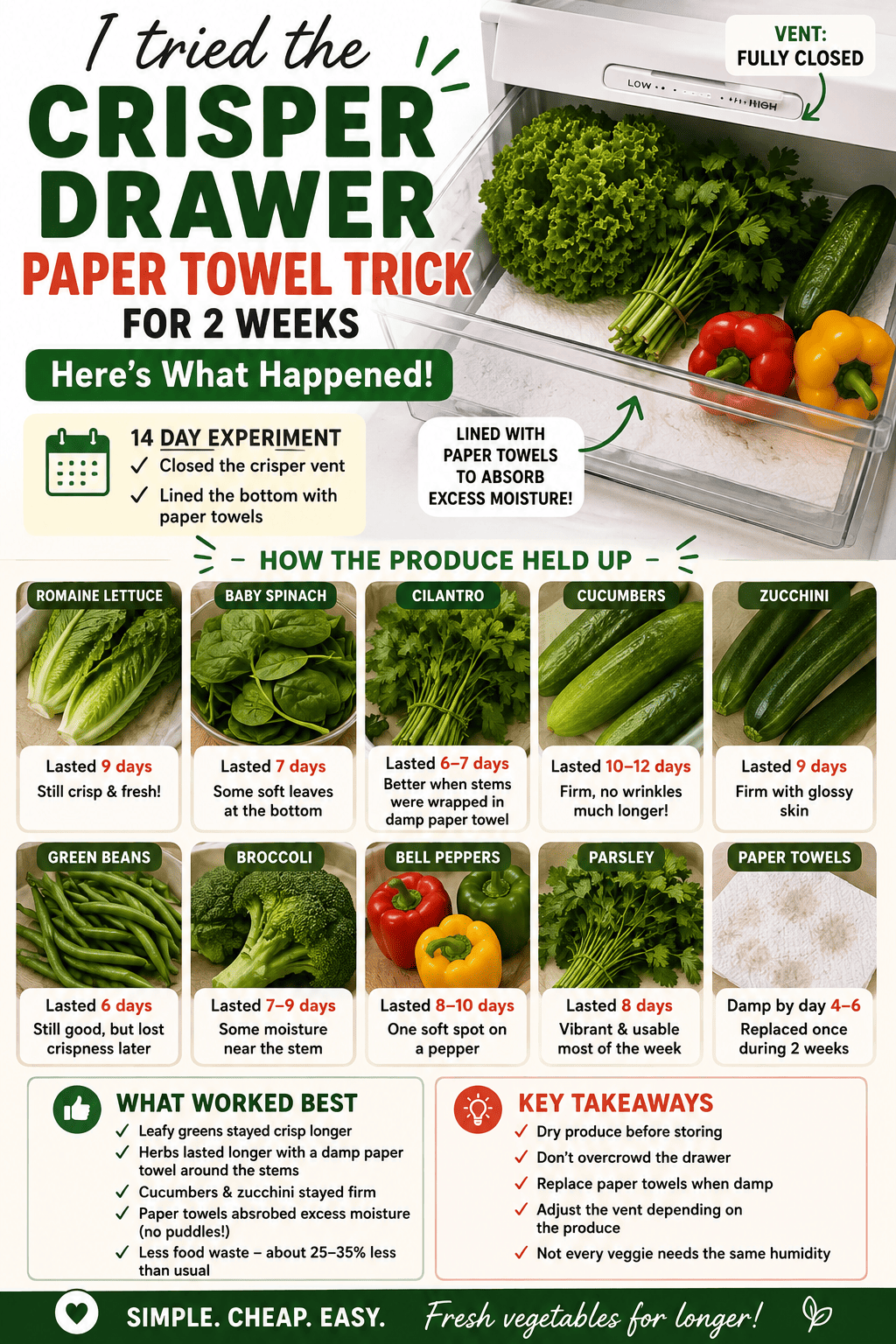
I completely closed the humidity vents on my crisper drawer and lined the bottom with two sheets of plain paper towel. Then I used the drawer that way for 14 days to find out whether the popular paper-towel trick actually helped keep vegetables fresh—or whether it was just another clever-sounding kitchen tip.
For two weeks, I paid close attention to everything that went into the drawer. I checked for moisture, condensation, texture, odors, soft spots, and spoilage.
The results surprised me.
Some vegetables stayed noticeably fresher, while others didn’t benefit nearly as much. I also discovered that one small detail—how dry the produce was before putting it into the drawer—made a bigger difference than I expected.
Here’s exactly what happened and how I plan to use my crisper drawer from now on.
Why I Tried This Refrigerator Trick
July is usually tough on my refrigerator.
The kitchen gets warmer, the refrigerator door seems to open constantly, and fresh produce doesn’t always make it through the week in good shape.
My usual problems were familiar: leafy greens becoming slimy within a few days, cucumbers getting soft, and fresh herbs looking sad long before I could use them.
My crisper drawer has a humidity-control vent that regulates airflow. Closing the vent helps retain humidity, which can be useful for produce that tends to wilt.
The paper towels have a different job. They absorb excess moisture so vegetables aren’t sitting directly in condensation.
In theory, combining the two should create a humid environment without allowing the drawer to become excessively wet.
I wanted to see whether that theory actually worked in a real kitchen.
How I Set Up the Crisper Drawer
I used the standard bottom crisper drawer in my refrigerator, which is approximately 15 inches wide and 12 inches deep.
First, I completely emptied the drawer and washed it with warm, soapy water. After drying it thoroughly, I closed the humidity vent completely.
Then I placed two full sheets of plain, unscented paper towel across the bottom, overlapping them slightly so the entire plastic surface was covered.
I didn’t individually wrap every vegetable or create complicated storage systems.
I wanted this to be realistic for an ordinary busy week.
Most of the produce went into the drawer loose or in the thin produce bags from the grocery store.
I checked the drawer once a day, usually in the evening, and only replaced the paper towels when they became noticeably damp.
What I Put in the Drawer
I chose vegetables and herbs that I regularly buy but often struggle to use before they spoil.
My initial test included:
- 1 head of romaine lettuce
- 1 clamshell of baby spinach
- 1 bunch of cilantro
- 1 bunch of parsley
- 4 cucumbers
- 1 bag of green beans
- 2 zucchini
- 1 head of broccoli
- 3 bell peppers
As I used some of the first batch, I added another round of greens and herbs.
I intentionally kept fruit such as apples, pears, peaches, and avocados out of the experiment because many fruits release ethylene gas, which can affect nearby produce.
The goal was to focus specifically on vegetables that tend to wilt, soften, or become overly moist.
The First Two Days Were Promising
Within the first 48 hours, the drawer already seemed different.
The air inside felt slightly more humid, almost like opening a sealed container of salad greens.
But most importantly, I didn’t see standing water.
The paper towels underneath the spinach and herbs felt slightly damp, especially toward the back of the drawer where my refrigerator tends to be colder.
The vegetables looked good.
The romaine remained crisp. The cilantro stayed upright instead of drooping overnight, and the cucumbers were still firm.
Nothing dramatic happened during those first two days, but that was actually encouraging.
Summer spoilage can begin quickly in my kitchen, so simply preventing that early wilt felt like a good start.
Leafy Greens Were the Biggest Winners
This was where I noticed the clearest improvement.
The romaine stayed crisp for approximately nine days—about two or three days longer than it normally lasts for me without the paper-towel setup.
The baby spinach lasted around seven days before showing its first signs of deterioration.
Even then, the entire container wasn’t ruined. Some leaves at the bottom had softened, but much of the spinach was still perfectly usable.
The paper towels seemed especially helpful with greens.
They absorbed the moisture that normally collects underneath lettuce and spinach and eventually creates that unpleasant slimy layer.
On day six, I replaced the first set of paper towels. They were definitely damp, but they weren’t soaked.
That simple replacement seemed to give the vegetables another day or two of good texture.
Herbs Needed a Slightly Different Approach
Cilantro and parsley also benefited, but I had to change my method.
During the first round, I placed the herbs in the drawer while they were still slightly damp from rinsing.
The stems stayed hydrated, but the leaves began becoming soft and patchy around day five.
For the second round, I dried the herbs more thoroughly first. I then loosely wrapped the stems in a barely damp paper towel before placing them in the drawer.
That worked much better.
The parsley remained usable for approximately eight days, while the cilantro lasted around six to seven days.
The experiment taught me that herbs seem to dislike both extremes: extremely dry refrigerator air and water sitting directly on their leaves.
The closed vent helped maintain humidity, but the produce itself still needed to go into the drawer relatively dry.
Cucumbers and Zucchini Did Surprisingly Well
The cucumbers were another clear success.
All four cucumbers remained firm for approximately 10 to 12 days.
Normally, I start noticing soft areas around day seven.
This time, they stayed plump and the skins didn’t wrinkle nearly as quickly.
The zucchini performed similarly.
Both zucchini remained firm with glossy skin for around nine days before one developed a soft spot.
The higher humidity seemed to help prevent the dehydration that can affect summer squash.
Again, though, dryness mattered.
The vegetables needed to be dry on the surface before going into the drawer. The humid environment was helpful, but trapped water directly on the produce was not.
Green Beans and Broccoli Were More Mixed
Not everything showed a dramatic improvement.
The green beans stayed crisp for about six days before gradually losing their snap. By around day eight, they were still edible but no longer at their best.
Broccoli performed reasonably well during the first week.
The florets stayed tight, and the cut stem didn’t dry out too quickly.
By day nine, however, I noticed a stronger broccoli smell and some moisture around the stem.
Neither vegetable performed badly, but neither benefited as dramatically as the leafy greens and cucumbers.
If I were storing mostly broccoli and green beans, I’d probably still use paper towels but leave the vent slightly open to allow more airflow.
The Paper Towels Did More Than I Expected
This turned out to be one of the most useful parts of the experiment.
By day four, the paper towels felt cool and damp underneath the spinach, romaine, and herb stems.
By day six, they were damp enough that I replaced them.
The second set lasted through the remainder of the experiment and was noticeably moist by day 14.
There was never a visible puddle inside the drawer.
That was a major improvement for me.
Normally, I occasionally find condensation underneath produce bags or containers.
The paper towels created a simple moisture barrier. They absorbed excess water before it could collect around the vegetables.
The setup cost almost nothing, took less than a minute, and also made cleaning the drawer easier.
I Expected a Mini Swamp—But That Didn’t Happen
I was honestly worried that completely closing the vent during a hot July would create an overly damp environment.
It didn’t.
On the warmest day of the experiment, when the kitchen reached about 82°F and the refrigerator was being opened frequently, I noticed a small amount of condensation on the drawer walls.
But because the bottom was lined with paper towels, the moisture never became a standing layer beneath the produce.
There was one important condition, though.
I didn’t overcrowd the drawer.
Whenever possible, I kept the produce in a loose layer and left enough space around larger vegetables for air movement.
If I had packed the drawer twice as full, I suspect the result would have been very different.
A Few Vegetables Actually Did Worse
The experiment wasn’t a complete victory for every vegetable.
One bell pepper developed a soft spot around day eight where it was pressed against the side of the drawer.
The peppers remained perfectly acceptable overall, but they didn’t seem to benefit from the increased humidity nearly as much as the greens did.
I also discovered a major mistake: putting wet produce into a closed drawer.
A small amount of spinach that went into the drawer with leftover rinse water broke down faster than the dry spinach beside it.
That’s an important distinction.
The goal isn’t to create a wet environment.
It’s to maintain humidity while keeping the surfaces of the vegetables relatively dry.
Don’t Ignore Smells
One of the most interesting things I noticed was that appearance wasn’t always enough.
Around day nine, the combination of broccoli and herbs created a stronger vegetable smell inside the drawer.
Most of the produce still looked usable, but the odor told me it was time to inspect everything more carefully.
That became part of my routine.
The humidity-control trick can buy you extra time, but it doesn’t eliminate the need to check your produce.
A quick inspection for moisture, soft spots, discoloration, and unusual odors every few days is still worthwhile.
I Threw Away Less Produce
Compared with a typical two-week stretch during the summer, I ended up wasting noticeably less.
Normally, I might lose half a bunch of herbs, some spinach, and one or two cucumbers.
This time, I threw away only a small amount of spinach, several cilantro leaves, and one soft section of zucchini that I trimmed away.
Based on my experience, I estimated that the setup reduced produce waste in that drawer by roughly 25% to 35% during the 14-day experiment.
That’s not a miracle.
But if you regularly spend money on fresh greens, herbs, and vegetables, reducing even a portion of your weekly food waste can add up.
And there’s something satisfying about opening your refrigerator and actually finding vegetables you can still use.
Who Should Try This?
If you regularly buy:
- Leafy greens
- Fresh herbs
- Cucumbers
- Zucchini
- Other vegetables that tend to wilt quickly
this setup may be worth trying.
It can be especially useful during warm weather or if your refrigerator tends to dry out fresh produce.
If your main problem is vegetables becoming limp rather than vegetables becoming moldy or waterlogged, a closed vent combined with paper towels is a reasonable starting point.
Who Should Be More Careful?
If your crisper drawer already becomes very wet, your refrigerator runs particularly humid, or you routinely store freshly washed vegetables while they’re still wet, I’d be more cautious about completely closing the vent.
In that situation, try leaving the vent partially open instead.
Check the drawer after two or three days rather than waiting two weeks.
Your refrigerator, produce, and storage habits can all affect the result.
What I’ll Do From Now On
After two weeks, I’m keeping the paper towels.
That part of the experiment was clearly useful.
The towels absorbed excess moisture, prevented produce from sitting directly on a cold wet surface, and made cleaning the drawer much easier.
I’ll also continue using the closed vent for vegetables that seemed to benefit most, particularly greens, herbs, cucumbers, and zucchini.
But I won’t treat every vegetable exactly the same.
Peppers, broccoli, and green beans may benefit from a little more airflow.
I’ll also continue keeping fruit separate from the vegetables in this drawer.
My ideal setup is simple:
Dry the produce thoroughly.
Don’t overcrowd the drawer.
Line the bottom with two paper towels.
Replace them when they become damp.
Adjust the vent according to the type of produce you’re storing.
My Honest Verdict After Two Weeks
So, did the experiment work?
For me, yes.
The vegetables that usually wilt or deteriorate quickly—especially leafy greens, herbs, cucumbers, and zucchini—stayed fresh noticeably longer.
Closing the crisper vent helped maintain humidity, while the paper towels absorbed the excess moisture that could otherwise turn into condensation and spoilage.
It wasn’t magic.
But it was an inexpensive, low-effort change that made a noticeable difference.
The entire setup took only a few minutes, cost almost nothing, and helped me waste less produce.
For me, that’s enough reason to keep doing it.
Sometimes the best kitchen tricks aren’t complicated at all.
ADVERTISEMENT