
ADVERTISEMENT
ADVERTISEMENT
ADVERTISEMENT
Is It Appropriate to Require a Minimum Cash Gift at a Wedding?
Wedding invitations are meant to bring people together to celebrate a couple’s marriage, but gift expectations can sometimes create an uncomfortable situation. One increasingly debated practice is asking guests to give a specific amount of cash—such as $150 per person—to help cover the cost of the reception.
While asking for cash gifts has become more common, there is an important difference between expressing a preference for monetary gifts and requiring guests to give a particular amount. So, is it acceptable to put a minimum cash gift requirement on a wedding invitation? Generally, wedding etiquette suggests that couples should avoid making gifts feel mandatory.
Why Do Some Couples Ask for Cash?
Weddings can be expensive, and couples may have many financial goals after the celebration. Cash gifts can be especially useful because newlyweds can put the money toward a honeymoon, savings, household expenses, or other priorities.
Some couples may also believe that asking for cash helps guests avoid purchasing unwanted household items. In cultures where monetary wedding gifts are traditional, cash may already be an expected part of the celebration.
There’s nothing inherently wrong with preferring cash gifts. The issue is usually how that preference is communicated.
What Does Traditional Wedding Etiquette Say?
Traditionally, a wedding gift is a voluntary gesture of congratulations and goodwill. Guests aren’t supposed to be responsible for paying for the wedding itself.
The invitation is an invitation to share an important moment with the couple—not an invoice for the cost of dinner, entertainment, or venue rental.
Guests may choose a gift based on their relationship with the couple, their personal circumstances, and what they feel comfortable giving.
Is It Acceptable to Set a Minimum Dollar Amount?
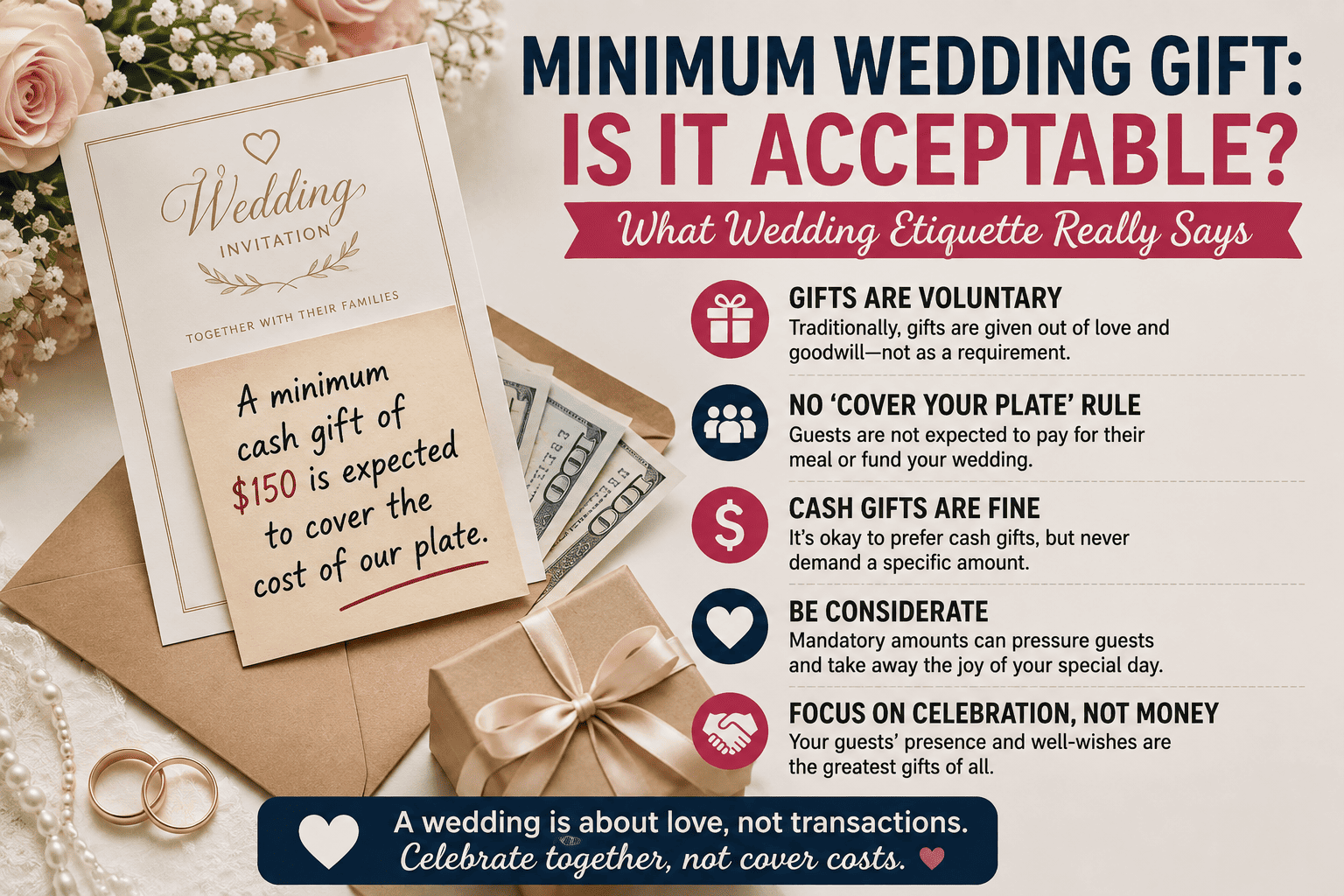
Generally, specifying a mandatory minimum gift amount is considered poor wedding etiquette.
A couple can certainly let guests know that cash is preferred, particularly through a wedding website or registry. However, telling guests that they must contribute at least $150 can make the celebration feel more like a financial obligation.
It can also put guests in an awkward position if they simply cannot afford the requested amount.
There may be cultural or family traditions where cash gifts and customary amounts are openly discussed. Even then, there’s a meaningful distinction between explaining a tradition and demanding a payment.
The Problem With “Cover Your Plate”
The idea that wedding guests should give enough money to cover the cost of their meal is sometimes called the “cover your plate” rule.
But this isn’t a universal rule of etiquette.
Guests aren’t financially responsible for the decisions a couple makes when planning their wedding. If a couple chooses an expensive venue, elaborate menu, or large reception, those decisions generally remain the couple’s responsibility.
A guest shouldn’t feel obligated to calculate the price of their dinner before deciding what gift they can comfortably give.
Cultural Traditions Can Make Things More Complicated
Wedding gift customs vary significantly around the world.
In some cultures, monetary gifts are an important wedding tradition and may symbolize prosperity, good fortune, or support for the newly married couple. In other families, guests may traditionally bring physical gifts, purchase something from a registry, or simply offer a card.
These differences matter when discussing what is considered appropriate.
What feels completely normal within one cultural tradition may feel unusual or uncomfortable to someone from another background. Couples should consider their guests’ expectations and communicate their preferences respectfully.
How Mandatory Gift Amounts Can Affect Guests
A minimum cash requirement can create unnecessary pressure.
For a guest with a comfortable budget, $150 might seem reasonable. For another guest, however, that amount could be difficult to manage.
Some guests may also be attending as a couple, traveling a significant distance, taking time away from work, or paying for accommodations. Adding a mandatory gift amount can make an already expensive event even more challenging.
Instead of focusing on celebrating the couple, guests may find themselves worrying about whether their contribution is “enough.”
A Wedding Shouldn’t Feel Like a Financial Transaction
Couples understandably want to manage their wedding finances carefully. However, relying on guests to cover reception expenses can create an uncomfortable dynamic.
A wedding is ultimately a celebration, and guests are invited because the couple wants them there. Financial planning should ideally begin with a budget that the couple can realistically afford rather than assuming guests will make up the difference through gifts.
Cash gifts can certainly help newlyweds—but they are best treated as generous gestures rather than required payments.
How Can Couples Ask for Cash Politely?
If cash is the couple’s preference, there are more gracious ways to communicate it.
For example, a wedding website might explain that the couple has chosen not to create a traditional registry and would appreciate contributions toward a honeymoon or future home.
A honeymoon fund or cash registry can also allow guests to contribute whatever amount feels appropriate to them.
The key is to make the request optional rather than mandatory.
A Polite Example
“Your presence at our wedding is the greatest gift of all. If you’d like to give something, we’re saving toward our honeymoon and would be grateful for any contribution.”
This communicates the couple’s preference without putting a price tag on attendance.
What Should Guests Do If They Can’t Afford the Requested Amount?
If a couple has stated a minimum gift amount and a guest can’t comfortably afford it, the guest shouldn’t put themselves under financial strain simply to meet the expectation.
Depending on the relationship, they could:
- Give what they can reasonably afford.
- Choose a thoughtful alternative gift.
- Give a heartfelt card without a monetary gift.
- Speak privately with the couple if the situation calls for it.
- Attend the wedding and celebrate with them without feeling guilty.
A guest’s financial circumstances don’t determine how much they care about the couple.
Better Alternatives to a Mandatory Minimum
Couples who prefer cash have several options that are more welcoming than setting a required amount.
Create a Honeymoon Fund
Guests can contribute whatever amount they’re comfortable giving toward a honeymoon.
Set Up a Home Fund
A registry can allow guests to contribute toward furniture, household expenses, or a future home.
Simply Say “Cash Gifts Welcome”
A short, polite preference gives guests information without creating an obligation.
Don’t Mention Gifts at All
Some couples may prefer to let guests decide for themselves whether and how they want to give.
What Does This Say About Changing Wedding Traditions?
Wedding customs are constantly evolving. Cash registries, honeymoon funds, online invitations, and digital gift platforms have all changed how couples and guests approach wedding gifts.
There’s nothing wrong with modernizing traditions. The challenge is maintaining the spirit of generosity and celebration while avoiding expectations that make guests feel financially obligated.
A couple can communicate what they would appreciate without turning a gift into an admission fee.
Final Thoughts
Is it acceptable to require a specific wedding gift amount? While couples can certainly express a preference for cash, making a minimum contribution mandatory is generally viewed as impolite and overly demanding in traditional wedding etiquette.
Guests should not be expected to “cover their plate” or pay a predetermined amount simply because they were invited to the reception.
The most gracious approach is for couples to welcome their guests’ presence first and treat any gifts—cash or otherwise—as optional acts of generosity.
After all, the most meaningful part of a wedding isn’t how much money guests bring. It’s the people who show up to celebrate the couple’s new chapter with them.
ADVERTISEMENT