
ADVERTISEMENT
ADVERTISEMENT
ADVERTISEMENT
Found a Strange Foam-Like Brown Object on Your Fence? Here’s What It Really Is
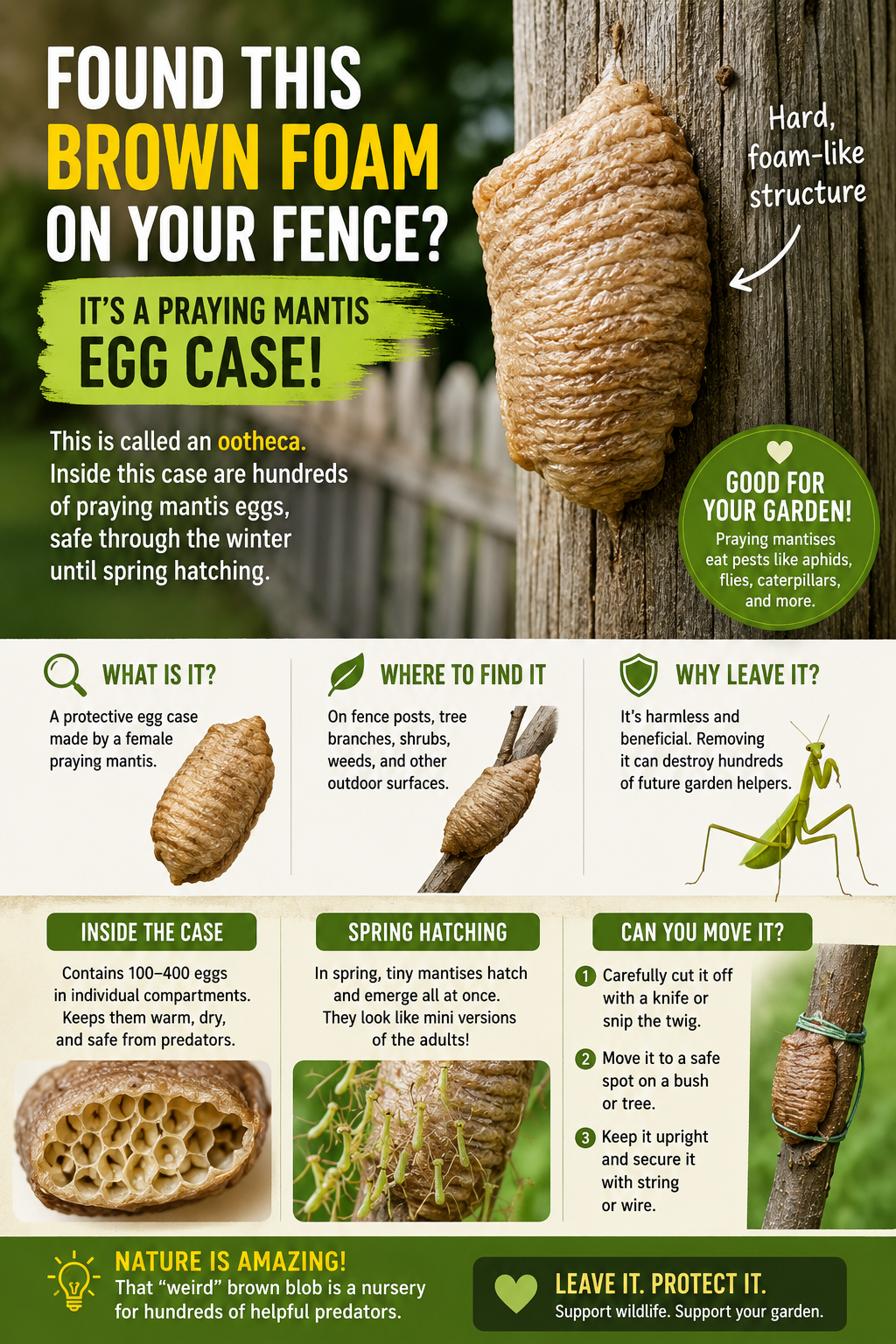
Spotting an odd, brown, foam-like lump attached to a fence post, tree branch, or garden railing can be surprising. At first glance, it may look like a wasp nest, dried expanding foam, or even a strange fungus. Before you scrape it away, though, you might want to take a closer look.
In many cases, this unusual structure is actually the egg case of a praying mantis, known as an ootheca. Far from being harmful, it’s one of nature’s most fascinating creations—and a sign that your garden is home to one of its best natural pest controllers.
What Is a Praying Mantis Ootheca?
An ootheca is a protective egg case created by a female praying mantis. During late summer or autumn, she deposits her eggs inside a frothy substance that quickly hardens when exposed to air. The finished case has a tan or brown color and a texture similar to hardened foam.
Most oothecae measure between 1 and 2 inches (2.5–5 cm) long and are firmly attached to branches, fence posts, walls, shrubs, or other sturdy surfaces. Inside, they can hold anywhere from 100 to 400 eggs, safely protected until spring.
Why Does It Look Like Foam?
The female mantis produces a special foamy secretion as she lays her eggs. Within minutes, this foam hardens into a tough, lightweight shell that shields the developing insects from harsh weather, moisture, and predators.
The ridged, spongy exterior acts as natural insulation, helping the eggs survive freezing temperatures throughout the winter months.
Why Praying Mantises Are Good for Your Garden
Praying mantises are among the most beneficial insects you can attract to your yard. They are skilled predators that help reduce populations of common garden pests without the need for chemical pesticides.
Their diet includes:
- Aphids
- Caterpillars
- Moths
- Flies
- Crickets
- Grasshoppers
- Beetles
- Other small insects
Because they naturally control many destructive pests, gardeners often welcome mantises as valuable allies in maintaining healthy plants.
Where Are Egg Cases Commonly Found?
Although fence posts are a popular location, mantis egg cases can appear in many places around the yard, including:
- Tree branches
- Shrubs and hedges
- Flower stems
- Tall ornamental grasses
- Wooden fences
- Garden furniture
- Porch railings
- Trellises
Females choose sheltered locations that protect the eggs while placing the future nymphs close to food sources after they hatch.
Should You Remove It?
In most situations, it’s best to leave the egg case exactly where it is.
A praying mantis ootheca is completely harmless. It won’t damage wood, spread disease, attract termites, or pose any danger to people or pets.
Removing or destroying it may eliminate hundreds of beneficial insects before they even have a chance to hatch.
If your goal is a healthy garden, allowing the egg case to remain is one of the easiest ways to support local wildlife.
What Happens in Spring?
As temperatures rise in spring, the eggs complete their development.
Tiny praying mantis nymphs emerge through small openings in the egg case, often within a short period of time. At first they’re pale and delicate, but they quickly darken and begin searching for tiny insects to eat.
Although hundreds may hatch, only a fraction survive to adulthood due to predators and competition, making every successful hatch important for maintaining healthy mantis populations.
Can You Move an Egg Case?
If the egg case is attached to something that will be painted, repaired, or discarded, it can usually be relocated carefully.
To move it safely:
- Gently remove the egg case using a thin knife or carefully cut off the twig it’s attached to.
- Avoid crushing or squeezing the case.
- Tie or wire it securely to a shrub, tree branch, or fence in a protected area.
- Keep it facing the same direction it originally was, with the top remaining upright.
Proper handling gives the developing mantises the best chance of hatching successfully.
How to Tell It Apart from Other Objects
Several natural structures can resemble a praying mantis egg case.
Praying Mantis Ootheca
- Tan or light brown
- Hard, foam-like texture
- Oval shape with distinctive ridges
- Firmly attached to wood or plants
Paper Wasp Nest
- Gray or brown papery material
- Open honeycomb cells visible
- Often hangs beneath eaves or branches
Fungus
- Usually softer or moist
- Irregular shape
- May grow directly from decaying wood
- Lacks the neat ridged appearance of an ootheca
Recognizing these differences can help you avoid accidentally destroying beneficial insects.
A Small Discovery Worth Protecting
Finding a praying mantis egg case is a reminder that your backyard is full of remarkable wildlife. What appears to be a simple brown lump is actually a carefully designed nursery protecting hundreds of future garden helpers.
Instead of removing it, consider leaving it in place and checking back when spring arrives. You may be lucky enough to witness one of nature’s most incredible transformations as dozens of tiny mantises emerge, ready to help keep your garden healthy for the season ahead.
ADVERTISEMENT