
ADVERTISEMENT
ADVERTISEMENT
ADVERTISEMENT
What You See First in This Viral Optical Illusion Could Reveal How You View the World
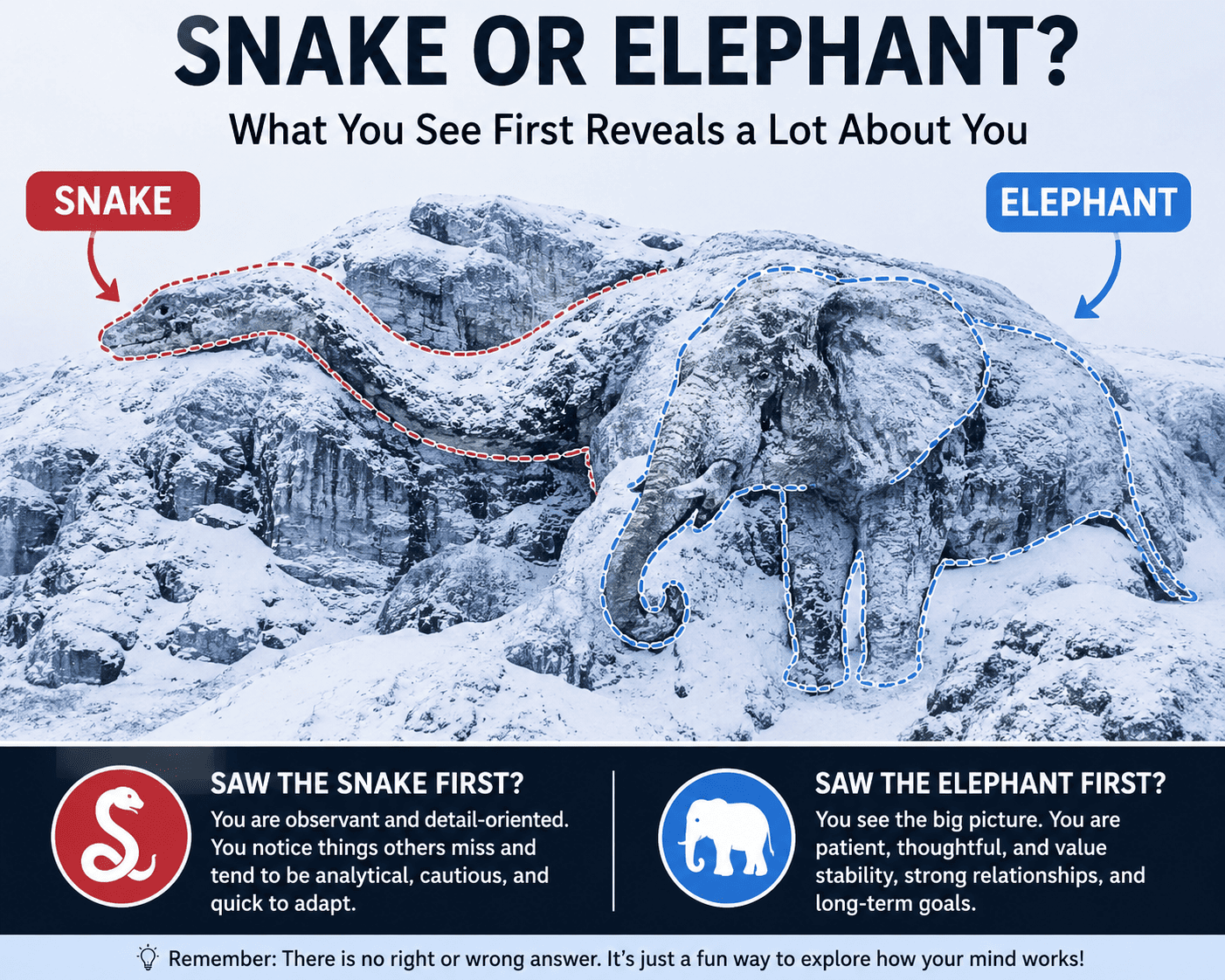
A single image has sparked a surprising debate online, leaving thousands of people divided over what they see first. Some viewers immediately notice a snake slithering across a snowy landscape, while others are certain they see the shape of an elephant hidden within the scene.
The fascinating part? Everyone is looking at the exact same picture.
This viral optical illusion has captured attention across social media platforms, with users comparing their answers and discussing what their first impression might reveal about their personalities. Before reading further, take a moment to think about it yourself: if you were looking at the image, would you spot the snake or the elephant first?
Why Optical Illusions Fascinate Us
Optical illusions have intrigued people for centuries because they challenge our understanding of reality. They demonstrate that seeing is not simply a matter of using our eyes—our brains play an equally important role in interpreting what appears before us.
Every moment, the human brain processes vast amounts of visual information. To keep up, it relies on shortcuts, patterns, and past experiences to make sense of the world. Optical illusions expose this process by presenting images that can be interpreted in more than one way.
As a result, different people often see completely different things even when viewing the same picture.
The Snake or the Elephant?
At first glance, the image appears to show nothing more than a frozen landscape filled with snow-covered rocks and icy terrain.
Look a little closer, however, and two hidden figures begin to emerge.
Some viewers instantly notice a snake winding through the scene. Others quickly recognize the outline of an elephant seemingly formed by the snowy cliffs and rock formations.
What makes this illusion particularly interesting is that many people strongly see one animal while completely missing the other—at least initially.
So, which one did you see first?
If You Saw the Snake First
According to popular interpretations shared online, people who notice the snake first are often viewed as detail-oriented observers.
They may have a natural ability to spot small changes, recognize patterns, and pick up on information that others overlook. These individuals are often described as analytical thinkers who prefer logic and careful evaluation when making decisions.
Supporters of this theory suggest that snake-first viewers tend to be adaptable problem-solvers who gather facts before acting. They often enjoy investigating challenges, finding practical solutions, and approaching situations strategically.
While these descriptions are far from scientific, many people find the traits surprisingly relatable.
If You Saw the Elephant First
Those who immediately spot the elephant are often associated with a broader perspective.
Rather than focusing on fine details, they may naturally pay attention to the overall picture. Popular interpretations describe elephant-first viewers as patient, thoughtful, and future-focused individuals who value long-term goals and meaningful relationships.
These people are often portrayed as dependable decision-makers who prefer stability and careful planning over impulsive choices. They may prioritize trust, loyalty, and emotional balance in both personal and professional situations.
Again, these characteristics are intended more for entertainment than serious psychological analysis, but they continue to resonate with many viewers.
What the Illusion Really Reveals
Although personality-based interpretations make these visual puzzles fun to discuss, there is no scientific evidence that an optical illusion can accurately determine someone’s personality traits.
What the image does reveal is something equally fascinating: perception is highly individual.
Our brains constantly filter and organize information based on previous experiences, expectations, attention patterns, and countless other factors. When faced with an ambiguous image, the mind quickly searches for meaning and settles on the interpretation that seems most recognizable.
This process happens almost instantly, often before we are consciously aware of it.
Why People See Different Things
Several factors can influence what a person notices first in an optical illusion:
- Past experiences and memories
- Personal interests and preferences
- Attention habits and observation styles
- Current mood and concentration levels
- Familiarity with similar visual patterns
Because of these influences, two people can examine the same image and arrive at entirely different conclusions without either one being wrong.
Their brains are simply processing the information differently.
A Lesson Beyond the Illusion
The popularity of optical illusions extends beyond simple entertainment. They serve as a reminder that perception is not always objective.
Just as people can interpret the same image in different ways, they can also view real-life situations through different perspectives. Our experiences, beliefs, and expectations shape how we understand the world around us.
The snake-or-elephant illusion highlights this perfectly. It demonstrates that reality is often more complex than it first appears and that multiple viewpoints can exist at the same time.
Final Thoughts
Whether you noticed the snake first or immediately recognized the elephant, the true value of the illusion lies in what it teaches us about the human mind.
It shows how quickly our brains create meaning, how uniquely each person interprets information, and how perception influences our understanding of reality.
So the next time you come across an optical illusion, don’t think of it as just a visual puzzle. Think of it as a glimpse into the remarkable way your mind works.
Now the question remains:
Did you see the snake first—or the elephant?
ADVERTISEMENT