
ADVERTISEMENT
ADVERTISEMENT
ADVERTISEMENT
If you’ve ever noticed green algae creeping across your home’s siding, you know how frustrating it can be. Those green streaks and patches can make even a well-kept house look dirty and neglected. For years, I tried everything to get rid of it—scrubbing by hand, buying expensive cleaners, and even using a pressure washer. Most methods either took too much effort or didn’t last very long.
Then my neighbor shared a surprisingly simple trick that completely changed the way I clean my siding. The best part? It required almost no scrubbing at all. After trying it myself and seeing how well it worked, I knew I had to pass it along.
The Simple No-Scrub Cleaning Trick
The secret behind this method is a homemade cleaning mixture made from common household ingredients. Instead of spending hours scrubbing stubborn algae, the solution does most of the work for you.
All you need is:
- Water
- White vinegar
- Dish soap
- A garden sprayer
The vinegar helps kill and loosen the algae, while the dish soap helps the solution cling to the siding long enough to break everything down effectively.
Once sprayed on, the mixture works quietly on its own, lifting the algae without heavy scrubbing or harsh chemicals.
Why Green Algae Grows on Siding
Green algae tends to thrive in damp, shaded areas. Homes surrounded by trees or located in humid climates are especially vulnerable. The north-facing side of a house often gets the worst buildup because it receives less direct sunlight.
Vinyl and painted siding can hold moisture for long periods, creating the perfect environment for algae growth. Dirt, pollen, and organic debris also provide food for algae, helping it spread even faster.
Understanding why algae appears can help you prevent it from returning later.
The Easy Homemade Cleaning Solution
One of the best things about this trick is how affordable and simple it is.
Ingredients
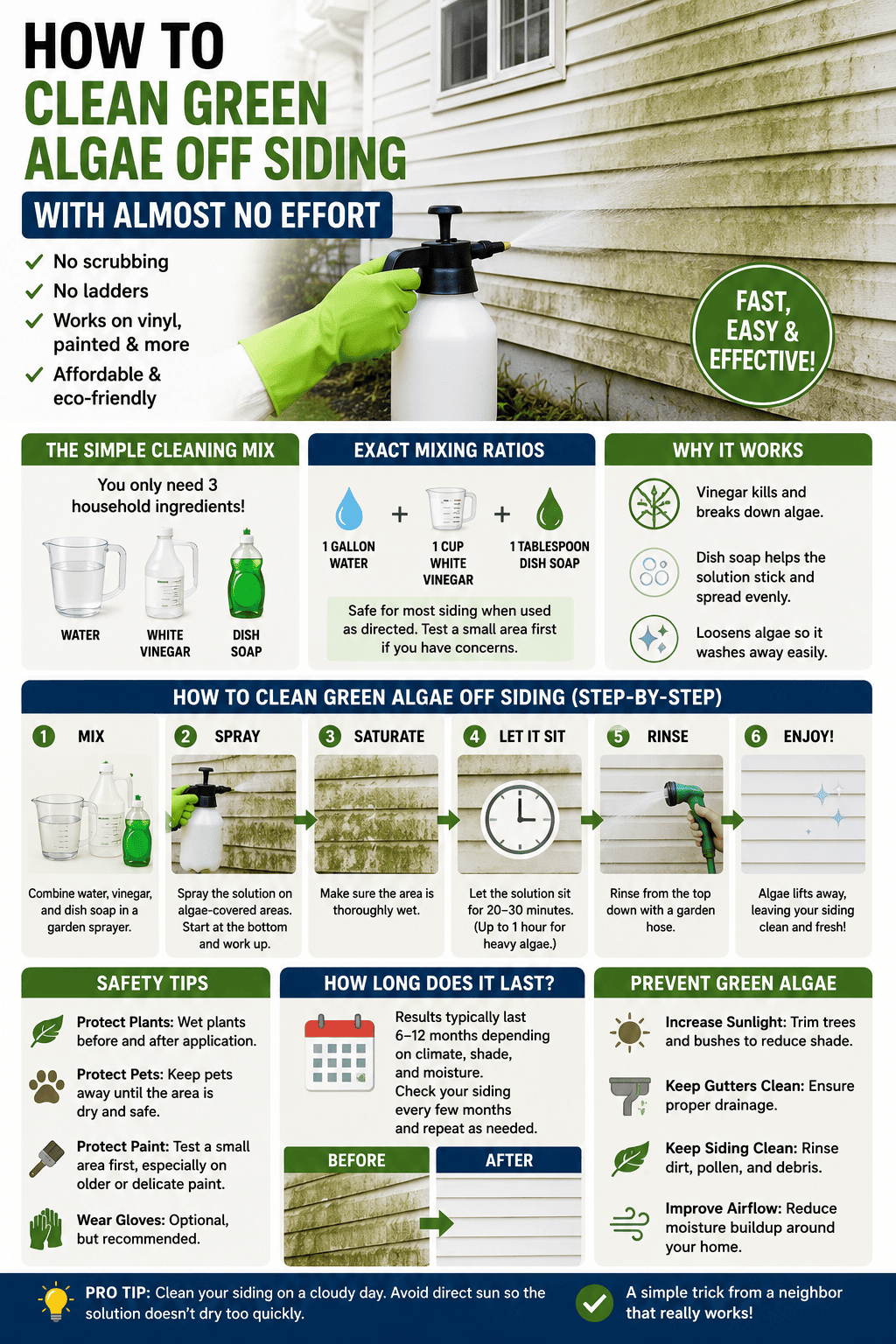
- 1 gallon of water
- 1 cup of white vinegar
- 1 tablespoon of dish soap
Mix everything together in a garden sprayer or large bucket. The vinegar’s natural acidity helps kill algae, while the soap helps the mixture spread evenly across the siding.
This gentle formula is usually safe for most siding types when used correctly.
Why the Mixing Ratio Matters
Using the proper ratio is important. Too much vinegar could potentially dull or damage certain painted surfaces, especially delicate finishes.
The recommended mixture of:
- 1 gallon water
- 1 cup vinegar
- 1 tablespoon dish soap
provides enough strength to tackle algae without being overly harsh.
If you’re unsure about your siding, test the solution on a small hidden area first before spraying the entire house.
How to Apply the Solution
The application process is incredibly easy and doesn’t require ladders in most cases.
Step-by-Step
- Pour the mixture into a garden sprayer.
- Spray the algae-covered siding thoroughly.
- Start near the bottom and work upward for even coverage.
- Make sure all green areas are fully saturated.
The garden sprayer allows you to reach high sections of siding safely and quickly without excessive effort.
The Most Important Step: Let It Sit
This is where the magic happens.
After spraying the solution, simply let it sit on the siding for about 20 to 30 minutes. During this time, the vinegar and soap begin breaking down the algae so it loosens naturally from the surface.
For heavier buildup, some homeowners leave it on for up to an hour.
Patience is key here. The longer the solution sits, the less work you’ll have to do later.
Rinsing the Algae Away
Once the waiting period is over, rinse the siding with a regular garden hose.
Start from the top and work your way downward. In many cases, the algae slides right off with very little effort. The loosened grime washes away surprisingly easily without needing aggressive scrubbing.
If stubborn spots remain, simply repeat the process in those areas.
Important Safety Tips
Although this mixture is mild compared to many commercial cleaners, it’s still smart to take precautions.
Protect Plants
Wet nearby plants before and after spraying to dilute any solution that reaches them.
Keep Pets Away
Allow the area to dry completely after rinsing before letting pets near the siding.
Test Painted Surfaces
Always test a small area first if your siding has older or delicate paint.
A little caution helps prevent accidental damage.
How Long the Results Last
The results can last anywhere from several months to over a year depending on your climate and how much shade your home gets.
Homes in humid or heavily shaded areas may need more frequent cleaning, while sunnier homes often stay cleaner much longer.
Checking your siding every few months can help you catch algae early before it becomes a major problem again.
Simple Ways to Prevent Algae From Returning
Keeping algae away is often easier than removing it later.
Here are a few easy prevention tips:
- Trim back trees and bushes to increase sunlight exposure
- Keep gutters clean and draining properly
- Remove dirt and debris from siding regularly
- Improve airflow around damp areas of the home
These small maintenance habits can make a huge difference over time.
When This Trick May Not Be Enough
For severe algae buildup or years of neglected siding, the vinegar solution may need multiple applications. In extreme cases, a commercial siding cleaner or professional cleaning service may be necessary.
Pressure washing can help, but it should be used carefully because too much pressure can damage siding or force water behind it.
For most homeowners, though, this simple homemade trick works surprisingly well and saves a lot of time and effort.
Final Thoughts
I never expected such a simple mixture to work so effectively, but this no-scrub algae cleaning trick completely changed the way I maintain my home’s exterior.
Instead of spending hours scrubbing siding by hand, I now spray the solution, let it sit, and rinse everything away with minimal effort. It’s affordable, easy to make, and far less exhausting than traditional cleaning methods.
Sometimes the best home hacks are the simplest ones—and this one is definitely worth trying.
ADVERTISEMENT