
ADVERTISEMENT
ADVERTISEMENT
ADVERTISEMENT
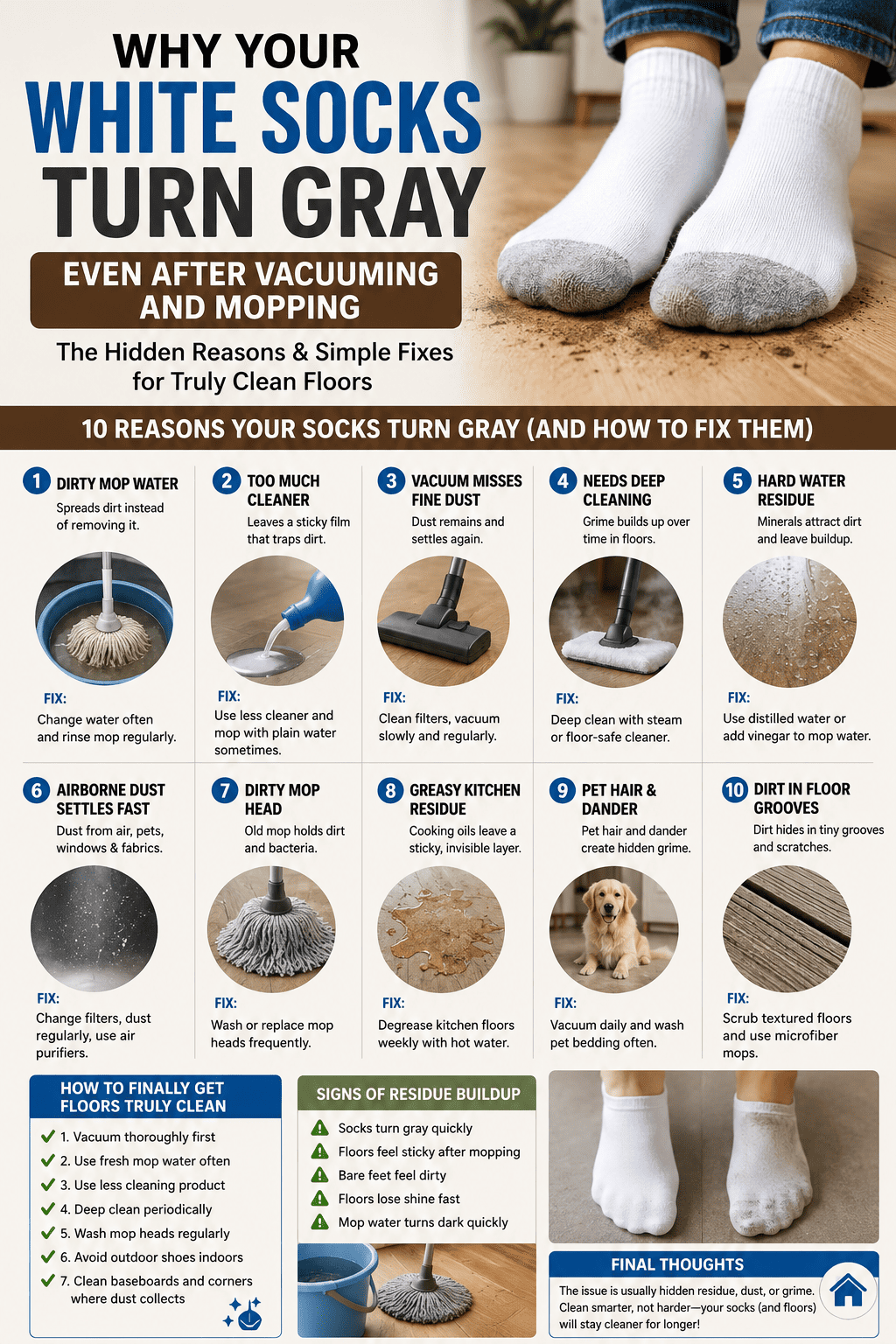
There’s nothing more frustrating than spending days vacuuming and mopping your floors, only to notice your clean white socks turning gray or black within minutes of walking around the house.
If this keeps happening, it usually means there’s still a hidden layer of dirt, residue, or grime being left behind — even if the floors look clean at first glance.
The good news is that this problem is extremely common, and in most cases, it can be fixed once you identify the real cause.
Here’s what’s likely happening and how to finally get your floors truly clean.
1. Dirty Mop Water Is Spreading Residue Around
One of the biggest reasons floors stay dirty is using the same mop water for too long.
As you mop, dirt, oils, and dust collect in the water. Instead of removing grime, the mop can end up spreading a thin dirty film across the floor.
Even though the floor may look shiny after drying, residue remains behind and transfers directly onto socks and bare feet.
Fix:
- Change mop water frequently
- Rinse the mop head often
- Use two buckets if possible — one for clean water and one for rinsing
- Wash reusable mop pads after every use
2. Too Much Cleaning Product Leaves a Sticky Film
Using extra floor cleaner may seem like it would make floors cleaner, but it often does the opposite.
Many cleaning products leave behind a sticky residue when too much is used. That residue traps dust, pet hair, and dirt quickly, creating grimy floors again almost immediately.
Over time, layers of cleaner build up and make floors feel dirty no matter how often you mop.
Fix:
- Use less cleaner than recommended
- Occasionally mop with plain hot water to remove buildup
- Avoid mixing multiple cleaning products
3. Vacuuming May Not Be Removing Fine Dust
Some vacuums remove visible debris but leave behind fine dust and microscopic dirt particles.
If your vacuum filter is dirty, clogged, or low quality, dust can simply blow back into the room and settle onto floors again.
This is especially common in homes with pets, carpeting, or heavy foot traffic.
Fix:
- Empty the vacuum regularly
- Clean or replace filters
- Vacuum slowly instead of rushing
- Use attachments along baseboards and corners
4. Floors May Need a Deep Cleaning
Sometimes grime becomes embedded into flooring over time, especially on:
- Vinyl floors
- Laminate
- Tile grout
- Hardwood with residue buildup
Regular mopping only cleans the surface while hidden oils and dirt remain trapped underneath.
Fix:
Try a deep-cleaning session using:
- A steam mop
- Floor-safe degreaser
- Microfiber scrub pads
- Warm water with vinegar for buildup removal
You may notice the rinse water turning dark even after several passes.
5. Hard Water Can Leave Mineral Residue
If your home has hard water, minerals may dry onto the floor after mopping.
This residue attracts dirt quickly and can make floors feel dusty or sticky.
Fix:
- Use distilled water occasionally
- Dry floors with a microfiber cloth after mopping
- Add a small splash of vinegar to break down minerals
6. Airborne Dust Keeps Settling on Floors
Even clean homes collect airborne dust constantly.
Dust can come from:
- HVAC systems
- Open windows
- Pets
- Fabric fibers
- Shoes worn indoors
If dust settles faster than it’s removed, floors quickly start dirtying socks again.
Fix:
- Change HVAC filters regularly
- Dust furniture before vacuuming
- Use air purifiers if needed
- Remove shoes at the door
7. Old Mop Heads Can Make Floors Dirtier
A dirty mop head can hold bacteria, grease, and trapped grime even after rinsing.
Instead of cleaning, it simply redistributes dirt.
Fix:
- Replace mop heads regularly
- Wash microfiber pads in hot water
- Allow mop heads to dry completely between uses
8. Greasy Kitchen Residue May Be Spreading
Kitchen floors often collect invisible grease from cooking oils and food particles.
Grease traps dust and creates a sticky coating that turns socks gray quickly.
Fix:
- Degrease kitchen floors weekly
- Use hot water when mopping
- Pay extra attention near the stove and cabinets
9. Pet Hair and Dander Create Hidden Grime
Homes with pets often need more frequent floor cleaning because fur, dander, and oils build up fast.
Even if the floor looks clean, a thin layer of pet residue can remain.
Fix:
- Vacuum daily in pet areas
- Wash pet bedding frequently
- Use microfiber tools that trap hair better
10. Some Floors Trap Dirt in Tiny Grooves
Textured flooring and older laminate or vinyl can trap dirt inside tiny grooves and scratches.
Mopping may clean the surface while grime remains hidden underneath.
Fix:
- Scrub textured floors with a soft brush occasionally
- Use microfiber mops instead of sponge mops
- Deep clean grout lines if tiled
Signs Your Floors Have Residue Buildup
Your floors may have hidden buildup if:
- Socks turn gray quickly
- Floors feel sticky after mopping
- Bare feet feel dirty
- Floors lose shine fast
- Mop water turns dark immediately
These are strong signs that residue is accumulating rather than being removed.
How to Finally Get Floors Truly Clean
For the best results:
- Vacuum thoroughly first
- Use fresh mop water often
- Use less cleaning product
- Deep clean periodically
- Wash mop heads regularly
- Avoid wearing outdoor shoes indoors
- Clean baseboards and corners where dust gathers
Sometimes one deep-cleaning session is enough to completely solve the problem.
Final Thoughts
If your white socks keep turning gray after walking around the house, it doesn’t necessarily mean your home is dirty. More often, it means residue, dust, or hidden grime is being left behind during cleaning.
Small changes like using cleaner mop water, reducing product buildup, deep cleaning occasionally, and improving vacuum maintenance can make a huge difference.
Once floors are properly cleaned and residue is removed, you’ll likely notice your socks staying white much longer — and your home feeling fresher overall.
ADVERTISEMENT