
ADVERTISEMENT
ADVERTISEMENT
ADVERTISEMENT
Washing machines work hard every week, yet many people rarely clean them. Over time, detergent residue, hard water minerals, mildew, and grime can build up inside the drum, door seal, hoses, and dispenser drawer. The result can be unpleasant odors, dingy laundry, and reduced washing performance.
One of the most popular DIY cleaning methods uses two pantry staples: baking soda and white vinegar. It’s inexpensive, simple, and often praised online as a natural way to freshen a washer.
I decided to test the baking soda and vinegar washing machine hack for one month to see if it really works. Here’s what happened, what improved, and whether I’d keep doing it.
1. Why I Tried the Baking Soda and Vinegar Method
My washing machine had started to develop a faint musty smell, especially when the door stayed closed. I also noticed soap residue around the rubber door gasket and detergent buildup in the dispenser tray.
I wanted a cleaning method that was:
- Affordable
- Easy to do
- Non-toxic
- Made with products already at home
Since baking soda and vinegar are often recommended for cleaning and deodorizing, it seemed worth trying.
2. My Once-a-Week Cleaning Routine
Once a week, I followed a simple routine:
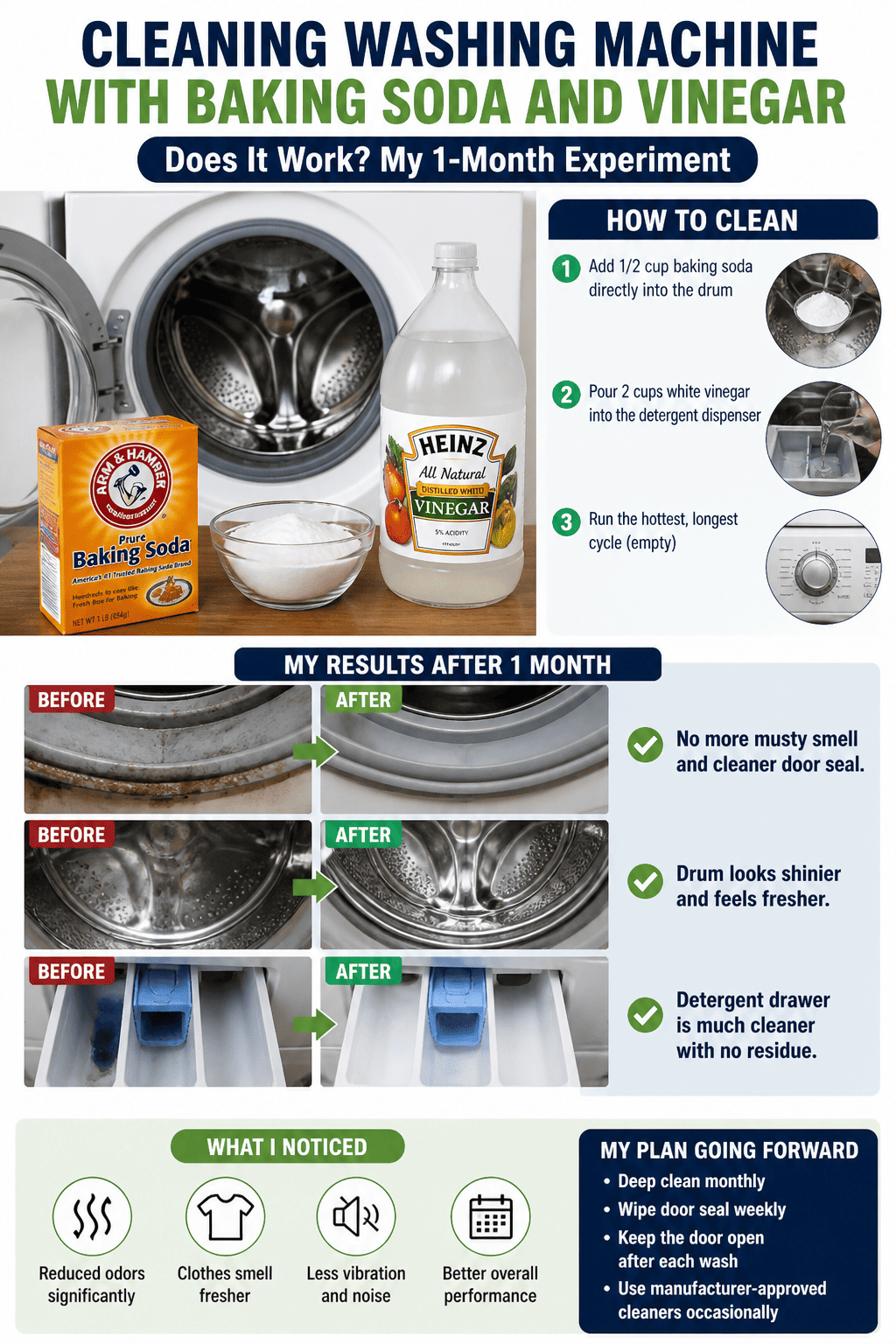
- Added ½ cup baking soda directly into the drum
- Poured 2 cups white vinegar into the detergent dispenser
- Ran the hottest, longest empty cycle available
After the cycle finished, I wiped down the door seal, drum, and detergent drawer with a clean cloth.
The whole setup took only a few minutes.
3. Results After the First Cleaning Cycle
After the very first wash, I noticed immediate changes.
The musty odor was noticeably reduced, and the inside drum looked cleaner and shinier. Soap scum around the rubber seal also loosened, making it easier to wipe away.
I washed a load of towels afterward, and they came out smelling fresher than usual.
4. What Changed Over the Month
By the end of four weeks, the machine smelled much cleaner overall.
Improvements I noticed:
- No lingering mildew smell
- Cleaner dispenser drawer
- Less residue around the seal
- Fresher-smelling laundry
- Slightly softer towels and clothes
Even when clothes sat in the washer briefly after a cycle, they didn’t develop that stale damp smell as quickly.
5. Visible Differences Inside the Washer
The most obvious changes were cosmetic.
Drum:
The stainless steel drum regained more shine and looked cleaner.
Door Seal:
Residue buildup around folds of the rubber gasket was reduced.
Detergent Drawer:
Old detergent sludge gradually disappeared after repeated cleanings.
These are areas many people forget to clean.
6. Did It Actually Make Clothes Cleaner?
While it’s hard to measure “cleaner” scientifically, laundry definitely felt fresher.
Clothes smelled better after washing, and there seemed to be less detergent residue left behind. Whites also appeared a bit brighter, likely because the machine itself was cleaner.
So while it’s not magic, a cleaner washer can improve wash results.
7. Unexpected Benefits: Noise and Performance
One surprise was that the machine seemed to run a little smoother.
I noticed:
- Less vibration during spin cycles
- Slightly quieter operation
- More consistent cycle timing
This may have been related to reduced residue or mineral buildup affecting moving parts.
8. What I Learned About Buildup and Odors
This experiment made it clear how much buildup can collect in a washer.
Common hidden problems include:
- Hard water limescale
- Detergent residue
- Fabric softener film
- Mold in seals and drawers
- Moisture trapped between uses
Regular maintenance helps prevent all of these.
9. Is Baking Soda and Vinegar Safe for Washing Machines?
Used occasionally, many people find this method helpful. However, there are a few cautions.
Vinegar is acidic and repeated heavy use may potentially wear rubber seals or hoses over time in some machines.
Always check your washer manufacturer’s recommendations before using DIY cleaners, especially for newer HE (high-efficiency) models.
If your manual warns against vinegar, use approved machine cleaners instead.
10. How I’ll Clean My Washer Going Forward
After this one-month test, I wouldn’t continue using vinegar weekly.
Instead, my long-term plan is:
- Monthly deep clean with manufacturer-approved cleaner
- Occasional baking soda refresh if needed
- Leave door open after washes to dry out
- Wipe gasket weekly
- Clean dispenser drawer monthly
This feels safer and more sustainable.
Final Verdict
The baking soda and vinegar washing machine hack did improve smell, reduce residue, and make the washer feel fresher during my month-long test.
It’s a low-cost short-term cleaning method, but it’s best used occasionally rather than constantly. For long-term care, combine regular wipe-downs, proper drying, and approved washer cleaners.
A clean machine really does help create cleaner-smelling laundry.
ADVERTISEMENT