
ADVERTISEMENT
ADVERTISEMENT
ADVERTISEMENT
I Found a Strange Ceramic Jar at an Estate Sale—Here’s What It Turned Out to Be
Estate sales are full of surprises. One table might hold old books and silverware, while the next reveals something completely unfamiliar. That’s part of the excitement—finding unusual objects with forgotten purposes and hidden stories.
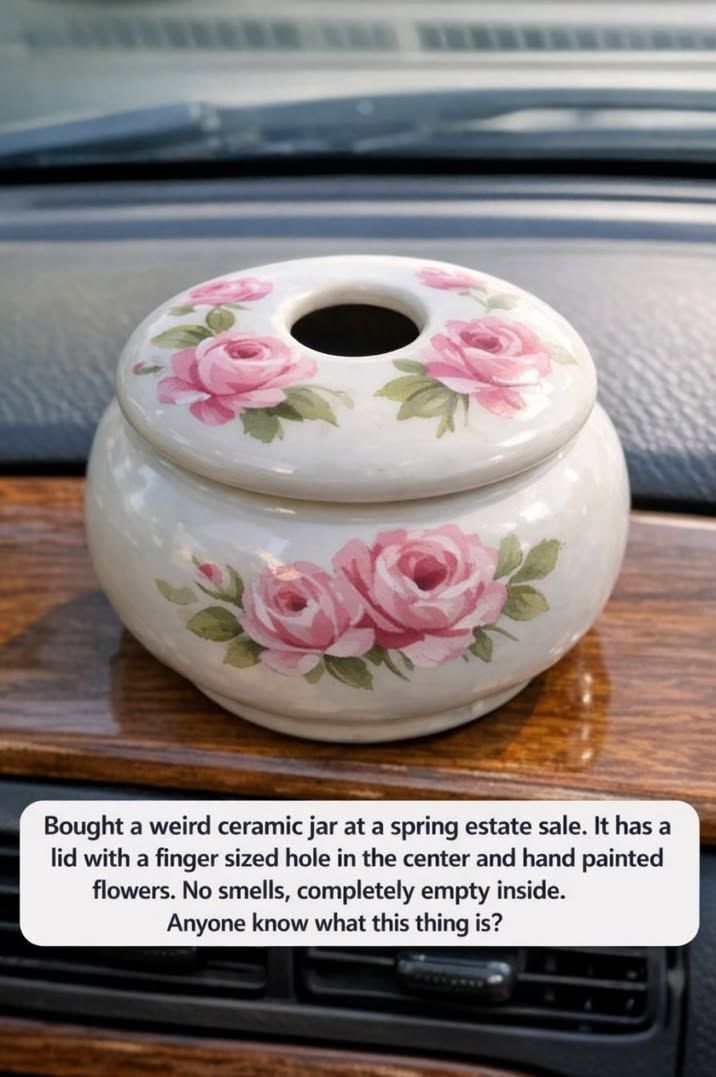
During a recent spring estate sale, I came across a small ceramic jar decorated with hand-painted flowers. It looked elegant, but the lid had one very odd detail: a perfectly round finger-sized hole in the center.
The jar was empty, clean, and gave no clue about its purpose. After some research, I discovered this mysterious piece was likely a once-common household item that most people today have never heard of.
1. The Curious Estate Sale Find
The jar was small and delicate, roughly five inches tall and four inches wide. It had a glossy glazed finish with soft floral patterns in pink and blue.
Its strangest feature was the lid:
- Snug-fitting top
- Smooth round opening in the center
- Hole about finger-width size
- Clearly intentional, not damage
At first glance, it looked decorative—but that opening suggested it had a practical purpose.
2. The Clues Hidden in the Design
Several details pointed to its age and use:
- Hand-painted floral style common in late 1800s to early 1900s
- Small vanity-table size
- Decorative but functional form
- Covered storage container with access hole
Items from Victorian and Edwardian dressing tables were often beautiful everyday tools, so this likely belonged in a bedroom or vanity area.
3. What It Actually Was: A Hair Receiver
After comparing similar antiques, the mystery jar appears to be a hair receiver.
Hair receivers were common personal grooming accessories in the Victorian era. They were used to collect loose hair removed from brushes and combs.
Instead of throwing hair away, people saved it for reuse.
4. Why People Saved Hair in the Past
In the 19th century, hair was often repurposed in practical and decorative ways.
Collected hair could be used for:
- Filling pincushions
- Making hairpieces or switches
- Adding volume to hairstyles
- Creating sentimental hair art or jewelry
Saving hair was considered normal household practice at the time.
5. Why the Hole in the Lid Matters
The round hole in the lid is the defining clue.
It allowed someone to:
- Pull hair from a brush
- Push it through the hole
- Store it neatly inside
- Keep the vanity looking tidy
The lid prevented loose strands from being visible while keeping the container attractive.
6. Common Materials and Styles
Hair receivers were made in several materials, including:
- Porcelain
- Ceramic
- Pressed glass
- Silver-plated metal
- Painted china
Popular decorations included:
- Flowers
- Gold trim
- Pastoral scenes
- Cherubs
- Matching vanity-set patterns
Many were sold with matching powder jars, trays, and perfume bottles.
7. How to Identify the Maker and Age
Check the bottom of the jar for:
- Stamped maker’s marks
- Country of origin
- Pattern numbers
- Handwritten artist marks
Common antique makers may include European and Japanese porcelain companies from the late 1800s and early 1900s.
The style of glaze, floral painting, and construction can also help estimate age.
8. How to Clean and Preserve It
If you own one, clean it gently.
Best Care Tips:
- Dust with a soft cloth
- Use mild soap and damp cloth if needed
- Avoid soaking in water
- Never scrub painted details
- Keep away from extreme humidity or heat
- Display safely to prevent chips
Older glaze may develop fine crackling, which is common with age.
9. Creative Ways to Use One Today
Even if you don’t collect antiques, a hair receiver can be repurposed beautifully.
Ideas include:
- Jewelry holder
- Cotton swab container
- Small dried flower vase
- Desk trinket jar
- Vanity décor piece
- Conversation starter on a shelf
Its unusual design makes it memorable.
10. What It Might Be Worth
Value depends on:
- Condition
- Maker
- Age
- Rarity
- Matching vanity set pieces
- Hand-painted quality
Many common examples sell for modest amounts, while rare marked porcelain pieces can be worth more to collectors.
11. Where to Learn More
If you enjoy identifying vintage finds, explore:
- Antique collector guides
- Online auction archives
- Ceramic maker mark databases
- Estate sale groups
- Antique shops and appraisers
- Decorative arts museums
You may discover many forgotten household objects with fascinating stories.
Final Thoughts
That strange ceramic jar with a hole in the lid turned out not to be odd at all—it was a practical beauty item from another era. Hair receivers were once common parts of daily grooming routines, but today they’re charming reminders of how household habits have changed.
So if you spot one at an estate sale, you may be holding a small piece of social history.
ADVERTISEMENT