
ADVERTISEMENT
ADVERTISEMENT
ADVERTISEMENT
Bread is one of the most common foods found in kitchens around the world. It is loved for its convenience, comforting flavor, and endless uses—from toast at breakfast to sandwiches at lunch. But one question continues to divide households: Should bread stay on the counter or go in the refrigerator?
Some people always leave bread in the pantry or bread box, while others refrigerate it to make it last longer. The truth is that both methods have advantages, depending on the type of bread, your climate, and how quickly you plan to eat it.
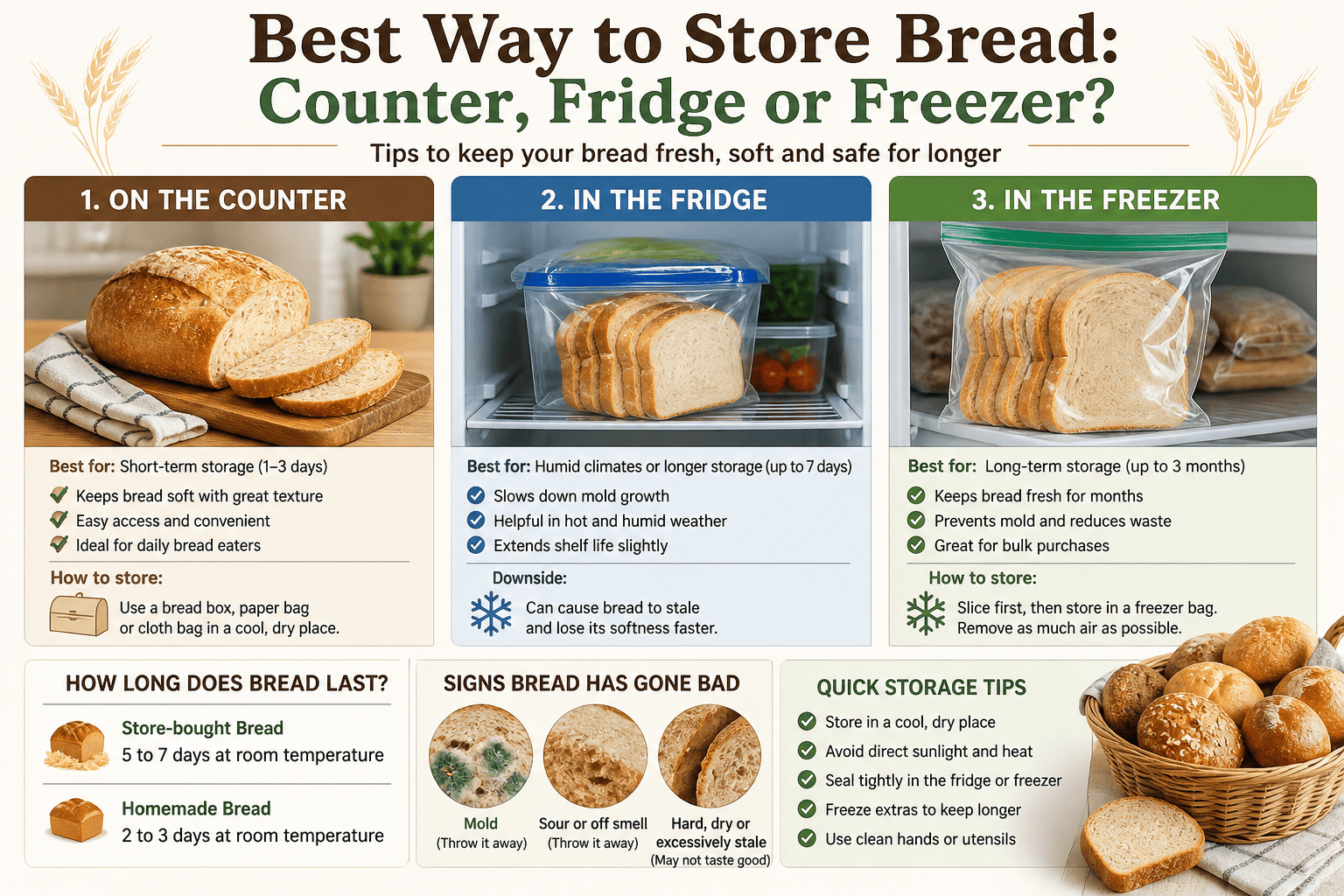
How Long Does Bread Last at Room Temperature?
The shelf life of bread depends on whether it is homemade or store-bought.
Store-Bought Bread
Most packaged breads contain preservatives that help prevent mold and keep them soft longer. They usually stay fresh for:
- 5 to 7 days at room temperature
Homemade Bread
Fresh homemade bread typically contains fewer preservatives, so it often lasts:
- 2 to 3 days on the counter
Because homemade bread has more moisture and fewer additives, it spoils faster.
What Causes Bread to Go Bad?
Bread usually becomes inedible for two reasons:
1. Mold Growth
Mold thrives in warm, damp environments. It may appear as:
- Green spots
- White fuzz
- Blue or black patches
If mold is visible, the bread should be discarded.
2. Staling
Stale bread is different from spoiled bread. It happens when starches inside the bread harden over time, causing bread to become:
- Dry
- Tough
- Crumbly
Stale bread is not always unsafe, but it may not taste good.
Is It Better to Store Bread on the Counter?
Keeping bread on the counter is ideal if you eat it quickly.
Benefits:
- Maintains soft texture
- Better flavor
- Convenient access
- No reheating needed
Best For:
- Families who eat bread daily
- Sandwich bread used within a few days
- Fresh bakery loaves
Store it in a bread box, cloth bag, or loosely sealed bag in a cool, dry place.
Does Refrigerating Bread Help?
Yes, refrigeration can slow mold growth, especially in humid or hot climates. However, it often causes bread to stale faster.
Benefits:
- Slows mold
- Extends usable life slightly
- Helpful in humid weather
Downsides:
- Bread becomes dry faster
- Texture becomes firm
- Flavor may suffer
Refrigeration works best when mold is a bigger problem than staleness.
What About Freezing Bread?
Freezing is often the best option for long-term storage.
Why Freeze Bread?
- Keeps bread fresh for months
- Prevents mold
- Reduces waste
- Great for bulk purchases
Best Method:
- Slice bread first
- Place in freezer bag
- Remove excess air
- Freeze up to 3 months
Take out only what you need and toast or thaw slices as needed.
Signs Bread Should Be Thrown Away
Discard bread if you notice:
- Visible mold
- Sour or unpleasant smell
- Sticky texture
- Excess moisture inside package
If it is only hard or dry, it may still be usable for croutons, breadcrumbs, or toast.
What Experts Recommend
Food storage experts often suggest:
For 1–3 Days:
Store on the counter.
For Up to a Week:
Counter storage for store-bought bread, depending on climate.
For Longer Than a Week:
Freeze it.
Use the Fridge If:
You live in a very humid area where bread molds quickly.
Best Storage Tips for Fresh Bread
To keep bread fresher longer:
- Store in a cool, dry place
- Keep sealed but not airtight if fresh bakery bread
- Avoid direct sunlight
- Keep away from heat sources
- Freeze extras immediately
Final Verdict
There is no single perfect way to store bread. The best method depends on how fast you eat it and the environment in your kitchen.
- Counter: Best for freshness and texture
- Fridge: Best for slowing mold in humid climates
- Freezer: Best for long-term storage
If you want bread at its best, buy only what you can use in a few days and freeze the rest. That way, every slice tastes fresh and nothing goes to waste.
ADVERTISEMENT