
ADVERTISEMENT
ADVERTISEMENT
ADVERTISEMENT
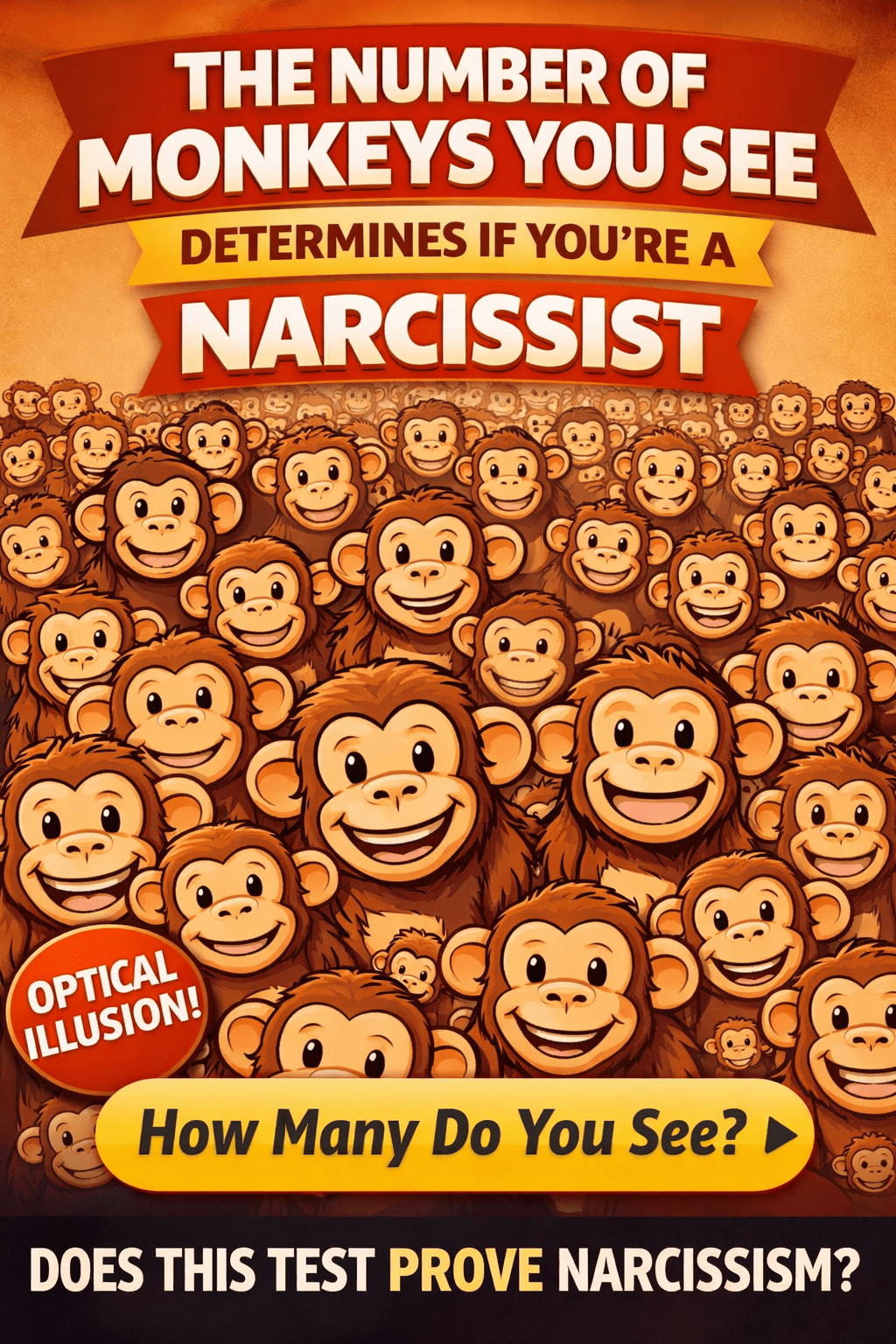
At first glance, it seems like a simple, playful puzzle — rows of smiling monkeys lined up against a plain background. Nothing complicated, nothing serious.
Then you notice the bold statement at the top:
“The number of monkeys you see determines if you’re a narcissist.”
That one sentence is enough to stop you mid-scroll.
Naturally, you start counting.
But here’s the twist — the real story isn’t about the monkeys at all.
It’s about how your brain works.
Some people glance at the image and quickly settle on a clear number. They trust what they see right away and move on. Others keep looking… and suddenly, more monkeys appear. Smaller shapes hidden inside larger ones, overlapping patterns, details that weren’t obvious at first.
Now the answer doesn’t feel so certain anymore.
And that’s exactly the point.
Images like this play with perception. They make it seem like there’s a single “correct” answer, when in reality, they highlight something much more human: we all see things differently.
Your brain isn’t a camera simply recording what’s in front of you. It’s constantly interpreting, filtering, and organizing information. It decides what stands out, what gets ignored, and what deserves a second look — all based on experience, attention, and mental shortcuts you don’t even notice.
So when one person sees fewer monkeys and another sees more, it doesn’t mean one is more intelligent — or more self-absorbed.
It just means they’re observing differently.
And that brings us to the biggest myth in the image: the narcissism claim.
There’s no scientific evidence linking how many monkeys you count to narcissistic traits. That part is simply viral bait — designed to grab attention, spark curiosity, and encourage people to share.
But that doesn’t make the puzzle useless.
It just means its value lies somewhere else.
If you tend to notice the bigger, more obvious shapes first, you might naturally focus on the big picture. If you quickly pick up on hidden details and layered patterns, you might lean toward a more detail-oriented way of seeing the world.
Neither is better.
They’re just different ways of processing what you see.
And that’s exactly why puzzles like this spread so quickly online. They trigger curiosity (“Did I miss something?”), self-reflection (“What does this say about me?”), and comparison (“What did others see?”).
Suddenly, a simple image becomes a conversation.
Maybe that’s the real takeaway.
What we see at first glance isn’t always the full picture. Sometimes it takes a second look — or even a third — to notice what was there all along.
So no, the number of monkeys you see won’t diagnose narcissism.
But it might remind you of something more meaningful:
Look closer — there’s often more than meets the eye.
So… how many monkeys do you see now?
ADVERTISEMENT