
ADVERTISEMENT
ADVERTISEMENT
ADVERTISEMENT
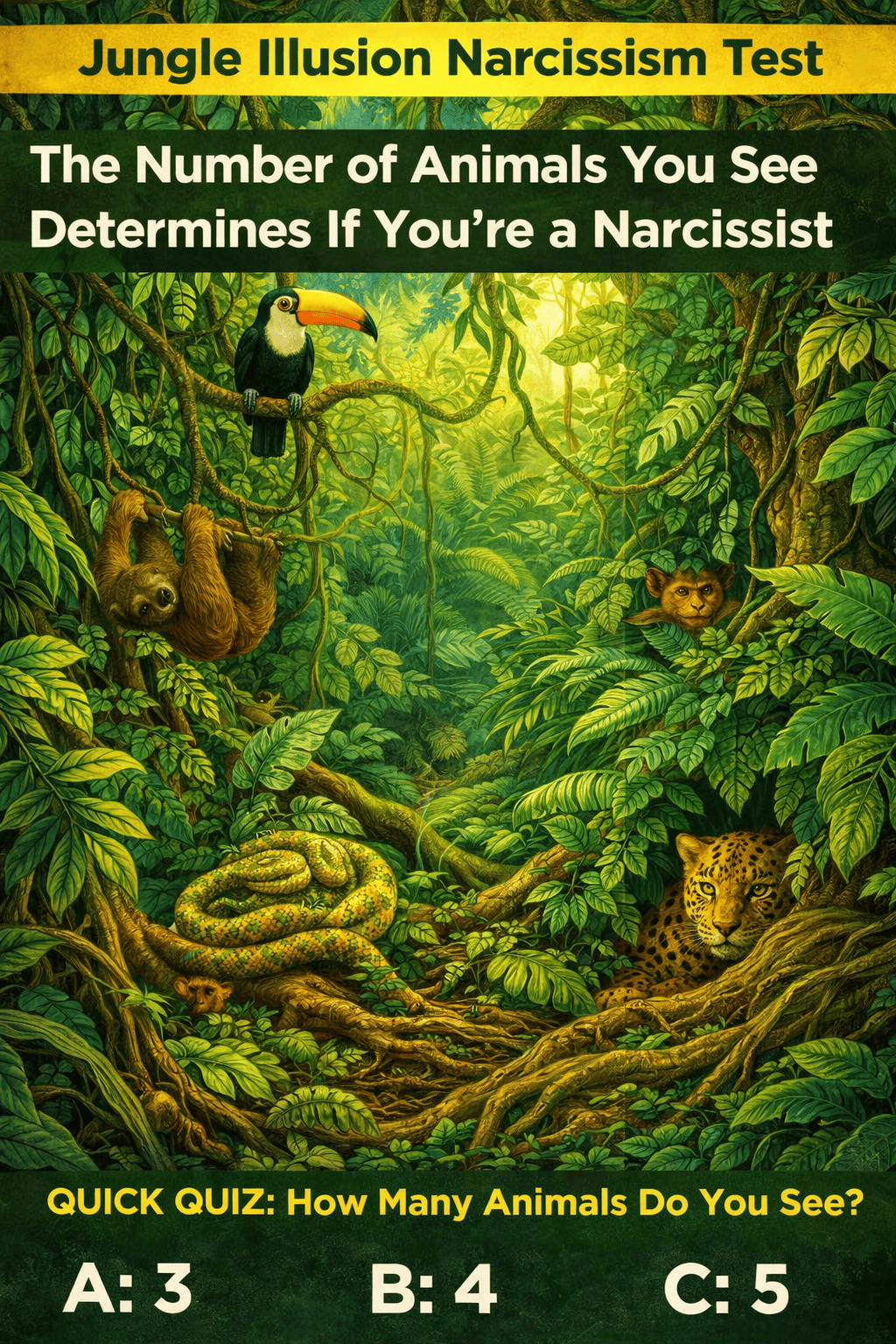
At first glance, this jungle illustration appears to be a simple drawing of a dense forest filled with tangled roots, hanging vines, and thick layers of leaves. However, if you look more carefully, you’ll notice that several animals are cleverly hidden within the foliage. The challenge is to spot as many of them as possible.
The image is often paired with a bold headline claiming:
“The Number of Animals You See Determines If You’re a Narcissist.”
Viewers are usually given three choices:
-
A: 3 animals
-
B: 4 animals
-
C: 5 animals
While this statement sounds intriguing and makes people curious about their results, the truth is a bit different.
Finding the Hidden Animals
When observing the jungle scene closely, you might be able to identify several animals blended into the environment, such as:
-
A toucan sitting on a branch
-
A sloth hanging from a tree limb
-
A snake coiled near the forest floor
-
A monkey hidden among the leaves
-
A jaguar or leopard resting in the background
Some people notice only three animals at first glance, while others eventually spot four or even all five after studying the picture longer.
But the number of animals someone sees does not actually reveal anything about their personality.
Why Narcissism Is Used in the Headline
Titles like this are designed to capture attention and spark curiosity. The word narcissism is particularly powerful because it relates to topics people often think about—ego, self-confidence, attention, and empathy.
In psychology, narcissism exists on a spectrum rather than being a simple label.
-
Low levels: Healthy confidence and self-assurance
-
Moderate levels: A desire for recognition and sensitivity to criticism
-
High levels: Strong feelings of superiority, entitlement, and reduced empathy
-
Extreme levels: Narcissistic Personality Disorder (NPD), a diagnosable mental health condition
A visual puzzle or optical illusion cannot measure or diagnose any of these traits.
What the Illusion Really Reveals
Although the image isn’t a personality test, it does highlight something interesting about how people observe details.
Different viewers may experience the illusion in different ways:
-
Some see it simply as a fun visual puzzle.
-
Others feel surprised when they realize they missed certain animals.
-
A few people become curious about what their perception might say about their attention or focus.
In reality, the illusion is less about personality and more about visual perception and observation skills.
The Real Takeaway
This jungle illusion isn’t a psychological test or a way to determine narcissism. Instead, it’s a playful visual challenge designed to engage curiosity and encourage people to look more closely at the details around them.
ADVERTISEMENT