
ADVERTISEMENT
ADVERTISEMENT
ADVERTISEMENT
Smarter Energy Habits Start at Home
Today’s homes are filled with appliances designed to make life easier, faster, and more comfortable. From smart TVs and coffee makers to kitchen gadgets and gaming systems, modern technology has become part of everyday living. But while these devices offer convenience, many homeowners are shocked when their monthly electricity bill suddenly climbs higher than expected.
Surprisingly, the issue often isn’t one large appliance running nonstop. Instead, the biggest source of wasted energy is usually a combination of small habits and devices quietly consuming electricity around the clock.
The Hidden Energy Drain: Standby Power
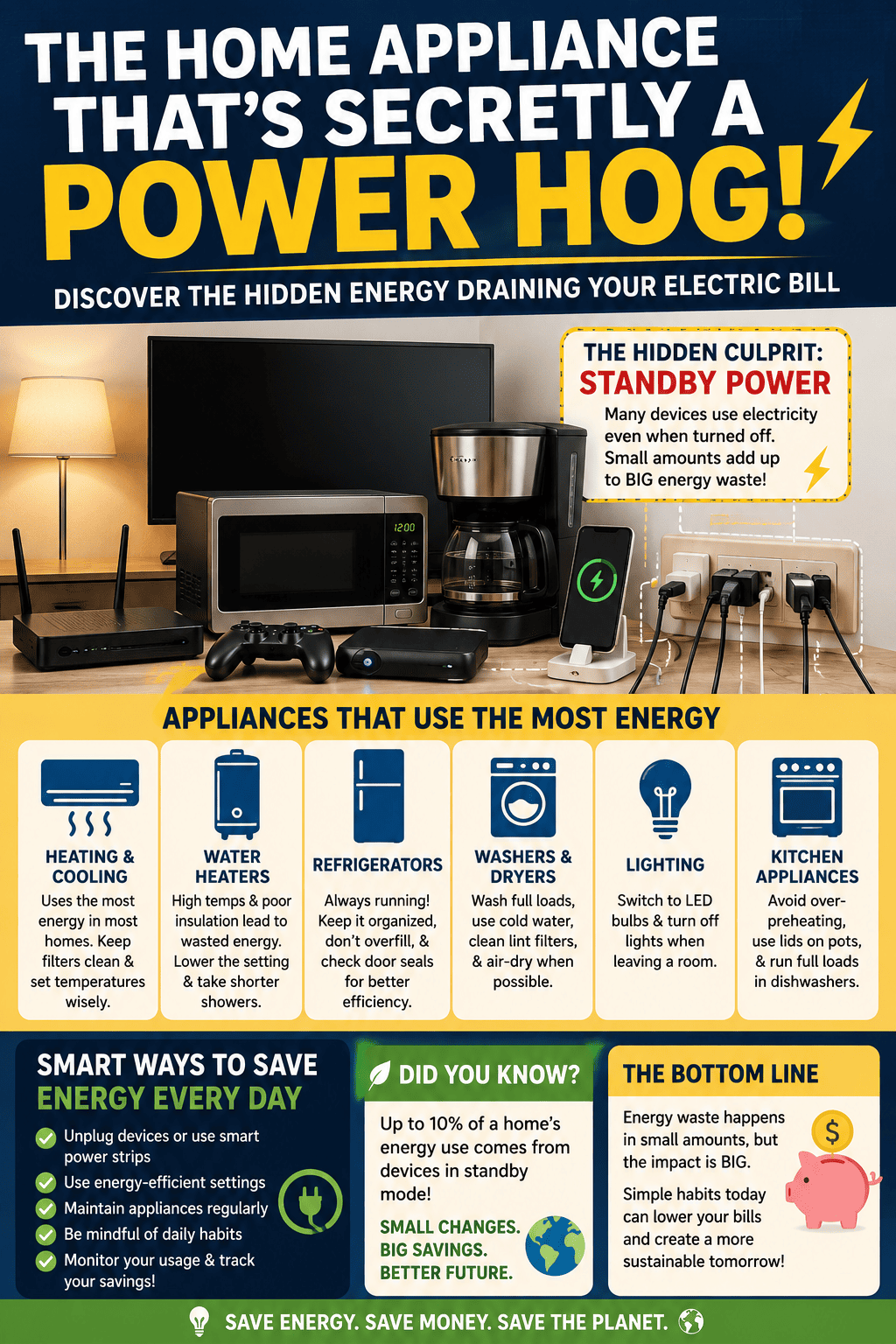
Many people assume appliances stop using electricity once they’re turned off. In reality, countless devices continue drawing power even while sitting idle. This is known as “standby power” or “phantom energy use.”
Common culprits include:
- Televisions
- Gaming consoles
- Microwaves with digital clocks
- Coffee makers
- Phone chargers
- Streaming devices
- Smart speakers
- Wi-Fi routers
Although each item uses only a small amount of electricity individually, the combined effect across an entire home can noticeably increase energy costs over time.
Phone chargers are especially deceptive. Even when no phone is connected, plugged-in chargers continue pulling small amounts of electricity from the outlet. Smart devices and internet equipment also remain active 24/7 so they can instantly respond when needed.
A simple way to reduce this waste is by unplugging unused electronics or using switch-controlled power strips that cut power completely when devices aren’t in use.
Appliances That Use the Most Energy
Heating and Cooling Systems
Heating and air conditioning systems are typically the largest energy consumers in a home. Dirty filters, blocked vents, or poorly managed thermostat settings force HVAC systems to work much harder than necessary.
Small adjustments can lead to meaningful savings:
- Raise the thermostat slightly during summer
- Lower it a bit during winter
- Replace air filters regularly
- Keep vents clean and unobstructed
Water Heaters
Water heaters constantly work to maintain hot water throughout the day and night. High temperature settings, poor insulation, and excessive hot water use can all increase energy consumption.
To improve efficiency:
- Lower the water heater temperature slightly
- Use warm or cold water for laundry when possible
- Take shorter showers
- Insulate older water heaters
Refrigerators
Because refrigerators run continuously, they naturally consume a large amount of electricity. Older models are especially inefficient, but even newer refrigerators waste energy if not maintained properly.
Helpful habits include:
- Keeping door seals clean and tight
- Avoiding long periods with the door open
- Allowing hot food to cool before refrigerating
- Keeping the interior organized for better airflow
Washers and Dryers
Laundry appliances also contribute heavily to household energy use, especially clothes dryers operating on high heat.
To reduce energy waste:
- Wash full loads instead of several small ones
- Clean dryer lint filters regularly
- Use lower heat settings
- Air-dry clothing whenever possible
Lighting and Kitchen Energy Waste
Lighting may seem harmless, but outdated incandescent bulbs consume significantly more energy than modern LED bulbs. Even efficient lighting wastes electricity when left on unnecessarily.
Building simple habits like turning off lights in empty rooms can make a noticeable difference over time.
Kitchen routines also affect energy use more than many realize. Ovens, stovetops, and dishwashers become less efficient when used carelessly.
Smart kitchen habits include:
- Avoid over-preheating the oven
- Keep oven doors closed while cooking
- Use lids on pots to trap heat
- Match burner size to cookware
- Run dishwashers only when full
- Choose eco-friendly wash cycles
Small Adjustments Add Up
Energy waste usually happens gradually, making it difficult to notice at first. Rarely is one appliance solely responsible for high utility bills. Instead, the combined effect of many small inefficiencies slowly drives costs upward month after month.
The good news is that reducing energy consumption doesn’t require sacrificing comfort. Minor adjustments—combined with regular appliance maintenance and mindful daily habits—can significantly lower electricity use over time.
Monitoring utility bills and paying attention to usage patterns can also help homeowners identify where improvements matter most.
Final Thoughts
Understanding how household appliances consume energy gives homeowners greater control over their monthly expenses. From standby power to inefficient routines, small details can have a surprisingly large impact on electricity costs.
By unplugging unused devices, maintaining major appliances, and practicing energy-conscious habits, families can enjoy a comfortable home while lowering bills and supporting a more sustainable lifestyle at the same time.
ADVERTISEMENT