
ADVERTISEMENT
ADVERTISEMENT
ADVERTISEMENT
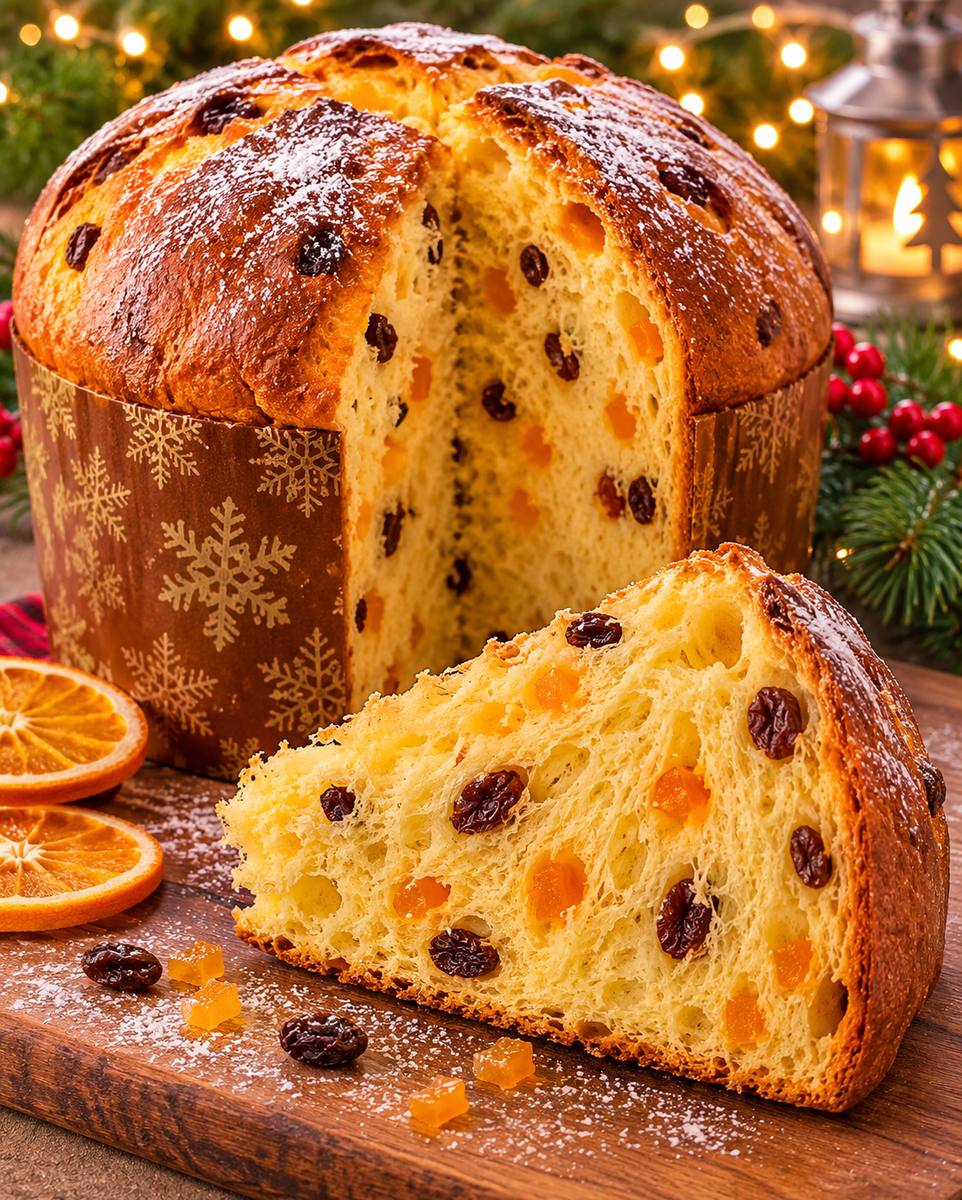
This gluten free panettone bakes up tall, golden and wonderfully soft, with a light, fluffy crumb full of juicy raisins and candied orange and lemon peel. It’s baked in a classic paper panettone mold for that iconic domed shape, and it smells like orange, vanilla and Christmas. Making a homemade gluten free panettone sounds intimidating, but this version needs no starter and no multi-day process: just one rise and a bit of patience. It’s a show-stopping gluten free Christmas bread for holiday breakfasts, dessert tables and gifts.
Recipe adapted from The Loopy Whisk, rewritten with my own notes and tips.
Prep Time: 30 minutes | Proof Time: about 2–2 1/4 hours | Bake Time: 55–60 minutes | Cooling: 3–4 hours (or overnight) | Total Time: about 6 1/2 hours | Yield: 1 panettone (8–10 slices) | Oven: 350°F (180°C)
Why You’ll Love This Gluten Free Panettone
- Soft and fluffy with an open, airy crumb, nothing like dense gluten free bread.
- No starter or 3-day process: just one rise.
- Classic festive flavor with orange zest, vanilla, raisins and candied peel.
- Tall bakery-style loaf baked in a paper mold.
- Perfect for gifting to friends with celiac disease or gluten sensitivity.
Equipment
- A 750 g paper panettone mold (about 6 inches/15 cm wide and 4 1/4 inches/11 cm tall). No mold? Line the bottom of a 6-inch (15 cm) cake pan with parchment and wrap the sides with a tall parchment collar (about 4 1/4 inches/11 cm), overlapping the ends for stability.
- A stand mixer with dough hook (recommended, since the dough is very soft)
- 2 long metal skewers for cooling
Ingredients
Add-ins
- 100 g (2/3 cup) raisins or sultanas
- 80 g (1/2 cup) candied citrus peel (orange and lemon)
Dough
- 15 g (3 tbsp) whole psyllium husk (or 13 g psyllium husk powder)
- 320 g (1 1/3 cups) lukewarm water (use 300 g for a slightly less sticky dough)
- 190 g (1 2/3 cups) tapioca starch (or cornstarch, potato starch or arrowroot)
- 110 g (3/4 cup + 1 tbsp) millet flour, plus extra for dusting (or finely ground brown rice flour)
- 50 g (1/3 cup + 1 tbsp) sorghum flour (or light buckwheat, white teff or certified gluten free oat flour)
- 75 g (1/4 cup + 2 tbsp) granulated or caster sugar
- 8 g (2 1/2 tsp) instant yeast (or 10 g active dry yeast)
- 8 g (2 tsp) baking powder
- 7 g (2 3/4 tsp) xanthan gum
- 8 g (1 1/2 tsp) salt
- 1 large egg, at room temperature
- 2 large egg yolks, at room temperature
- 40 g (3 tbsp) unsalted butter, melted
- 40 g (3 tbsp) sunflower oil or another neutral oil
- 1 teaspoon orange extract
- 1/2 teaspoon vanilla bean paste (or 1 teaspoon vanilla extract)
- Zest of 1 orange
For Finishing
- 1 egg white, lightly whisked
- 1 small pat of butter (about 1 teaspoon)
How to Make Gluten Free Panettone
1. Prepare the add-ins
- Cover the raisins with hot water and let them plump for 10–15 minutes.
- Drain, squeeze gently and pat completely dry with paper towels so no extra water gets into the dough.
2. Make the dough
- Psyllium gel: Stir the psyllium husk into the lukewarm water. Within about a minute it will thicken into a gel.
- Dry ingredients: In the bowl of a stand mixer, whisk together the tapioca starch, millet flour, sorghum flour, sugar, yeast, baking powder, xanthan gum and salt.
- Wet ingredients: Add the egg, egg yolks, melted butter, oil, orange extract, vanilla and orange zest to the psyllium gel and mix well.
- Knead: Add the wet mixture to the dry ingredients and knead until smooth, then keep kneading for another 4–5 minutes with a mixer (6–8 minutes by hand). Scrape the bowl a few times so no dry flour remains. This extra kneading is the secret to a smooth, fluffy panettone.
The dough will be very soft and sticky. That’s normal! Don’t add more flour to the dough itself, or the panettone will turn out dense. If it’s too hard to handle, chill it for about 1 hour first.
Using active dry yeast? Dissolve it with 1 tablespoon of the sugar in 80 g of the lukewarm water and let it foam for 5–10 minutes. Use the remaining water for the psyllium gel.
3. Shape
- Turn the dough out onto a generously floured surface (millet flour works well) and flour your hands and the top of the dough.
- Pat it into a rough slab about 1 inch (2.5 cm) thick.
- Scatter the raisins and candied peel on top, fold the dough over them and knead gently until evenly distributed.
- Shape into a smooth ball, brush off excess flour and place it seam side down in the paper mold set on a baking sheet.
4. Score and proof
- With a sharp knife or bread lame, cut a shallow cross across the top from edge to edge. This helps it rise evenly without tearing.
- Cover loosely with plastic wrap and let rise in a warm place for about 2–2 1/4 hours, until doubled. It should start about 2 inches (5 cm) below the rim and end up about 1 inch (2.5–3 cm) above it.
- Cold kitchen? Proof it in the turned-off oven with a mug of just-boiled water beside it.
5. Bake
- About 30 minutes before the end of proofing, place the rack in the lower-middle position and preheat the oven to 350°F (180°C).
- Gently brush the top with egg white, avoiding the cuts. Score again lightly between the first cuts, then place the pat of butter in the center.
- Bake for 55–60 minutes, until deep golden brown and a skewer inserted in the center comes out clean. If the top browns too fast (usually after 25–30 minutes), cover loosely with foil.
6. Cool upside down
- Right out of the oven, push two metal skewers through the paper mold about 1 inch (2.5 cm) above the base. (Wooden skewers can snap: gluten free panettone is heavier than regular.)
- Flip it upside down and hang it between two tall pots or containers to cool for at least 3–4 hours. Hanging keeps the tall dome from collapsing.
- For the best crumb, let it hang overnight. Once completely cool, you can lower it (still hanging) into a large pot and cover with clean kitchen towels so it doesn’t dry out.
- Cut only when fully cooled, then slice into wedges.
Tips for Success
- Weigh your ingredients. Gluten free baking is much more reliable with a kitchen scale.
- Don’t skip the psyllium and xanthan gum: they replace gluten and give the panettone its structure and stretch.
- Use room-temperature eggs so the dough rises well.
- Be patient with the rise. Rich doughs proof slowly; go by size, not the clock.
- Never cut it warm: the crumb finishes setting as it cools.
Variations
- Chocolate: Replace the raisins and peel with 150 g chocolate chips.
- Cranberry orange: Use dried cranberries instead of raisins.
- Rum raisin: Soak the raisins in rum instead of hot water.
How to Store and Serve
Keep the panettone in a closed container or bag in a cool, dry place for 2–3 days. Leftovers are amazing toasted, turned into French toast or bread pudding. You can freeze slices for up to 2 months.
Frequently Asked Questions
Can I make it without a panettone mold?
Yes. Use a 6-inch (15 cm) round cake pan with a tall parchment collar.
Why is my dough so sticky?
That’s how it should be. The high moisture makes the panettone soft. Use plenty of flour on the surface and your hands, or chill the dough for 1 hour.
Can I use psyllium powder instead of whole husk?
Yes, but use only 13 g because the powder is more concentrated.
Is this panettone dairy free?
Not as written, but you can replace the butter with more oil or a plant-based butter.
More Christmas Baking
ADVERTISEMENT