
ADVERTISEMENT
ADVERTISEMENT
ADVERTISEMENT
No more guessing at the grocery store! Choosing a sweet, juicy watermelon is easier when you know what to look for. While no single trick can guarantee the perfect melon, combining a few simple clues can greatly improve your chances.
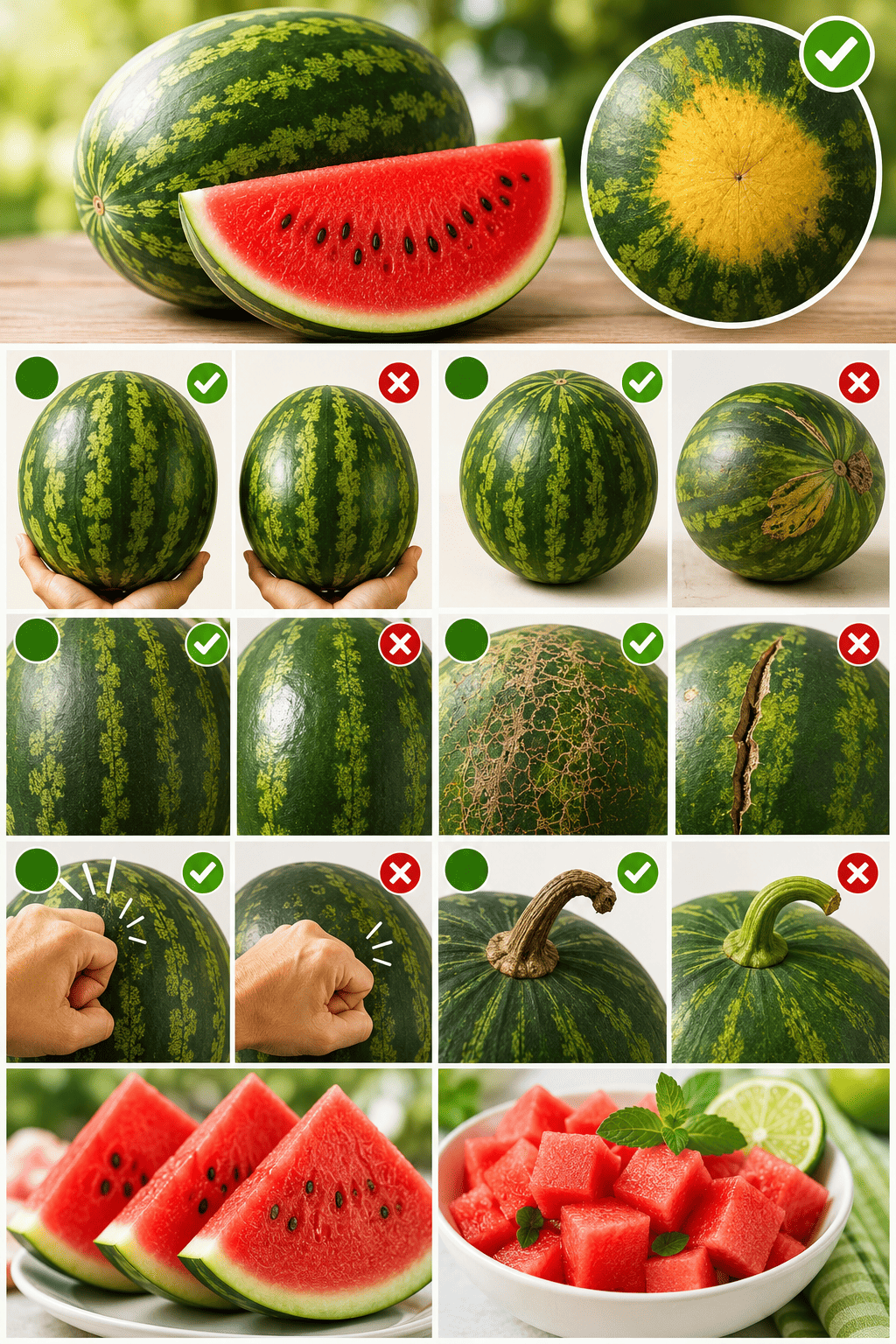
1. Look for a Creamy Yellow Field Spot
The field spot is the area where the watermelon rested on the ground while growing.
Look for a spot that is:
- Creamy yellow
- Deep yellow
- Buttery in color
A watermelon with a very pale or white field spot may have been picked before reaching full maturity.
2. Choose a Heavy Watermelon
Pick up a few watermelons that are similar in size.
Choose the one that feels heavier for its size. A heavier watermelon often has plenty of water and dense, juicy flesh inside.
3. Check the Shape
Look for a watermelon with a:
- Symmetrical shape
- Even surface
- Firm appearance
Avoid melons with large dents, soft spots, deep cuts, leaking areas, or mold.
Small scratches and cosmetic marks are usually not a problem.
4. Look for a Firm, Dull Rind
A good watermelon should have a rind that feels firm and resists gentle pressure.
Many ripe watermelons also have a relatively dull or matte-looking surface rather than an extremely shiny one.
On striped varieties, look for clear contrast between the lighter and darker stripes.
5. Don’t Worry About Brown Webbing
Some watermelons have rough brown lines or web-like markings on the rind.
These natural marks can develop during growth and are often considered a positive sign by experienced shoppers. Just make sure they are not active cracks, moldy areas, or signs of damage.
6. Try the Thump Test
Give the watermelon a gentle tap.
A deeper, more resonant sound can be one useful clue, while a dull or flat sound may suggest poor texture or an overripe melon.
However, the thump test works best when combined with the field spot, weight, shape, and rind appearance.
7. Check the Stem if One Is Present
If the watermelon still has part of its stem attached, a dry, brown stem may suggest the fruit had more time to mature before harvesting.
A green stem can sometimes indicate earlier harvesting, but stems are often removed during shipping, so this should only be used as an extra clue.
Quick Watermelon Shopping Checklist
Before putting a watermelon in your cart, look for:
✅ A creamy yellow field spot
✅ Heavy weight for its size
✅ A symmetrical shape
✅ A firm, mostly dull rind
✅ No soft spots, leaks, or mold
✅ Clear stripe contrast
✅ Natural webbing or sugar scars as a possible bonus
The best approach is to use several clues together instead of relying on one trick. With a little practice, choosing a sweet, crisp watermelon can become much less of a guessing game!
ADVERTISEMENT