
ADVERTISEMENT
ADVERTISEMENT
ADVERTISEMENT
Most of us cook cabbage the same way: simmered in lightly salted water, sautéed with butter, or roasted until tender. But what happens if you replace the cooking water with a bottle of 7-Up?
Curious to see whether the lemon-lime soda could transform an ordinary vegetable into something unexpectedly delicious, I decided to put the idea to the test. The results were surprising, both in flavor and appearance.
Here’s exactly what happened.
Why I Tried Cooking Cabbage in 7-Up
I enjoy experimenting with simple ingredients to see how small changes can create completely different flavors. Cabbage is affordable, nutritious, and incredibly versatile, yet it’s often considered one of the most underrated vegetables.
Since 7-Up has a light citrus flavor and contains plenty of sugar, I wondered whether it would add sweetness while helping tenderize the cabbage. My hope was that the soda would create a lightly glazed side dish with a unique balance of sweet and savory flavors.
Preparing the Experiment
For this test, I used:
- 1 medium green cabbage, chopped into bite-sized pieces
- 1 liter of 7-Up
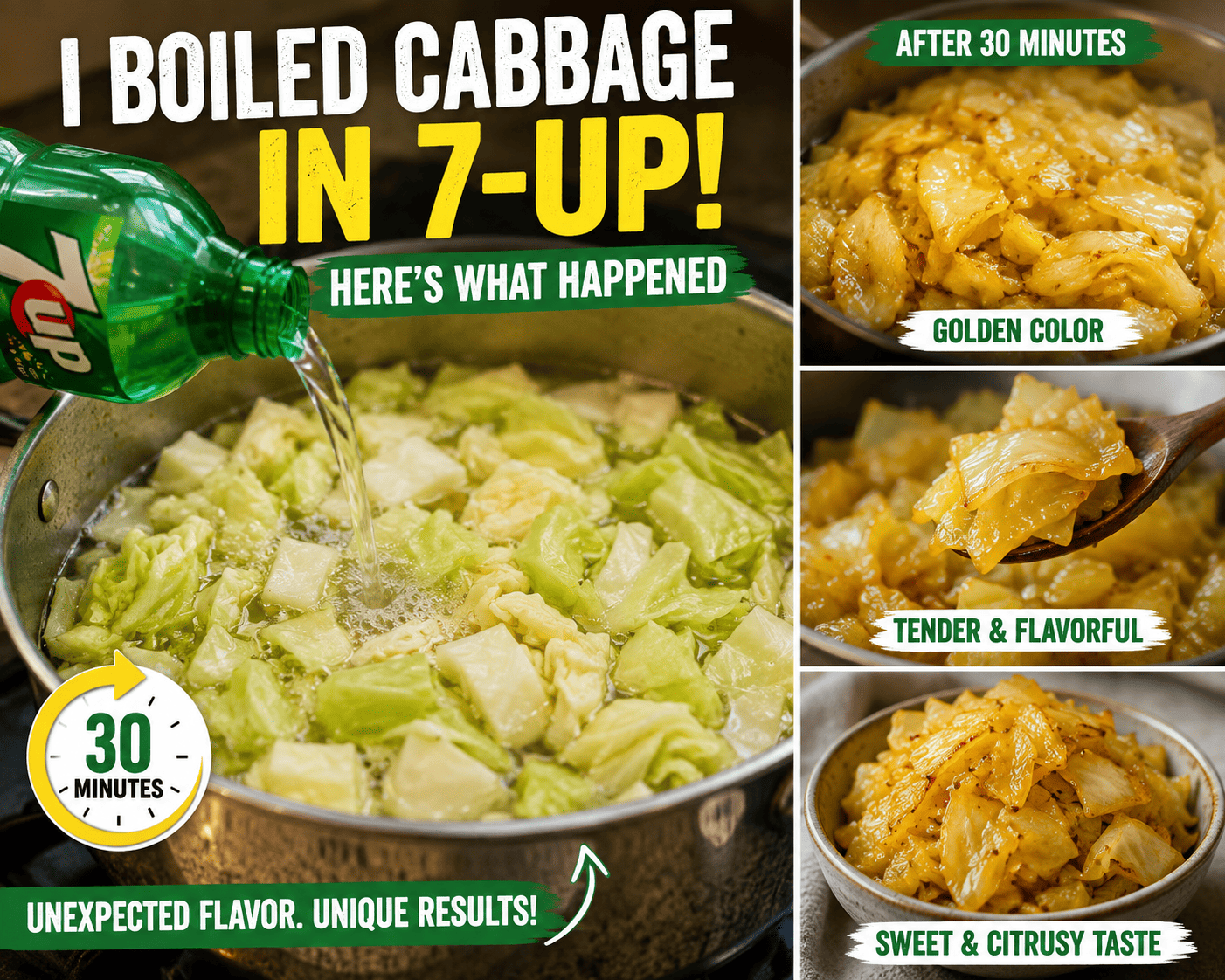
After chopping the cabbage, I poured the soda into a large pot and brought it to a gentle boil. Once the bubbles settled into a steady simmer, I added the cabbage and made sure every piece was covered by the liquid.
The cabbage cooked for about 30 minutes while I watched to see how the soda would change it.
What Happened During Cooking
As the cabbage simmered, the kitchen filled with the unmistakable aroma of lemon-lime soda instead of the stronger scent normally associated with boiling cabbage.
As the liquid reduced, it became noticeably thicker. Since much of the water evaporated during cooking, the remaining syrup became more concentrated, coating the cabbage with a light glaze.
It was immediately clear that this wouldn’t taste anything like traditional boiled cabbage.
The Color Changed Dramatically
One of the biggest surprises was the appearance.
Instead of remaining pale green, the cabbage gradually developed a deeper golden color with slightly caramelized edges.
The natural sugars in the soda, combined with the heat, created a glossy finish that made the cabbage look more like a glazed side dish than a boiled vegetable.
The Texture Was Different Too
Traditional boiled cabbage can sometimes become overly soft or waterlogged.
This version remained tender while still holding its shape. Although it softened during cooking, the cabbage retained a pleasant bite rather than turning mushy.
The reduced syrup also helped coat each piece, giving it a richer mouthfeel than cabbage cooked in plain water.
The Flavor Was Surprisingly Unique
The biggest difference was the taste.
The cabbage absorbed subtle citrus notes from the 7-Up while developing a noticeable sweetness from the concentrated sugars.
Rather than overpowering the vegetable, the sweetness balanced the cabbage’s naturally earthy flavor. The result reminded me of sweet-and-sour dishes, with a gentle lemon-lime finish that was unexpected but enjoyable.
If you prefer savory vegetables, this method may be too sweet. But if you enjoy experimenting with flavor combinations, it’s certainly an interesting experience.
Did the Soda Make the Cabbage Sweeter?
Absolutely.
As the soda reduced during cooking, its sugars became more concentrated, giving the cabbage a lightly candied exterior.
While the sweetness wasn’t overwhelming, it was much more noticeable than I expected.
The cabbage remained tender without falling apart, making it an interesting alternative to traditional boiling.
The Kitchen Smelled Completely Different
Anyone who has boiled cabbage knows the strong aroma it can produce.
Cooking it in 7-Up created a completely different experience.
Instead of a heavy vegetable smell, the kitchen filled with light citrus and sweet soda aromas that lingered throughout the cooking process.
It was definitely one of the more pleasant surprises.
The Cleanup Was the Biggest Downside
There was one drawback.
After removing the cabbage, the pot was coated with a sticky sugary residue left behind as the soda reduced.
Cleaning required more soaking and scrubbing than usual, making cleanup slightly more time-consuming than simply boiling vegetables in water.
Is Cooking Vegetables in Soda a Good Idea?
From a food safety perspective, cooking vegetables in soda is generally safe when prepared properly.
However, it’s worth remembering that soft drinks contain significant amounts of added sugar. While they can create interesting flavors, they also add sweetness that many people may not want in a vegetable side dish.
If you’re watching your sugar intake or looking for the healthiest preparation, traditional cooking methods remain the better choice.
Would I Try It Again?
For everyday meals, probably not.
But as a fun kitchen experiment, it was absolutely worth trying.
The cabbage developed a sweet, citrus-infused flavor and an attractive glazed appearance that was unlike any version I’d made before.
While it won’t replace my favorite cabbage recipes, it reminded me that cooking is all about curiosity and creativity. Sometimes the most unusual ideas lead to surprisingly enjoyable results—and even when they don’t, you still learn something new in the kitchen.
Would I recommend everyone boil cabbage in 7-Up? Maybe not.
But if you enjoy experimenting with unexpected ingredients and don’t mind a sweeter side dish, it’s certainly a memorable recipe to try at least once.
ADVERTISEMENT