
ADVERTISEMENT
ADVERTISEMENT
ADVERTISEMENT
You crack open a hard-boiled egg expecting to find a perfectly golden yolk.
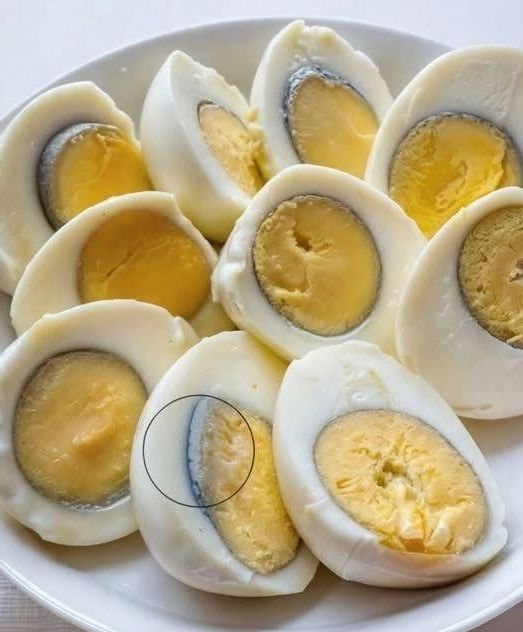
Instead, you’re greeted by an unusual greenish-gray ring surrounding the center.
For many people, that unexpected color immediately raises concerns.
Is the egg spoiled?
Did something go wrong during cooking?
Could it be unsafe to eat?
The strange discoloration has puzzled home cooks for years, leading countless people to throw away perfectly good eggs out of caution. Fortunately, the truth behind this common kitchen mystery is much less alarming than it appears.
In fact, the green ring is completely harmless.
It isn’t mold, bacteria, or a sign that the egg has gone bad. Rather, it’s the result of a natural chemical reaction that occurs when eggs are exposed to heat for too long.
Why the Green Ring Appears
Although hard-boiled eggs seem simple to prepare, small changes in cooking time can dramatically affect the final result.
Inside every egg are naturally occurring elements that react to heat.
The yolk contains iron, while the egg white contains sulfur. When an egg is cooked for an extended period or at excessively high temperatures, sulfur from the white combines with iron from the yolk.
This reaction produces a compound known as iron sulfide.
Iron sulfide forms a thin greenish-gray layer around the outer edge of the yolk, creating the ring that often surprises people when they cut the egg open.
While the appearance may not be particularly appetizing, the egg remains perfectly safe to eat.
It’s Not a Freshness Problem
One of the biggest misconceptions about the green ring is that it indicates an old or spoiled egg.
That’s simply not true.
Fresh eggs can develop the discoloration.
Older eggs can develop it too.
The ring is caused by cooking conditions—not freshness.
If the egg was properly stored and handled, the green color alone is not a reason to throw it away.
Why Overcooked Eggs Smell Stronger
The same process that creates the green ring is also responsible for the distinctive sulfur odor often associated with overcooked hard-boiled eggs.
As cooking time increases, more sulfur compounds are released, producing the stronger smell many people notice.
Although harmless, both the odor and discoloration can affect the overall eating experience.
Fortunately, preventing them is easier than most people realize.
How to Make Perfect Hard-Boiled Eggs
The key to beautiful yellow yolks starts before the water even begins to boil.
Many cooking experts recommend placing eggs in a pot and covering them with cold water. This allows the eggs to warm gradually, reducing the chance of cracks and promoting more even cooking.
Once the water reaches a gentle boil, avoid aggressively boiling the eggs for long periods.
Instead, remove the pot from the heat, cover it with a lid, and allow the eggs to finish cooking in the hot water.
This gentler method helps prevent overcooking while producing consistently cooked yolks.
Timing Matters
Cooking time plays a major role in the final appearance of the egg.
- About 9 minutes produces a slightly softer, creamier yolk.
- Around 12 minutes creates a fully firm yolk ideal for salads and sandwiches.
- Longer cooking times increase the likelihood of developing the green ring.
Even a few extra minutes can make a noticeable difference.
Don’t Skip the Ice Bath
One of the most important steps happens after cooking.
As soon as the eggs are finished, transfer them immediately into a bowl of ice water or very cold water.
This rapid cooling stops the cooking process instantly.
Without an ice bath, the eggs continue cooking internally from residual heat, which can contribute to the formation of the green ring.
The cooling process also makes peeling much easier by helping separate the shell from the egg white.
Additional Tips for Easy-to-Peel Eggs
Many experienced cooks prefer using eggs that are several days old rather than extremely fresh eggs.
Slightly older eggs generally peel more easily because the membrane separates more readily from the shell.
Some people also add a small amount of salt or vinegar to the cooking water. While this won’t prevent discoloration, it can help reduce mess if an egg cracks during cooking.
Proper Storage
Hard-boiled eggs are convenient because they can be prepared ahead of time.
Unpeeled hard-boiled eggs can typically be stored in the refrigerator for up to one week.
Once peeled, they should be eaten sooner to maintain the best quality, flavor, and texture.
Keeping them refrigerated at all times helps ensure freshness and safety.
The Science Behind the Color
The green ring often looks alarming because unusual colors in food naturally make people cautious.
However, in this case, appearances can be deceiving.
The discoloration is simply a harmless chemical reaction between iron and sulfur caused by excess heat.
There’s no contamination.
No spoilage.
And no health risk.
Just basic chemistry at work.
Final Thoughts
The next time you discover a green ring around your hard-boiled egg, there’s no need to panic.
The egg hasn’t gone bad, and it’s perfectly safe to eat.
The discoloration is simply a sign that the egg spent a little too much time exposed to heat.
To keep your yolks bright yellow and visually appealing, remember three simple rules: start with cold water, avoid overcooking, and cool the eggs immediately in ice water.
Sometimes achieving the perfect hard-boiled egg comes down to just a few minutes—and understanding the science behind what happens inside the shell.
ADVERTISEMENT