
ADVERTISEMENT
ADVERTISEMENT
ADVERTISEMENT
In the fast-moving world of kitchen technology, 2024 became a wake-up call for consumer safety. A major recall involving a widely used kitchen appliance sparked concern across the United States. Yet surprisingly, millions of households chose to keep using the product even after official warnings—raising serious questions about how recalls are handled and why people ignore them.
A Popular Appliance With a Serious Flaw
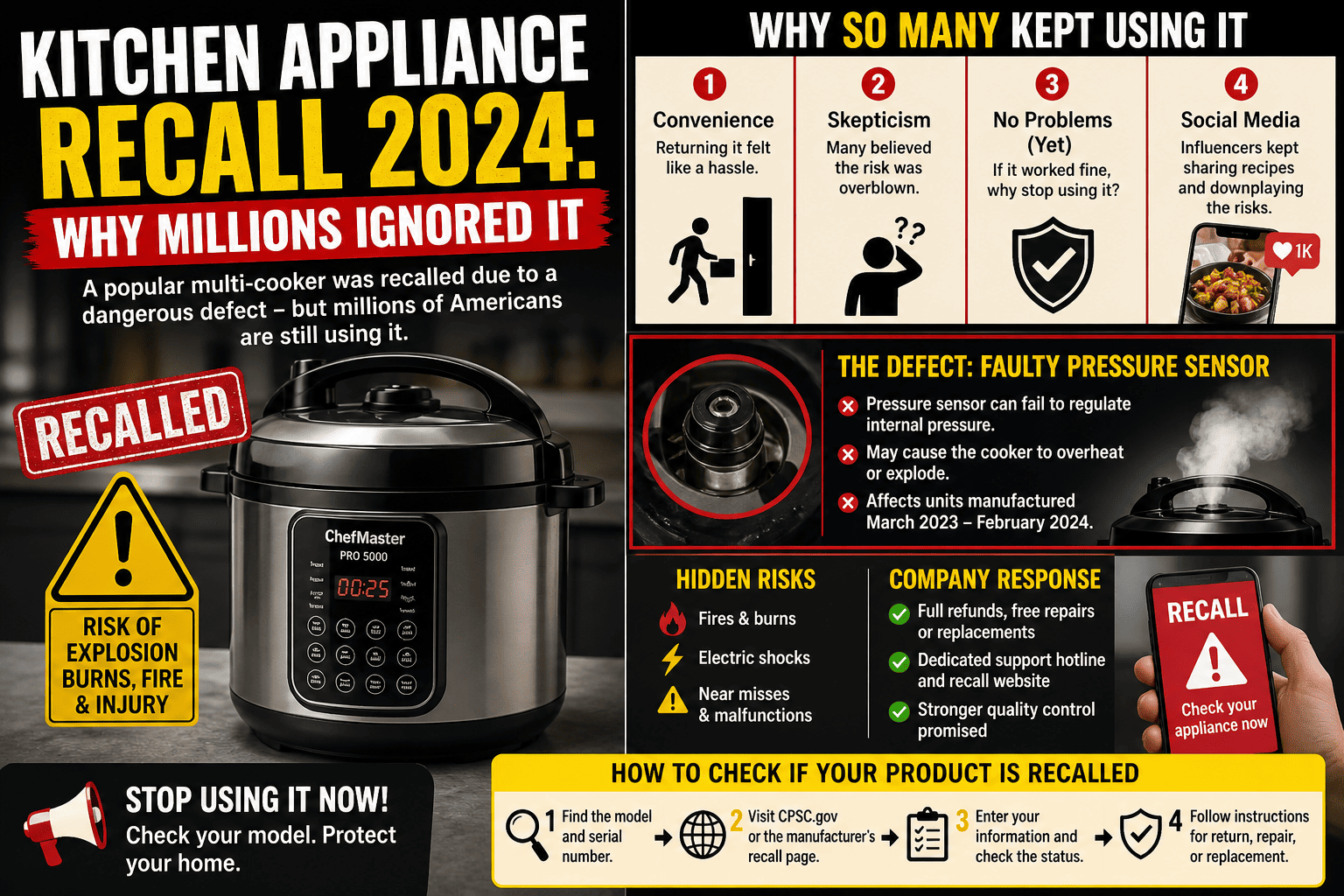
At the center of the controversy was the ChefMaster Pro 5000, a multi-cooker that had quickly gained popularity for its convenience and advanced features. With millions of units sold, it became a staple in modern kitchens. But that success took a sharp turn when reports surfaced of a dangerous defect tied to its pressure system.
What Triggered the Recall
Investigations revealed that the appliance had a faulty pressure sensor. This component, designed to regulate internal pressure during cooking, sometimes failed—allowing pressure to build to unsafe levels. In extreme cases, the device could rupture, posing risks of burns, fires, or property damage. After hundreds of reported incidents, authorities issued an official recall, urging consumers to stop using the product immediately.
How the Problem Spread So Widely
The issue traced back to manufacturing. In an effort to meet high demand, production had been partially outsourced. During this process, defective components slipped through quality control and were installed in a large number of units. Because the flaw wasn’t immediately obvious, it went unnoticed until real-world usage exposed the danger.
The Official Warning—And Why It Fell Short
Safety authorities released detailed recall notices, explaining the risks and offering refunds or replacements. Despite this, many consumers never acted. Some didn’t see the warning, while others assumed their appliance was safe since it hadn’t caused problems yet. The message, although clear, didn’t reach or convince everyone.
Why People Kept Using It
For many users, convenience played a major role. Returning the appliance felt like a hassle, especially if it was still working. Others believed the risk was exaggerated or unlikely to affect them personally. This combination of doubt and inconvenience led to widespread non-compliance with the recall.
The Psychology Behind Ignoring Risk
Human behavior also played a part. People often assume that negative events are more likely to happen to others than to themselves—a mindset known as optimism bias. If nothing had gone wrong so far, it was easy to believe nothing would. This thinking made it easier for users to dismiss the warning and continue using the product.
Social Media Kept It Alive
Adding to the problem, social media helped maintain the appliance’s popularity. Influencers and home cooks continued posting recipes and tutorials, often overlooking or minimizing the recall. These posts reinforced the idea that the appliance was still safe and useful, encouraging others to keep using it.
The Risks Beyond Headlines
While the most alarming issue was the risk of explosion, other problems also surfaced. Some users reported electrical malfunctions, while others experienced warning signs like excessive pressure without failure. These less-publicized issues contributed to an incomplete understanding of the danger.
The Company’s Response
In response, the manufacturer offered refunds, repairs, and replacements. Customer support lines were expanded, and efforts were made to reassure the public. Still, the damage to the brand’s reputation was significant, and the incident highlighted the importance of stronger quality control.
What This Says About Product Safety
This recall exposed weaknesses in the broader safety system. Problems were identified too late, and communication didn’t reach enough people effectively. It showed that relying on consumers to respond after a recall may not be enough to ensure safety.
How to Protect Yourself
To stay safe, it’s important to regularly check for product recalls through official channels. Look up model and serial numbers on your appliances and compare them with recall lists. If a product is flagged, follow the recommended steps immediately—whether that means stopping use, returning it, or requesting repairs.
Final Thoughts
The story of this recall is a reminder that even trusted household items can carry hidden risks. While quick fixes and assumptions are tempting, safety should always come first. Taking recall notices seriously isn’t just a recommendation—it’s a necessary step in protecting your home and family.
ADVERTISEMENT