
ADVERTISEMENT
ADVERTISEMENT
ADVERTISEMENT
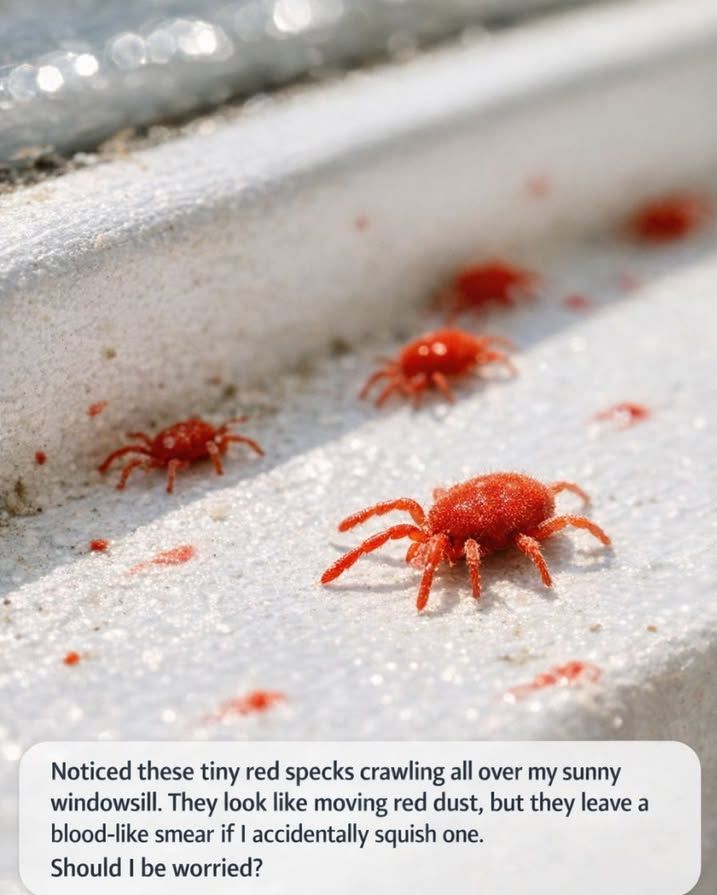
Finding tiny red specks on your windowsill can be surprising—and a little unsettling—especially when they appear to move. At first, they may look like dust, but a closer inspection reveals they are actually living organisms. These small pests are commonly known as clover mites, and while they are harmless, they can become a frustrating household nuisance when they appear in large numbers.
Understanding what clover mites are, why they enter homes, and how to control them can help you keep your living space clean and comfortable.
1. What Are These Tiny Red Specks?
Clover mites are microscopic arachnids related to spiders and ticks. They are extremely small—about 0.75 mm in size—and appear reddish-brown, often resembling moving grains of dust. One of their most noticeable features is their long front legs, which are used for sensing their environment.
These mites are most active during cooler seasons like spring and fall. When outdoor populations grow rapidly, they often migrate toward homes, especially sunny windowsills and walls. Although their appearance can be alarming, they do not bite, spread disease, or harm humans or pets.
2. How to Identify Clover Mites vs. Other Pests
It’s easy to confuse clover mites with other household pests, but there are clear differences:
- Clover mites are extremely tiny and have long front legs.
- Bed bugs are much larger and feed on blood.
- Ticks are also larger and can carry diseases.
- Spider mites usually stay on plants rather than indoor surfaces.
If you notice tiny red specks clustering near windows, especially moving in sunlight, they are most likely clover mites.
3. Why They Gather on Sunny Windowsills
Clover mites are strongly attracted to warmth and sunlight. That’s why they often gather on the south or west-facing sides of buildings where sunlight is strongest.
They feed on grass and plant juices, so homes surrounded by lawns, gardens, or dense vegetation are especially appealing to them. When outdoor food sources become limited or weather conditions change, they may move indoors seeking shelter.
4. Are Clover Mites Dangerous?
The good news is that clover mites are completely harmless to people and pets. They do not bite, sting, or transmit diseases.
Their main issue is their numbers. When they appear in large groups, they can become annoying and leave behind stains if crushed, but they pose no real health risk.
5. Do They Damage Plants or Homes?
Clover mites may feed on grass and plant juices, but they rarely cause serious damage to lawns or houseplants. Most of the time, their feeding is too minimal to notice.
However, indoors they can become a nuisance. When crushed, they release a red pigment that can stain walls, furniture, or curtains.
6. The Red Stains They Leave Behind
The red marks left by clover mites are not blood—they come from their natural body pigments. When crushed, these pigments spread and create visible smears on surfaces.
While harmless, these stains can be difficult to remove, which is why it’s best to avoid crushing the mites whenever possible.
7. Easy Ways to Remove Them Indoors
If clover mites appear inside your home, there are simple ways to manage them:
- Vacuum them gently instead of crushing them
- Seal cracks around windows and doors
- Use caulk or weather stripping to block entry points
- Keep windowsills and walls clean to discourage buildup
These steps help reduce their presence without making a mess.
8. Outdoor Prevention Methods
Stopping clover mites before they enter your home is the most effective solution.
- Keep grass trimmed and well-maintained
- Remove weeds and excess vegetation near your home
- Create a gravel or mulch barrier around the foundation
- Consider perimeter pest control treatments if infestations are frequent
These actions make your home less attractive to mites.
9. Cleaning Red Stains Safely
If you notice red stains from crushed mites, clean them quickly:
- Use warm water with mild soap and gently blot the area
- Avoid scrubbing, which can spread the stain
- For stubborn marks, try diluted white vinegar
Always test cleaning solutions on a small hidden area first to avoid damage.
10. When to Call a Professional
If clover mites keep returning despite your efforts, a pest control professional can help. They can identify the source of the infestation and apply targeted treatments that are more effective than over-the-counter solutions.
Professionals also offer long-term prevention strategies tailored to your home’s environment.
11. Preventing Future Infestations
To keep clover mites from coming back:
- Maintain a vegetation-free zone around your home
- Seal all small cracks and entry points
- Keep lawns healthy but not overgrown
- Regularly inspect windows and exterior walls
Consistent prevention is the best way to avoid future invasions.
ADVERTISEMENT