
ADVERTISEMENT
ADVERTISEMENT
ADVERTISEMENT
Chilblains in Children: Why Cold, Damp Weather Can Harm Little Toes
As winter approaches, many parents start to worry about how cold weather might affect their children—especially during outdoor play. Kids love exploring in chilly conditions, often ignoring how cold or wet they’ve become. But after a day outside, you might notice something concerning: red, itchy, or burning toes.
These symptoms can be alarming, but understanding what’s happening—and how to respond—can help you protect your child and ease their discomfort. One common cause of these symptoms is a condition called chilblains.
1. Why Cold and Damp Conditions Affect Toes So Quickly
Cold weather causes blood vessels near the skin to tighten in order to conserve body heat. When the skin warms up again too quickly, those vessels expand rapidly, which can lead to inflammation and irritation.
Damp conditions make things worse. Moisture lowers the skin’s natural protection against the cold, allowing it to penetrate more easily. Since toes are small and less insulated, they are especially vulnerable to this kind of damage.
2. Chilblains: A Common Cause of Red, Itchy Toes
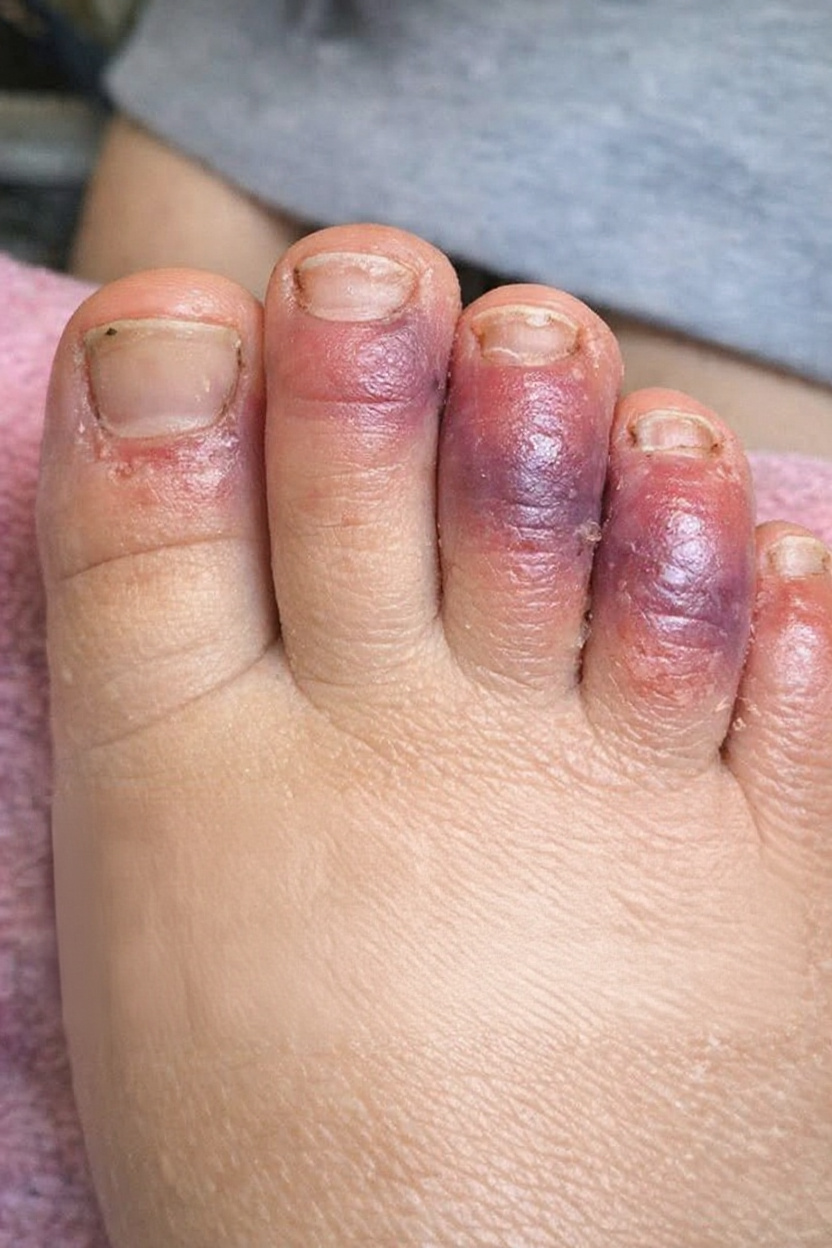
Chilblains (also known as pernio) occur when the skin reacts to cold and damp exposure followed by rewarming. This reaction leads to inflammation in small blood vessels.
Common symptoms include:
- Red or purple patches
- Itching and burning sensations
- Swelling
- Tender or sensitive skin
Chilblains often appear within hours after coming indoors and may last several days if not treated properly.
3. Chilblains vs. Frostbite: Knowing the Difference
It’s important to tell chilblains apart from more serious conditions.
- Chilblains: Red, itchy, swollen skin with discomfort
- Frostbite: Pale, numb, or waxy skin caused by freezing tissue
- Infection: Warmth, pus, and increasing pain
Unlike frostbite, chilblains do not permanently damage tissue, but they can worsen if ignored.
4. Who Is Most at Risk?
Some children are more likely to develop chilblains than others.
Higher-risk groups include:
- Children and teenagers
- Kids who spend long periods outdoors
- Those with poor circulation
- Individuals with certain medical conditions
Because kids are active and often unaware of the cold, they are especially at risk.
5. What You Can Do at Home
If your child develops symptoms, act gently and quickly.
Helpful steps:
- Warm the feet gradually (not with hot water)
- Use soft blankets or warm socks
- Encourage light movement to improve circulation
- Apply a gentle moisturizer
Avoid rubbing or massaging the area too hard, as this can make symptoms worse.
6. When to Seek Medical Help
Most cases improve on their own, but some situations need medical attention.
Contact a doctor if:
- Pain becomes severe
- Blisters appear
- Signs of infection develop
- Symptoms don’t improve after a few days
Children with existing health conditions affecting circulation should be checked sooner.
7. How Doctors Treat Chilblains
Doctors usually diagnose chilblains by examining the skin and asking about cold exposure.
Treatment may include:
- Soothing creams or corticosteroids
- Medication to improve blood flow in severe cases
- Advice on prevention and proper care
Follow-up care helps prevent the condition from returning.
8. Common Mistakes to Avoid
Some well-meaning actions can actually make chilblains worse.
Avoid:
- Using hot water or heating pads
- Rubbing or massaging aggressively
- Ignoring symptoms for too long
Gentle care is always the safest approach.
9. Preventing Chilblains in the Future
Prevention is the best protection.
Simple tips:
- Dress your child in warm, layered clothing
- Use waterproof shoes and thick socks
- Keep feet dry at all times
- Take breaks indoors to warm up
Healthy, moisturized skin is also less likely to react badly to the cold.
10. Could It Be Something Else?
Sometimes chilblains can look like other conditions.
- Raynaud’s phenomenon: Color changes in fingers/toes
- Eczema: Dry, itchy skin not always linked to cold
- Frostbite: More severe cold damage
If you’re unsure, a healthcare professional can provide a clear diagnosis.
11. Talking to Your Child About Cold Safety
It’s important to teach your child how to stay safe without making them anxious.
- Keep the conversation simple and reassuring
- Explain the importance of staying warm
- Encourage them to speak up if they feel uncomfortable
This helps them enjoy outdoor play while staying protected.
Conclusion
Cold, damp weather can be tough on little toes, but chilblains are usually manageable with the right care. By recognizing the symptoms early, responding gently, and taking preventive steps, you can keep your child safe, comfortable, and ready to enjoy winter fun.
A little preparation goes a long way in turning cold days into happy, worry-free adventures.
ADVERTISEMENT