
ADVERTISEMENT
ADVERTISEMENT
ADVERTISEMENT
The Best Sleep Position for Waking Up Refreshed, According to Experts
Getting enough sleep is important, but the position you sleep in can be just as impactful. Many people wake up after a full night in bed only to deal with neck stiffness, back pain, or sore joints. Often, the problem is not how long you slept—but how your body was positioned throughout the night.
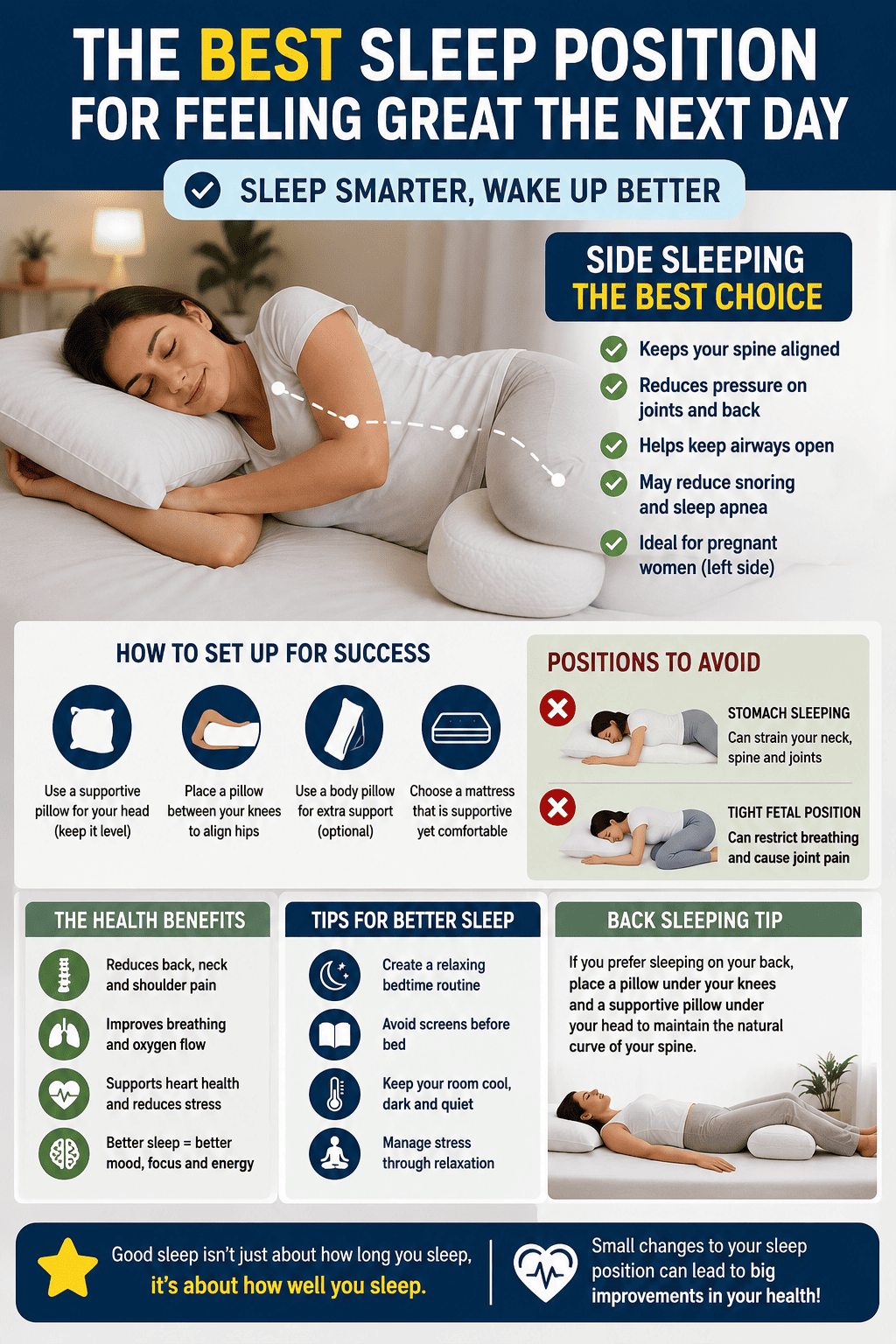
Experts say that improving your sleep posture can help reduce discomfort, improve breathing, and support better overall health. While everyone has personal preferences when it comes to sleeping positions, research suggests that side sleeping is one of the healthiest and most comfortable options for many people.
Why Sleeping on Your Stomach Can Cause Problems
Although some people find stomach sleeping comforting, it can place unnecessary strain on the body. Sleeping face down forces the neck to twist for long periods and can flatten the natural curve of the spine. This may lead to neck pain, lower back discomfort, and muscle stiffness by morning.
Experts also note that stomach sleeping may affect breathing and put pressure on nerves and joints. Because of this, it can interfere with deep, restorative sleep and leave you feeling tired even after several hours in bed.
The Benefits of Sleeping on Your Side
Side sleeping is widely recommended because it helps keep the spine in a more natural alignment. This position reduces pressure on joints and connective tissues, helping many people wake up with less pain and stiffness.
Sleeping on your side may also improve breathing by helping keep the airways open. This can be especially helpful for people who snore or experience sleep apnea. Pregnant women are often encouraged to sleep on their left side because it may support healthy circulation and improve blood flow.
In addition to physical comfort, side sleeping can help promote deeper, more restful sleep, which supports both mental and physical well-being.
How to Make Side Sleeping More Comfortable
The right pillow setup can make a major difference in sleep quality. Experts often recommend placing a pillow between your knees to help keep your hips and pelvis aligned. A body pillow can also provide additional support for the torso, arms, and legs.
Your head should stay level with the mattress rather than being pushed too high by stacked pillows. Using too many pillows may strain the neck and shoulders over time.
It is also important to avoid curling into a very tight fetal position. Keeping the body relatively straight can reduce pressure on the joints and make breathing easier throughout the night.
Choosing the Right Mattress
Your mattress plays a key role in sleep posture and comfort. A mattress that is too soft or sagging may fail to support the spine properly, leading to tossing, turning, and poor sleep quality.
Experts generally recommend a mattress that offers both support and comfort—firm enough to keep the body aligned while still cushioning pressure points.
If you wake up frequently sore or restless, your mattress may need replacing.
The Connection Between Sleep and Overall Health
Quality sleep affects far more than your energy levels. During deep sleep, the body repairs tissues, regulates hormones, and supports immune function. Poor sleep posture and interrupted rest can contribute to fatigue, stress, high blood pressure, and reduced overall wellness.
Lack of restorative sleep may also affect mood, concentration, and emotional health. When the body feels rested and supported, it becomes easier to maintain a positive mindset and handle daily stress more effectively.
Managing Stress Before Bed
Stress and anxiety can make it difficult to stay comfortable and relaxed during sleep. Creating a calming bedtime routine may help improve both sleep quality and body posture overnight.
Instead of scrolling through a phone before bed, experts recommend relaxing activities such as reading a book, taking a warm bath, or practicing deep breathing exercises. Creating a calm environment can help your mind and body settle into deeper sleep more naturally.
Final Thoughts
While side sleeping is considered one of the healthiest positions for most people, comfort and proper support matter most. Small adjustments—such as using supportive pillows, choosing the right mattress, and improving bedtime habits—can make a significant difference in how you feel each morning.
By paying attention to your sleep posture and creating a more supportive sleep environment, you can wake up feeling more rested, refreshed, and free from the aches and pains that often come from poor sleeping habits.
ADVERTISEMENT