
ADVERTISEMENT
ADVERTISEMENT
ADVERTISEMENT
When you walk into someone’s home, the space may immediately appear neat, organized, and welcoming. Clean countertops, fluffed pillows, and a pleasant scent can create the impression of a spotless environment. However, a tidy home is not always a truly clean one. Many people focus on quick touch-ups that improve appearance while hidden dust, grime, and clutter remain unnoticed. Learning the difference between a genuinely clean home and one that has simply been straightened up can reveal a lot about the overall condition of a living space.
Clean vs. Tidy: Understanding the Difference
A tidy home and a clean home are not necessarily the same thing. Tidiness usually means items are organized, clutter is put away, and rooms appear orderly. Cleanliness goes much deeper and involves removing dust, dirt, bacteria, and buildup from surfaces and hidden areas.
A room can look organized while still harboring grime in overlooked places. Understanding this distinction helps explain why some homes look impressive at first glance but may not actually be thoroughly cleaned.
How Smells Influence Cleanliness
Scent has a powerful effect on how people judge cleanliness. Fresh candles, air fresheners, or scented sprays can instantly make a room feel cleaner. However, strong artificial fragrances may sometimes hide unpleasant odors caused by pets, trash, mildew, or stale air.
A truly clean home usually smells fresh and natural rather than overly perfumed. Lingering odors or heavy fragrances can sometimes signal that deeper cleaning issues are being covered up instead of addressed.
Surface Cleaning vs. Deep Cleaning
Quick cleaning often focuses only on what guests can easily see. Countertops may be wiped down, cushions arranged neatly, and visible clutter removed. While this improves appearance, it does not always mean the home has been deeply cleaned.
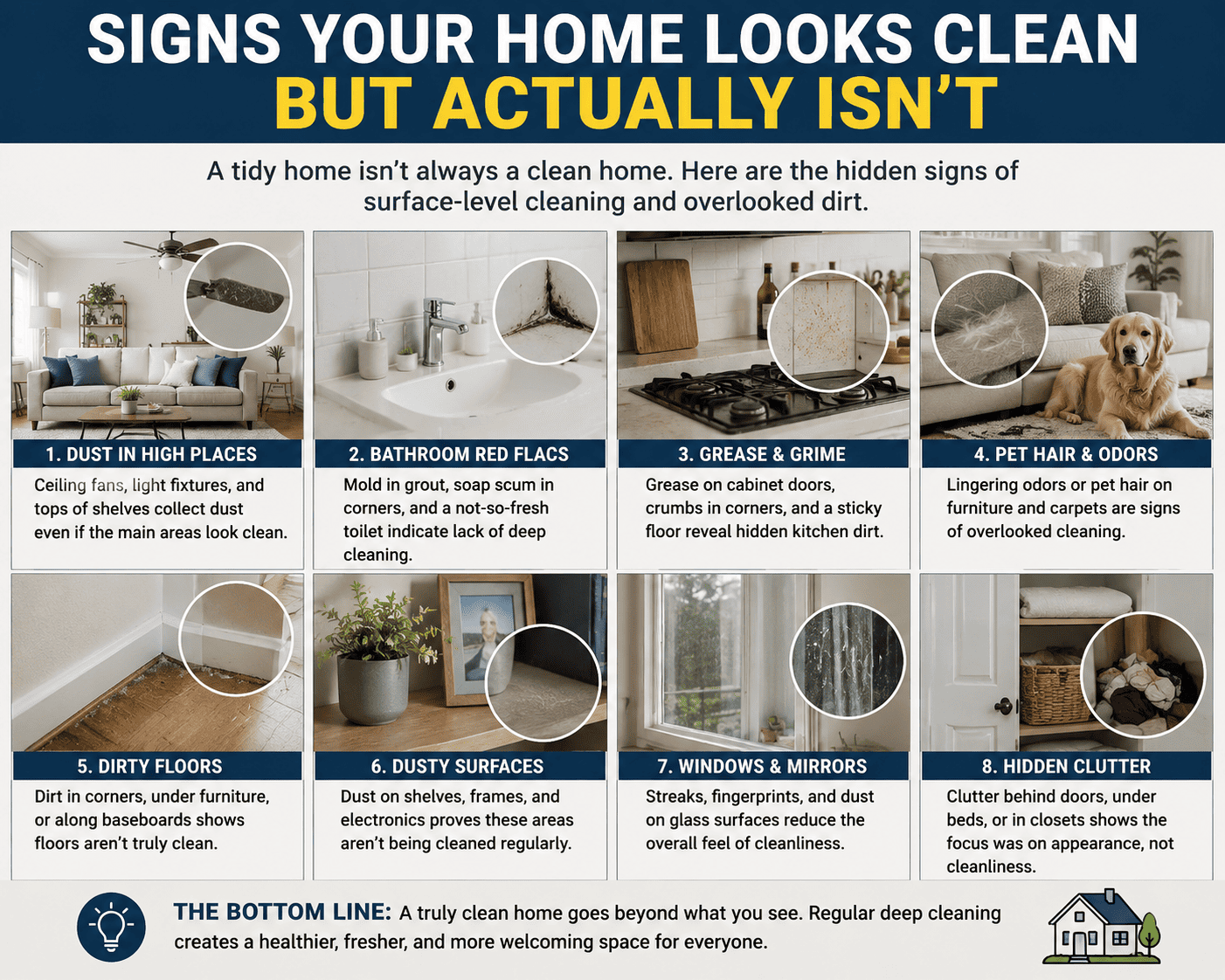
Dust on ceiling fans, fingerprints on light switches, or grime behind furniture are common signs of surface-level cleaning. These hidden areas often reveal whether a home is maintained regularly or simply tidied up before visitors arrive.
Hidden Clutter Tells a Story
One of the easiest ways to spot incomplete cleaning is by checking less noticeable spaces. Closets stuffed with random items, clutter hidden under beds, or piles tucked into corners can indicate that the focus was more on appearance than actual cleanliness.
Areas behind doors, underneath furniture, and inside storage spaces often collect dust and debris when they are ignored during regular cleaning routines.
The Bathroom Reveals Everything
Bathrooms are often one of the clearest indicators of how clean a home truly is. A sink may sparkle at first glance, but details matter. Soap scum, mold around the shower, stained grout, or dusty vents can quickly reveal a lack of deep cleaning.
A genuinely clean bathroom usually has spotless mirrors, sanitized fixtures, fresh-smelling towels, and no hidden buildup in corners or around drains.
Kitchen Areas That Are Often Overlooked
Kitchens may look clean on the surface while grease, crumbs, and bacteria build up in hidden spots. Cabinet handles, appliance doors, and corners near the stove are common places where dirt accumulates unnoticed.
Even if countertops are spotless, sticky floors, dirty microwaves, or grease-covered range hoods can indicate that cleaning is only being done where it is most visible.
Dust Is a Major Clue
Dust is one of the most obvious signs that a home has not been thoroughly cleaned. Shelves, electronics, picture frames, and blinds can collect layers of dust surprisingly quickly.
A room may appear clean until you touch a surface and notice residue. Consistent dusting is an important part of maintaining a truly clean and healthy home environment.
Pet Hair and Lingering Odors
Homes with pets require extra cleaning to stay fresh. Even after tidying up, pet hair trapped in furniture, rugs, and corners can reveal neglected cleaning tasks. Lingering pet odors may also suggest that carpets, upholstery, or litter areas are not cleaned regularly.
While pets naturally create messes, regular vacuuming and deep cleaning can greatly improve the overall cleanliness of a home.
Floors Can Reveal Hidden Dirt
Fresh vacuum lines may make carpets appear spotless, but they do not always guarantee cleanliness. Dirt often gathers along baseboards, under furniture, and in hard-to-reach corners.
For hard flooring, sticky spots, dusty edges, or dirty grout lines can reveal that floors have not been properly cleaned. Floors often hold more hidden dirt than any other surface in the home.
Windows and Mirrors Matter
Windows and mirrors are easy to overlook during rushed cleaning sessions. Smudges, streaks, fingerprints, and dust can dull the appearance of a room and quickly reveal incomplete cleaning.
Clean glass surfaces help brighten a room and contribute to the feeling of a fresh, well-maintained space.
Final Thoughts
A home that looks clean is not always as spotless as it appears. Tidying up can improve appearance quickly, but genuine cleanliness requires consistent attention to both visible and hidden areas. Dust-free surfaces, fresh-smelling rooms, clean floors, and properly maintained kitchens and bathrooms all contribute to a truly clean environment.
Recognizing the difference between a tidy home and a genuinely clean one can help you better appreciate the effort involved in maintaining a healthy and welcoming living space.
ADVERTISEMENT