
ADVERTISEMENT
ADVERTISEMENT
ADVERTISEMENT
Mice in the kitchen aren’t just annoying—they can spread germs, contaminate food, and damage your home. While traps and poisons are common solutions, they’re not always ideal, especially in homes with kids or pets. Looking for a safer, more natural option, I decided to test a popular home remedy: peppermint oil.
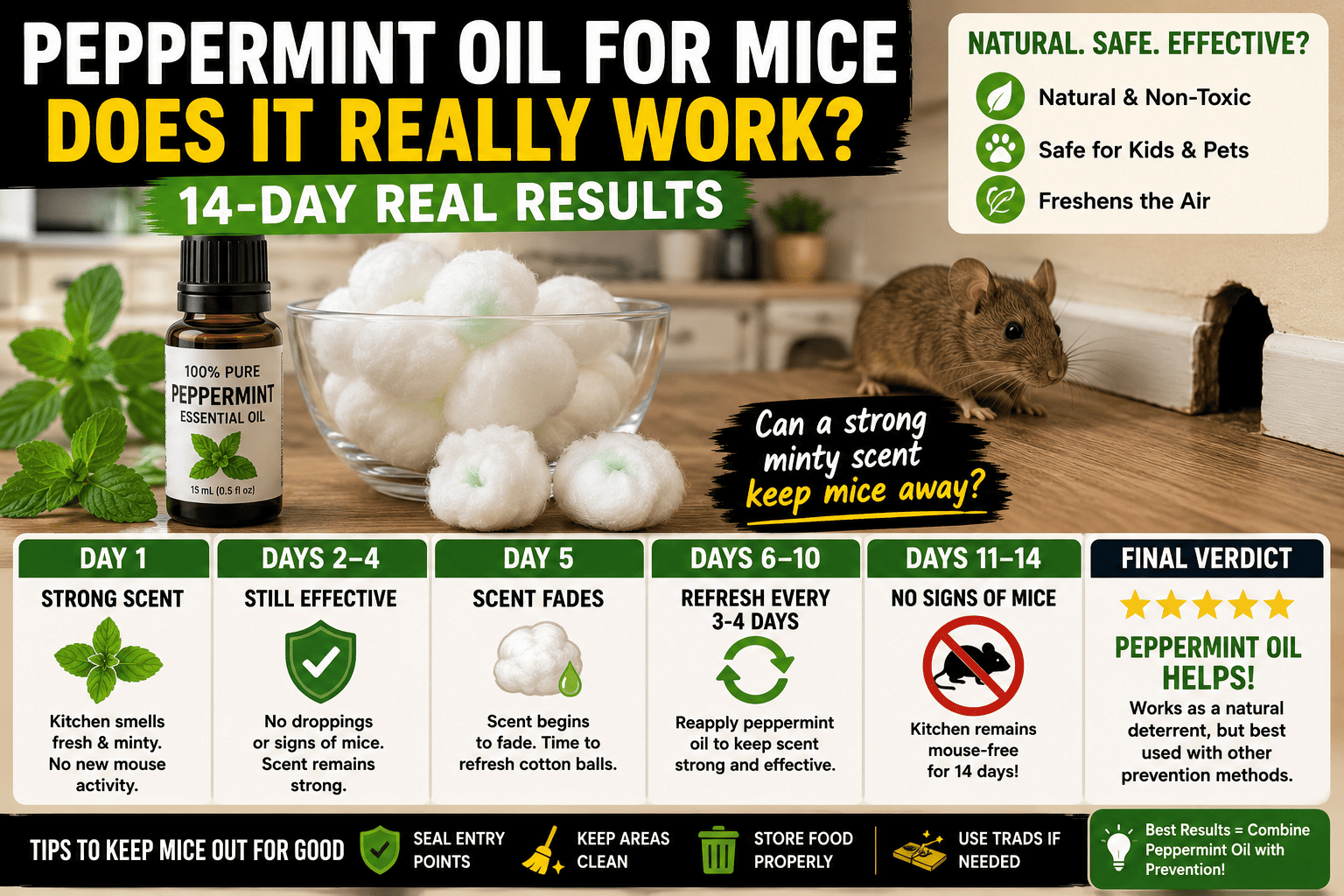
For 14 days, I placed cotton balls soaked in peppermint oil around my kitchen to see if this strong scent could actually keep mice away. Here’s what happened.
Why I Tried Peppermint Oil
Peppermint oil is often recommended as a natural mouse repellent because of its intense smell. Mice have a very strong sense of smell, and the idea is that the scent overwhelms them, making treated areas uncomfortable to enter.
It’s also non-toxic and doubles as a natural air freshener, which made it an appealing alternative to chemical-based solutions.
How I Set Up the Experiment
I used 100% pure peppermint essential oil and regular cotton balls. Each cotton ball was soaked with about 5–10 drops of oil—enough to create a strong scent without dripping.
I placed them in key problem areas:
- Under the sink
- Near the pantry
- Along baseboards
- Close to suspected entry points
Then I checked these spots daily for signs like droppings or gnaw marks.
The First 24 Hours
Right away, the kitchen smelled strongly of peppermint—fresh but powerful.
Interestingly, I didn’t notice any new mouse activity during the first day. No droppings, no damage. It seemed promising, but it was still too early to draw conclusions.
Days 2–4: Early Results
Over the next few days, the pattern continued—no signs of mice.
The scent stayed strong, and it appeared the mice were avoiding the treated areas. However, the intensity of the smell started to feel a bit overwhelming in smaller spaces like cabinets.
When the Scent Started Fading
By day 5, the peppermint smell had noticeably weakened. To keep the effect going, I reapplied oil to each cotton ball.
I found that refreshing them every 3–4 days was necessary to maintain a strong enough scent to act as a deterrent.
What I Observed Over 14 Days
Throughout the two weeks, I didn’t find any new droppings or damage—no clear signs of mice returning.
That said, I stayed cautious. Mice are adaptable, and there’s always a chance they could return or find another way in.
Unexpected Downsides
While peppermint oil is natural, it’s not perfect.
- The smell can become overpowering in enclosed spaces
- Some people in the house found it too strong
- Mild headaches or discomfort can happen with heavy use
It’s something to consider, especially in smaller kitchens.
What Science Says
Research on peppermint oil as a mouse repellent is mixed. Some studies suggest strong scents can deter rodents temporarily, but others show mice may get used to it over time.
Experts generally agree it works best as part of a broader strategy—not a standalone fix.
How It Compares to Other Methods
Peppermint oil has clear advantages:
- Non-toxic
- Safe for pets and kids
- Easy to use
But compared to traps or sealing entry points, it’s less reliable long-term. Traps reduce populations quickly, and sealing gaps prevents mice from entering in the first place.
Final Verdict
After 14 days, my kitchen stayed mouse-free, which suggests peppermint oil helped—but it’s hard to say it was the only reason.
It worked well as a temporary deterrent, but not as a permanent solution.
What I’d Do Next Time
If I were to do this again, I’d combine peppermint oil with other methods:
- Seal cracks and entry points
- Keep the kitchen spotless
- Use humane traps if needed
Using peppermint oil alongside these steps would create a more effective, long-term solution.
Conclusion
Peppermint oil can help keep mice away—at least for a while. It’s safe, simple, and smells great (in moderation). But for lasting results, it’s best used as part of a bigger plan.
If you’re dealing with mice, think of it as a helpful extra—not your only line of defense.
ADVERTISEMENT