
ADVERTISEMENT
ADVERTISEMENT
ADVERTISEMENT
The $2 Flea Market Find That Turned Out to Be a Vintage Brass Seed Dial
March often feels like the start of something new. Winter begins to loosen its grip, early signs of spring appear, and flea markets start filling with vendors eager to unpack boxes of forgotten treasures. Muddy walkways, chilly air, and rows of old tools and curiosities create the perfect setting for anyone who loves a good mystery.
That was exactly the scene on one damp March morning when a small brass object caught a shopper’s attention. It cost only two dollars, but its unusual design made it far more interesting than its price suggested. With numbered notches around the edge and a rotating top plate, it looked purposeful—but no one seemed to know what it was.
A Curious Object Hidden Among Clutter
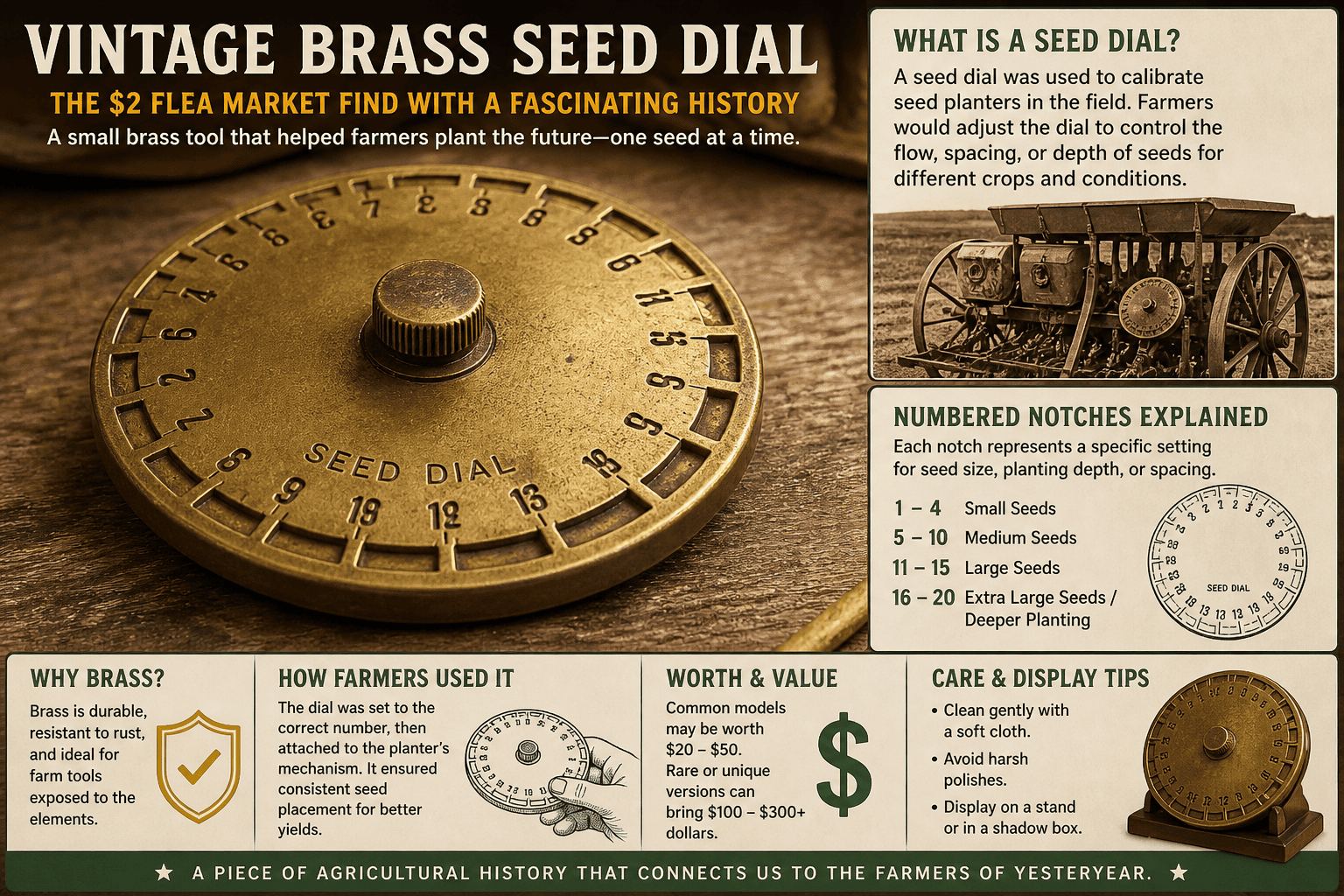
The item measured roughly five inches across and fit easily in one hand. It was made of brass, worn with age but still attractive. Around the outer rim were a series of carefully spaced numbered notches. On top sat a rotating plate that moved smoothly over the base.
There were no hooks, clamps, or screws, which made it even more puzzling. Most tools from the past were designed to attach to something larger, but this one appeared to stand entirely on its own.
Why Brass and Numbers Were Important Clues
Brass was commonly used in older tools because it resisted rust and handled outdoor conditions well. Its presence suggested the object had once served a practical purpose, likely in farming or another hands-on trade.
The numbered markings hinted at calibration or adjustment. Combined with the rotating plate, it seemed likely this was a device meant for setting measurements with precision.
The Answer: A Vintage Brass Seed Dial
After some research, the mystery item was identified as a vintage brass seed dial.
Seed dials were once used to calibrate seed planters, helping farmers control how seeds were distributed during planting. Before modern digital systems and computerized machinery, tools like this allowed growers to make careful manual adjustments in the field.
How Farmers Used It
To use a seed dial, a farmer would rotate the top plate to line up with numbered settings around the edge. These settings controlled seed spacing, planting depth, or feed rate depending on the planter model.
This ensured seeds were placed consistently, which was crucial for healthy crop growth. Proper spacing could improve yields, reduce waste, and make better use of available land.
In many ways, the seed dial was an early form of precision agriculture.
What the Numbered Notches Meant
Each notch represented a specific planting setting. Larger numbers might indicate larger seed sizes or different planting depths, though exact meanings often varied by manufacturer.
Because different companies used their own systems, understanding an old dial sometimes requires comparing it to original manuals or similar examples.
Different Styles and Makers
Not all seed dials were the same. Some were designed specifically for crops like corn or wheat, while others were made for general use.
Manufacturers often added unique markings, logos, or design details. That means collectors can sometimes trace a dial to a certain company, region, or time period.
How to Tell If One Is Original
Collectors usually look for a few key signs:
- Smoothly functioning rotating plate
- Clear numbered notches
- Original engravings or maker’s marks
- Natural aged patina
- Solid brass construction
Authentic wear from decades of use often adds character rather than reducing value.
What a $2 Find Could Be Worth
The value of a vintage seed dial depends on rarity, condition, and maker. Common examples may sell for modest amounts, while scarce or highly collectible models can bring much more.
A two-dollar flea market purchase could realistically be worth anywhere from a few dollars to several hundred in the right market.
Cleaning and Preserving It
If you own one, gentle care is best:
- Wipe with a soft cloth
- Use mild cleaner only if necessary
- Avoid harsh polishing that removes patina
- Store in a dry place
- Display on a stand or in a shadow box
The aged finish often adds to both beauty and historical value.
Why Old Farm Tools Still Show Up at Flea Markets
As farming equipment modernized, many older tools were tucked away in barns, sheds, and storage boxes. Years later, they reappear at estate sales and flea markets, where new owners discover them all over again.
These forgotten gadgets are more than curiosities—they are pieces of agricultural history, reminders of the ingenuity farmers relied on long before electronics and automation.
Final Thoughts
What looked like a strange brass trinket on a muddy March morning turned out to be a fascinating piece of farming history. For only two dollars, one buyer gained not just an object, but a story.
That is the magic of flea markets: sometimes the smallest mystery becomes the most valuable treasure.
ADVERTISEMENT